
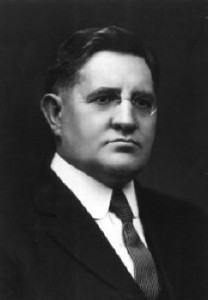
Historical · U.S. Court of Appeals for the Sixth Circuit
Xenophon Hicks
Former Circuit Judge · U.S. Court of Appeals for the Sixth Circuit · 1928–1952 · Appointed by Calvin Coolidge
Xenophon Hicks served as a circuit judge of the U.S. Court of Appeals for the Sixth Circuit (1928–1952). Hicks was appointed by Calvin Coolidge.
Key facts
- Full name
- Xenophon Hicks
- Court
- U.S. Court of Appeals for the Sixth Circuit
- Office
- Circuit Judge (U.S. Court of Appeals)
- Status
- Former circuit judge
- Duty status
- Not serving
- Appointment
- Senate-confirmed
- FJC seat
- CA60501
- Tenure
- 1928–1952
- Confirmed
- 1928-05-23
- Born
- 1872-05-02
- Died
- 1952-11-02
- First year on the bench
- 1928
- Dataset version
- 1.20260711
Appointment & service record
U.S. Court of Appeals for the Sixth Circuit · 1928–1952
- Seat
- CA60501
- Appointment
- Senate-confirmed
- Appointing president
- Calvin Coolidge
- Confirmed
- 1928-05-23
- Commissioned
- 1928-05-23
- Senior status
- 1952-03-01
- Chief Judge
- 1948–1952
Court, FJC seat, appointment type (Senate-confirmed or recess), appointing president, confirmation and commission dates, and senior-status date are drawn from the Federal Judicial Center Biographical Directory and Wikidata.[1][2][3]
Sources
- [1]https://www.fjc.gov/node/1382121fjc · retrieved 2026-07-11
- [2]https://www.fjc.gov/history/judges/biographical-directory-article-iii-federal-judges-exportfjc-directory · retrieved 2026-07-11
- [3]https://www.wikidata.org/wiki/Q8043656Wikidata · retrieved 2026-07-11
Biographical narrative
1,333 words · sourced from the Wikipedia REST extract
Xenophon Hicks was a United States circuit judge who served on the United States Court of Appeals for the Sixth Circuit from 1928 until his death in 1952, including four years as Chief Judge from 1948 to 1952. Before his elevation to the federal appellate bench, he had a distinguished career in Tennessee state courts and served as a United States district judge for courts in Tennessee. Appointed to the circuit court by President Calvin Coolidge, a Republican, Hicks spent nearly a quarter-century on the federal appellate bench during a transformative period in American law. His judicial service at both the district and circuit levels spanned three decades of the early-to-mid twentieth century, and he played an important administrative role in the federal judiciary through his participation in national judicial conferences.
Early life and legal career
Xenophon Hicks was born on May 2, 1872, in Clinton, Tennessee, a small city in Anderson County in the eastern part of the state. He pursued his undergraduate education at U.S. Grant University, an institution that would later become known as Tennessee Wesleyan University, where he earned an Artium Baccalaureus degree in 1891. Following his undergraduate studies, Hicks attended the Cumberland School of Law, which was then affiliated with Cumberland University and would later become part of Samford University. He completed his legal education quickly, receiving his Bachelor of Laws degree in 1892.
Upon completing his legal training, Hicks immediately entered both private practice and public service in his hometown of Clinton. From 1892 to 1898, he maintained a private law practice while simultaneously holding local government positions. His first public role came in 1892 when he was appointed city attorney of Clinton, a position he held until 1893. He then served as county attorney of Anderson County, Tennessee, from 1894 to 1896, gaining experience in local prosecution and legal administration.
In 1898, Hicks interrupted his legal career to serve his country during the Spanish-American War. He joined the United States Army and was assigned to the 6th United States Volunteer Infantry, where he rose to the rank of captain. After his military service concluded, he returned to Clinton and resumed his involvement in civic affairs, serving as an alderman and later as mayor of the city, demonstrating his commitment to public service at the local level.
Hicks's career advanced to the state level when he became a member of the Tennessee Senate in 1911. That same year, he also assumed the position of assistant state attorney general for the 2nd Judicial Circuit of Tennessee, serving in that prosecutorial role until 1913. His transition to the judiciary began in 1913 when he was appointed as a judge of the Criminal and Law Court for the 2nd Judicial Circuit of Tennessee. He served in that capacity for five years, presiding over criminal matters and developing expertise in trial court procedures. In 1918, he was elevated to serve as a judge of the 19th Circuit Court of Tennessee, a position he held until 1923, further establishing his reputation as a capable jurist in the Tennessee state court system.
Federal appellate service
Hicks's entry into the federal judiciary came in 1923 when President Warren G. Harding nominated him to serve on both the United States District Court for the Eastern District of Tennessee and the United States District Court for the Middle District of Tennessee. This nomination, made on February 28, 1923, was to fill a joint seat that had been vacated by Judge Edward Terry Sanford. The United States Senate confirmed Hicks on March 2, 1923, and he received his commission the same day, beginning his federal judicial service. He served in this dual district court capacity for approximately five years, presiding over federal cases in both districts.
Hicks's tenure on the district court was relatively brief, as he was soon elevated to the federal appellate bench. On May 19, 1928, President Calvin Coolidge, a Republican, nominated Hicks to the United States Court of Appeals for the Sixth Circuit. This appointment was to a newly created seat that had been authorized by federal statute. The Senate confirmed his nomination on May 23, 1928, and he received his commission the same day. His service on the district court terminated upon his elevation to the circuit court. Following his departure, the joint nature of the district court seat ended, and his successor served only in the Eastern District of Tennessee.
As a circuit judge on the Sixth Circuit, Hicks served for nearly twenty-four years, hearing appeals from federal district courts in Ohio, Michigan, Kentucky, and Tennessee. His service on the appellate bench coincided with significant developments in federal law during the New Deal era and the years following World War II. Beyond his judicial duties deciding cases, Hicks took on important administrative responsibilities within the federal judiciary. From 1938 to 1948, he served as a member of the Conference of Senior Circuit Judges, an organization that would later be renamed the Judicial Conference of the United States. This body brought together senior federal judges to discuss administrative matters and policy issues affecting the federal court system.
In 1948, Hicks assumed the position of Chief Judge of the Sixth Circuit, the administrative head of the court. He served in this leadership role for four years, from 1948 to 1952, overseeing the operations of one of the nation's busiest federal appellate courts during the post-war period. During his tenure as Chief Judge, from 1948 to 1951, he also served as a member of the Judicial Conference of the United States, the renamed and restructured national body for federal judicial administration. On March 1, 1952, Hicks assumed senior status, a form of semi-retirement that allows federal judges to continue hearing cases with a reduced workload. However, his senior service was brief; his service on the court terminated on November 2, 1952, when he died at the age of eighty.
Jurisprudence and legacy
Xenophon Hicks's nearly three decades of federal judicial service, including his twenty-four years on the Sixth Circuit, placed him on the bench during a period of substantial change in American law and society. His tenure spanned the final years of the 1920s, the entire Great Depression and New Deal era, World War II, and the early Cold War period. During these years, the federal courts confronted novel questions involving the expansion of federal regulatory authority, the scope of constitutional protections, and the relationship between state and federal power.
As a circuit judge, Hicks would have participated in three-judge panels hearing appeals across a wide range of legal subjects, including constitutional law, federal statutory interpretation, criminal law, and civil litigation. The Sixth Circuit's jurisdiction over four states meant that the court addressed diverse legal issues arising from both urban industrial centers and rural communities. Hicks's background in Tennessee state courts, including his experience in both criminal and civil matters, would have informed his approach to the cases that came before the federal appellate court.
Hicks's service as Chief Judge from 1948 to 1952 came during a particularly important period for the federal judiciary. The post-war years saw increasing caseloads in the federal courts and growing attention to questions of judicial administration and efficiency. As Chief Judge, Hicks would have been responsible for managing the court's docket, assigning cases to panels, and representing the circuit in national discussions about the federal judiciary. His concurrent service on the Judicial Conference of the United States during most of his tenure as Chief Judge gave him a voice in shaping policies that affected the entire federal court system.
The length of Hicks's service on the Sixth Circuit—nearly a quarter-century—meant that he contributed to the development of federal appellate jurisprudence over an extended period. His career reflected the traditional path of many early-to-mid-twentieth-century federal judges, who typically gained extensive experience in state courts and local legal practice before appointment to the federal bench. Hicks died on November 2, 1952, having served in judicial office at the local, state, and federal levels for nearly four decades.
Sources & provenance
Every quantitative or attributable claim above carries a per-section [N] marker that resolves to the corresponding URL below. Each entry records the upstream provider, the canonical URL, and the timestamp at which the underlying source was retrieved.
Key facts
- https://www.fjc.gov/node/1382121fjc · retrieved 2026-07-11
- https://www.fjc.gov/history/judges/biographical-directory-article-iii-federal-judges-exportfjc-directory · retrieved 2026-07-11
- https://www.wikidata.org/wiki/Q8043656Wikidata · retrieved 2026-07-11
Biographical narrative
- https://en.wikipedia.org/wiki/Xenophon_HicksWikipedia · retrieved 2026-07-11
Explore the federal judiciary
The U.S. Courts of Appeals are the intermediate appellate courts of the federal judiciary — thirteen circuits sitting between the district courts and the Supreme Court. Browse the full roster of judges on the U.S. Court of Appeals for the Sixth Circuit, or explore how the appointed federal judiciary fits into the federal government.