
Historical · U.S. Court of Appeals for the Tenth Circuit
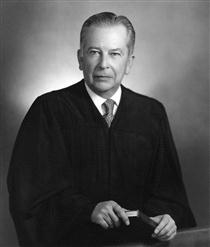
David Thomas Lewis
Former Circuit Judge · U.S. Court of Appeals for the Tenth Circuit · 1956–1983 · Appointed by Dwight D Eisenhower
David Thomas Lewis served as a circuit judge of the U.S. Court of Appeals for the Tenth Circuit (1956–1983). Lewis was appointed by Dwight D Eisenhower.
Key facts
- Full name
- David Thomas Lewis
- Court
- U.S. Court of Appeals for the Tenth Circuit
- Office
- Circuit Judge (U.S. Court of Appeals)
- Status
- Former circuit judge
- Duty status
- Not serving
- Appointment
- Senate-confirmed
- FJC seat
- CA100302
- Tenure
- 1956–1983
- Confirmed
- 1956-06-04
- Born
- 1912-04-25
- Died
- 1983-09-28
- First year on the bench
- 1956
- Dataset version
- 1.20260711
Appointment & service record
U.S. Court of Appeals for the Tenth Circuit · 1956–1977
- Seat
- CA100302
- Appointment
- Senate-confirmed
- Appointing president
- Dwight D Eisenhower
- Confirmed
- 1956-06-04
- Commissioned
- 1956-06-05
- Senior status
- 1977-12-03
- Chief Judge
- 1970–1977
Court, FJC seat, appointment type (Senate-confirmed or recess), appointing president, confirmation and commission dates, and senior-status date are drawn from the Federal Judicial Center Biographical Directory and Wikidata.[1][2][3]
Sources
- [1]https://www.fjc.gov/node/1383876fjc · retrieved 2026-07-11
- [2]https://www.fjc.gov/history/judges/biographical-directory-article-iii-federal-judges-exportfjc-directory · retrieved 2026-07-11
- [3]https://www.wikidata.org/wiki/Q5240369Wikidata · retrieved 2026-07-11
Biographical narrative
1,257 words · sourced from the Wikipedia REST extract
David Thomas Lewis was a United States circuit judge who served on the United States Court of Appeals for the Tenth Circuit from 1956 until his death in 1983. Appointed by President Dwight D. Eisenhower, a Republican, Lewis served as Chief Judge of the Tenth Circuit from 1970 to 1977, during which time he also participated as a member of the Judicial Conference of the United States. His judicial career spanned more than three decades, including six years as a Utah state district judge before his elevation to the federal appellate bench.
Early life and legal career
David Thomas Lewis was born on April 25, 1912, in Salt Lake City, Utah. He pursued his undergraduate education at the University of Utah, where he earned a Bachelor of Arts degree in 1935. Continuing his studies at the same institution, Lewis attended the S.J. Quinney College of Law at the University of Utah, receiving his Juris Doctor degree in 1937. Following his admission to the bar, he entered private legal practice in Salt Lake City in 1938, establishing himself in the legal community of Utah's capital city.
Lewis maintained his private practice for more than a decade, building experience in the law during the late 1930s and 1940s. His professional development was briefly interrupted by military service following World War II. He entered the United States Army in April 1945, joining as a private, and served in the Criminal Investigation Division until his discharge in January 1946. This period of military service, though relatively brief, came during the final months of the war and the immediate postwar period.
In addition to his legal practice, Lewis became involved in public service through the state legislature. He served as a member of the Utah House of Representatives from 1947 to 1948, gaining experience in the legislative process and public policy. This legislative service provided him with insight into the creation and purpose of statutory law, experience that would later inform his work as a judge interpreting such statutes.
Lewis's career took a significant turn in 1950 when he transitioned from private practice to the state judiciary. He was appointed as a Utah state district judge, a position he held for six years. During this period on the trial bench, he presided over cases involving state law matters and developed the judicial temperament and analytical skills that would characterize his later federal service. His tenure as a state district judge from 1950 to 1956 gave him substantial experience in courtroom procedure, evidence, and the application of law to factual disputes.
Federal appellate service
President Dwight D. Eisenhower nominated Lewis to the United States Court of Appeals for the Tenth Circuit on May 17, 1956. The nomination was to fill a vacancy that had been created by the departure of Judge Orie Leon Phillips from the court. The United States Senate confirmed Lewis's appointment on June 4, 1956, and he received his commission the following day, on June 5, 1956. This appointment elevated Lewis from the state trial bench to one of the thirteen federal courts of appeals, which serve as the intermediate appellate courts in the federal judicial system.
The Tenth Circuit, to which Lewis was appointed, has jurisdiction over appeals from federal district courts in Colorado, Kansas, New Mexico, Oklahoma, Utah, and Wyoming, as well as certain administrative agency decisions. As a circuit judge, Lewis would have participated in three-judge panels hearing appeals from these jurisdictions, reviewing questions of law and, in some instances, the sufficiency of evidence supporting lower court decisions.
Lewis served as an active circuit judge for more than two decades. On May 1, 1970, he assumed the position of Chief Judge of the Tenth Circuit, the administrative and ceremonial head of the court. As Chief Judge, Lewis held responsibilities beyond his judicial duties, including administrative oversight of the circuit's operations, assignment of judges to panels, and representation of the circuit in the broader federal judiciary. The position of Chief Judge is typically determined by seniority, going to the active judge who is under the age of seventy and has served on the court the longest.
During his tenure as Chief Judge, which lasted from May 1, 1970, to December 3, 1977, Lewis also served as a member of the Judicial Conference of the United States. The Judicial Conference is the national policymaking body for the federal courts, composed of the Chief Justice of the United States, the chief judges of the thirteen courts of appeals, and district judges representing each regional circuit. Through this role, Lewis participated in shaping policies and procedures for the federal judiciary as a whole, addressing matters such as court administration, judicial conduct, and legislative proposals affecting the courts.
Lewis stepped down as Chief Judge on December 3, 1977, and assumed senior status on the same date. Senior status is a form of semi-retirement available to federal judges who meet certain age and service requirements, allowing them to continue hearing cases on a reduced schedule while creating a vacancy for a new active judge. Lewis continued to serve in senior status, contributing to the work of the Tenth Circuit by hearing cases as needed, until his death on September 28, 1983, in Salt Lake City. His total federal judicial service spanned twenty-seven years.
Jurisprudence and legacy
Lewis's extended service on the Tenth Circuit, including his seven years as Chief Judge, placed him in a position of significant influence over the development of federal law in the circuit's six-state region during a period of substantial legal and social change. The years of his active service, from 1956 to 1977, encompassed major developments in civil rights law, criminal procedure, and administrative law, as the federal courts grappled with implementing Supreme Court decisions and addressing novel legal questions.
As a member of an intermediate appellate court, Lewis participated in the interpretation and application of federal statutes, constitutional provisions, and Supreme Court precedents. The work of circuit judges involves reviewing the decisions of federal trial courts for legal error, resolving conflicts in the interpretation of law, and providing guidance to lower courts within the circuit. Through participation in three-judge panels and, occasionally, en banc proceedings involving all active judges of the circuit, Lewis contributed to the body of published opinions that constitute binding precedent within the Tenth Circuit.
Lewis's background in state legislative service and state trial court experience likely informed his approach to federal appellate work. His time in the Utah House of Representatives would have provided perspective on legislative intent and the policy considerations underlying statutory schemes, while his six years as a state district judge gave him practical experience with trial-level issues that frequently arise on appeal. This combination of legislative, trial, and appellate experience was relatively uncommon and may have contributed to a pragmatic approach to judicial decision-making.
His service as Chief Judge during the 1970s came at a time of growth and evolution in the federal judiciary. The decade saw increasing caseloads, debates over judicial administration and efficiency, and ongoing discussions about the role of federal courts in American society. As a member of the Judicial Conference during this period, Lewis participated in the institutional governance of the federal court system during these years of change.
Lewis continued his judicial work into senior status, maintaining his connection to the Tenth Circuit until his death in 1983 at the age of seventy-one. His nearly three decades of federal judicial service represented a significant contribution to the administration of justice in the mountain and plains states served by the Tenth Circuit.
Sources & provenance
Every quantitative or attributable claim above carries a per-section [N] marker that resolves to the corresponding URL below. Each entry records the upstream provider, the canonical URL, and the timestamp at which the underlying source was retrieved.
Key facts
- https://www.fjc.gov/node/1383876fjc · retrieved 2026-07-11
- https://www.fjc.gov/history/judges/biographical-directory-article-iii-federal-judges-exportfjc-directory · retrieved 2026-07-11
- https://www.wikidata.org/wiki/Q5240369Wikidata · retrieved 2026-07-11
Biographical narrative
- https://en.wikipedia.org/wiki/David_Thomas_LewisWikipedia · retrieved 2026-07-11
Explore the federal judiciary
The U.S. Courts of Appeals are the intermediate appellate courts of the federal judiciary — thirteen circuits sitting between the district courts and the Supreme Court. Browse the full roster of judges on the U.S. Court of Appeals for the Tenth Circuit, or explore how the appointed federal judiciary fits into the federal government.