
Historical · U.S. Court of Appeals for the Tenth Circuit
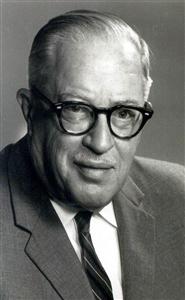
Jean Sala Breitenstein
Former Circuit Judge · U.S. Court of Appeals for the Tenth Circuit · 1957–1986 · Appointed by Dwight D Eisenhower
Jean Sala Breitenstein served as a circuit judge of the U.S. Court of Appeals for the Tenth Circuit (1957–1986). Breitenstein was appointed by Dwight D Eisenhower.
Key facts
- Full name
- Jean Sala Breitenstein
- Court
- U.S. Court of Appeals for the Tenth Circuit
- Office
- Circuit Judge (U.S. Court of Appeals)
- Status
- Former circuit judge
- Duty status
- Not serving
- Appointment
- Senate-confirmed
- FJC seat
- CA100404
- Tenure
- 1957–1986
- Confirmed
- 1957-06-26
- Born
- 1900-07-18
- Died
- 1986-01-30
- First year on the bench
- 1957
- Dataset version
- 1.20260711
Appointment & service record
U.S. Court of Appeals for the Tenth Circuit · 1957–1970
- Seat
- CA100404
- Appointment
- Senate-confirmed
- Appointing president
- Dwight D Eisenhower
- Confirmed
- 1957-06-26
- Commissioned
- 1957-06-27
- Senior status
- 1970-07-31
Court, FJC seat, appointment type (Senate-confirmed or recess), appointing president, confirmation and commission dates, and senior-status date are drawn from the Federal Judicial Center Biographical Directory and Wikidata.[1][2][3]
Sources
- [1]https://www.fjc.gov/node/1378201fjc · retrieved 2026-07-11
- [2]https://www.fjc.gov/history/judges/biographical-directory-article-iii-federal-judges-exportfjc-directory · retrieved 2026-07-11
- [3]https://www.wikidata.org/wiki/Q6171478Wikidata · retrieved 2026-07-11
Biographical narrative
1,081 words · sourced from the Wikipedia REST extract
Jean Sala Breitenstein was a United States circuit judge who served on the United States Court of Appeals for the Tenth Circuit from 1957 to 1986. Born in Iowa in 1900 and raised in Colorado, he built a distinguished legal career that spanned private practice, state and federal prosecution, and nearly three decades on the federal bench. Appointed by President Dwight D. Eisenhower, a Republican, Breitenstein served as an active circuit judge for thirteen years before assuming senior status in 1970, continuing to contribute to the federal judiciary until his death in 1986.
Early life and legal career
Jean Sala Breitenstein was born on July 18, 1900, in Keokuk, Iowa, a Mississippi River city with a long history as a commercial and transportation hub. His family relocated to Boulder, Colorado, in 1907, when Breitenstein was seven years old. He attended the public schools of Boulder, receiving his formative education in the growing community at the foot of the Rocky Mountains during the early twentieth century.
As World War I drew to a close, Breitenstein served in the United States Army in 1918. He enlisted as a private during the final months of the conflict, joining millions of young Americans in military service during the war effort. Following his military service, Breitenstein pursued higher education at the University of Colorado Boulder, where he earned an Artium Baccalaureus degree in 1922. He continued his studies at the University of Colorado School of Law, obtaining his Bachelor of Laws degree in 1924, completing his formal legal education at his home state's flagship public university.
Breitenstein began his legal career in public service shortly after his admission to the bar. From 1925 to 1929, he served as an assistant state attorney general of Colorado, gaining experience in state-level legal matters and governmental operations during the latter half of the 1920s. This position provided him with broad exposure to Colorado law and the workings of the state's legal system during a period of significant economic growth that preceded the Great Depression.
In 1930, Breitenstein transitioned to federal service, accepting an appointment as an Assistant United States Attorney for the District of Colorado. He held this position from 1930 to 1933, prosecuting federal criminal cases and representing the United States government in civil matters during the early years of the Depression. This role gave him substantial trial experience in federal court and familiarity with federal law and procedure that would prove valuable throughout his career.
Following his service as a federal prosecutor, Breitenstein entered private practice in Denver, Colorado, in 1933. He practiced law in the state's capital and largest city for more than two decades, from 1933 to 1954. During these years in private practice, he handled a variety of legal matters and established himself as a respected member of the Colorado bar. His extensive experience in both public service and private practice provided him with a well-rounded perspective on the law and the legal profession.
Federal appellate service
Breitenstein's return to federal service came in 1954, when President Dwight D. Eisenhower nominated him to serve as a United States district judge for the United States District Court for the District of Colorado. The nomination, submitted on April 6, 1954, was for a newly created judgeship authorized by federal statute. The United States Senate confirmed the nomination on April 23, 1954, and Breitenstein received his commission on April 27, 1954. His service as a district judge was relatively brief, lasting just over three years, but it provided him with valuable experience as a trial judge in the federal system.
Breitenstein's tenure on the district court ended when he was elevated to the appellate bench. On June 5, 1957, President Eisenhower nominated him to the United States Court of Appeals for the Tenth Circuit, to fill a vacancy created by the departure of Judge Walter A. Huxman. The Tenth Circuit, which hears appeals from federal district courts in Colorado, Kansas, New Mexico, Oklahoma, Utah, and Wyoming, as well as from certain administrative agencies, represented a significant step up in judicial responsibility. The Senate confirmed Breitenstein's nomination on June 26, 1957, and he received his commission the following day, July 27, 1957.
As a circuit judge, Breitenstein participated in the appellate review of cases from across the six-state region comprising the Tenth Circuit. He served as an active judge for thirteen years, hearing arguments and writing opinions on a wide range of federal legal questions. On July 31, 1970, Breitenstein assumed senior status, a form of semi-retirement that allows federal judges to continue hearing cases on a reduced schedule while creating a vacancy for a new active judge. Despite his senior status, Breitenstein remained an active participant in the work of the Tenth Circuit for nearly sixteen additional years, contributing his experience and judgment to the court's decisions well into his eighties. His service on the court continued until his death on January 30, 1986, bringing to a close a federal judicial career that had spanned more than three decades.
Jurisprudence and legacy
Breitenstein's nearly three decades on the federal bench, including twenty-nine years on the Tenth Circuit, made him one of the longer-serving judges in that court's history. His tenure spanned a period of significant change in American law and society, from the late 1950s through the mid-1980s. During his years of active service from 1957 to 1970, the federal courts grappled with major questions involving civil rights, criminal procedure, and the expansion of federal regulatory authority. His continued service in senior status through 1986 allowed him to contribute to the court's work during additional years of legal development.
The length of Breitenstein's service reflects the life tenure guaranteed to federal judges under Article III of the Constitution, designed to ensure judicial independence. His decision to assume senior status in 1970 rather than retire completely, and his continuation in that role for sixteen years, exemplifies the contribution that senior judges make to the federal judiciary, providing continuity and experience while allowing for the appointment of new active judges.
Breitenstein's career trajectory—from assistant state attorney general to assistant United States attorney, through two decades of private practice, to the district court and finally to the court of appeals—represented a path not uncommon among federal appellate judges of his generation, combining public service, private practice, and trial court experience. His death in 1986 at the age of eighty-five ended a legal career that had spanned more than six decades from his law school graduation in 1924.
Sources & provenance
Every quantitative or attributable claim above carries a per-section [N] marker that resolves to the corresponding URL below. Each entry records the upstream provider, the canonical URL, and the timestamp at which the underlying source was retrieved.
Key facts
- https://www.fjc.gov/node/1378201fjc · retrieved 2026-07-11
- https://www.fjc.gov/history/judges/biographical-directory-article-iii-federal-judges-exportfjc-directory · retrieved 2026-07-11
- https://www.wikidata.org/wiki/Q6171478Wikidata · retrieved 2026-07-11
Biographical narrative
- https://en.wikipedia.org/wiki/Jean_Sala_BreitensteinWikipedia · retrieved 2026-07-11
Explore the federal judiciary
The U.S. Courts of Appeals are the intermediate appellate courts of the federal judiciary — thirteen circuits sitting between the district courts and the Supreme Court. Browse the full roster of judges on the U.S. Court of Appeals for the Tenth Circuit, or explore how the appointed federal judiciary fits into the federal government.