
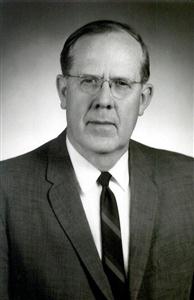
Historical · U.S. Court of Appeals for the Tenth Circuit
Oliver Seth
Former Circuit Judge · U.S. Court of Appeals for the Tenth Circuit · 1962–1996 · Appointed by John F Kennedy
Oliver Seth served as a circuit judge of the U.S. Court of Appeals for the Tenth Circuit (1962–1996). Seth was appointed by John F Kennedy.
Key facts
- Full name
- Oliver Seth
- Court
- U.S. Court of Appeals for the Tenth Circuit
- Office
- Circuit Judge (U.S. Court of Appeals)
- Status
- Former circuit judge
- Duty status
- Not serving
- Appointment
- Senate-confirmed
- FJC seat
- CA100203
- Tenure
- 1962–1996
- Confirmed
- 1962-06-11
- Born
- 1915-05-30
- Died
- 1996-03-27
- First year on the bench
- 1962
- Dataset version
- 1.20260711
Appointment & service record
U.S. Court of Appeals for the Tenth Circuit · 1962–1984
- Seat
- CA100203
- Appointment
- Senate-confirmed
- Appointing president
- John F Kennedy
- Confirmed
- 1962-06-11
- Commissioned
- 1962-06-20
- Senior status
- 1984-12-25
- Chief Judge
- 1977–1984
Court, FJC seat, appointment type (Senate-confirmed or recess), appointing president, confirmation and commission dates, and senior-status date are drawn from the Federal Judicial Center Biographical Directory and Wikidata.[1][2][3]
Sources
- [1]https://www.fjc.gov/node/1387611fjc · retrieved 2026-07-11
- [2]https://www.fjc.gov/history/judges/biographical-directory-article-iii-federal-judges-exportfjc-directory · retrieved 2026-07-11
- [3]https://www.wikidata.org/wiki/Q7087821Wikidata · retrieved 2026-07-11
Biographical narrative
1,058 words · sourced from the Wikipedia REST extract
Oliver Seth was a United States circuit judge who served on the United States Court of Appeals for the Tenth Circuit for more than three decades. Appointed to the federal appellate bench in 1962 by President John F. Kennedy, a Democrat, Seth served as an active judge until 1984 and then continued in senior status until his death in 1996. During his tenure, he served as Chief Judge of the Tenth Circuit from 1977 to 1984, leading one of the thirteen federal courts of appeals during a period of significant growth in the federal judiciary.
Early life and legal career
Oliver Seth was born on May 30, 1915, in Albuquerque, New Mexico, where he began his life in what was then a relatively young state, New Mexico having achieved statehood only three years before his birth. He pursued his undergraduate education at Stanford University in California, earning a Bachelor of Arts degree in 1937. Following his undergraduate studies, Seth attended Yale Law School, one of the nation's premier legal institutions, where he completed his legal education and received a Bachelor of Laws degree in 1940.
Upon graduating from law school, Seth returned to New Mexico and began the private practice of law in Santa Fe, the state capital, in 1940. However, his early legal career was soon interrupted by World War II. He entered military service in the United States Army, where he served from 1940 to 1946, achieving the rank of Major. His military service spanned the duration of American involvement in World War II and extended into the immediate postwar period, a time when many attorneys of his generation interrupted their professional careers to serve their country.
After completing his military service in 1946, Seth returned to Santa Fe and resumed the private practice of law, where he would remain for the next sixteen years. During this period, he established himself as a member of New Mexico's legal community. From 1948 to 1952, while maintaining his private practice, Seth also served as a Government Appeal Agent for the Selective Service System, a role that involved reviewing and adjudicating appeals related to military draft classifications during the early Cold War period. This position gave him experience in administrative law and government service that would later inform his work on the federal bench. Seth continued his private practice in Santa Fe until 1962, building a career that spanned more than two decades in New Mexico's legal community.
Federal appellate service
President John F. Kennedy nominated Seth to the United States Court of Appeals for the Tenth Circuit on May 24, 1962. The nomination was to fill a vacancy that had been created by the departure of Judge Sam G. Bratton from the court. The United States Senate confirmed Seth's nomination on June 11, 1962, and he received his judicial commission on June 20, 1962, formally beginning his service on the federal appellate bench.
The Tenth Circuit, headquartered in Denver, Colorado, has jurisdiction over federal appeals arising from six states: Colorado, Kansas, New Mexico, Oklahoma, Utah, and Wyoming, as well as those portions of Yellowstone National Park extending into Idaho and Montana. As a circuit judge, Seth would have heard appeals in a wide variety of federal matters, including civil rights cases, criminal appeals, administrative law disputes, and other matters of federal law arising from the district courts within the circuit's geographic jurisdiction.
Seth served as an active circuit judge for more than two decades. On December 3, 1977, he assumed the position of Chief Judge of the Tenth Circuit, the administrative and leadership position for the court. As Chief Judge, Seth would have been responsible not only for hearing cases but also for the administrative management of the circuit, including case assignment, court operations, and representing the circuit in the broader federal judicial system. He served in this leadership capacity until September 15, 1984, a tenure of nearly seven years as the circuit's chief administrative officer.
On December 25, 1984, Seth assumed senior status, a form of semi-retirement available to federal judges who meet certain age and service requirements. Senior status allowed him to continue hearing cases and contributing to the work of the court while also permitting the appointment of a successor to his active seat. Seth remained active in hearing cases as a senior judge, continuing to participate in the judicial work of the Tenth Circuit for more than eleven additional years. His service on the court was terminated on March 27, 1996, when he died at the age of eighty.
Jurisprudence and legacy
Seth's more than three decades of service on the Tenth Circuit spanned a transformative period in American law and the federal judiciary. He joined the bench during the early 1960s, an era marked by the Warren Court's expansion of civil rights and civil liberties, and continued serving through the 1980s and into the mid-1990s, witnessing significant changes in federal jurisprudence across multiple areas of law.
As a circuit judge appointed by a Democratic president during the Kennedy administration, Seth was part of a generation of federal judges who shaped the development of federal law during the latter half of the twentieth century. His service coincided with major developments in areas such as civil rights enforcement, criminal procedure, environmental law, and administrative regulation, all of which would have come before the Tenth Circuit during his tenure.
Seth's seven-year tenure as Chief Judge from 1977 to 1984 placed him in a position of leadership during a period when the federal courts were managing increasing caseloads and adapting to new procedural and substantive legal developments. The role of Chief Judge involves not only judicial decision-making but also administrative responsibilities, including managing the circuit's operations and representing the court in interactions with Congress, the Judicial Conference of the United States, and other components of the federal judiciary.
His decision to take senior status in 1984 but continue actively hearing cases for another twelve years demonstrated a sustained commitment to judicial service. Many senior judges reduce their caseloads significantly, but Seth's continued active participation until his death suggests he remained engaged with the work of the court throughout his eighties. His total service of nearly thirty-four years on the Tenth Circuit represents a substantial contribution to the federal appellate judiciary and to the administration of justice in the six-state region served by that court.
Sources & provenance
Every quantitative or attributable claim above carries a per-section [N] marker that resolves to the corresponding URL below. Each entry records the upstream provider, the canonical URL, and the timestamp at which the underlying source was retrieved.
Key facts
- https://www.fjc.gov/node/1387611fjc · retrieved 2026-07-11
- https://www.fjc.gov/history/judges/biographical-directory-article-iii-federal-judges-exportfjc-directory · retrieved 2026-07-11
- https://www.wikidata.org/wiki/Q7087821Wikidata · retrieved 2026-07-11
Biographical narrative
- https://en.wikipedia.org/wiki/Oliver_SethWikipedia · retrieved 2026-07-11
Explore the federal judiciary
The U.S. Courts of Appeals are the intermediate appellate courts of the federal judiciary — thirteen circuits sitting between the district courts and the Supreme Court. Browse the full roster of judges on the U.S. Court of Appeals for the Tenth Circuit, or explore how the appointed federal judiciary fits into the federal government.