
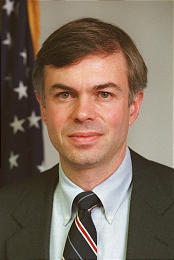
Currently serving · U.S. Court of Appeals for the Tenth Circuit
Scott Milne Matheson Jr.
Currently serving
Circuit Judge · U.S. Court of Appeals for the Tenth Circuit · 2010–present · Appointed by Barack Obama
Scott Milne Matheson Jr. serves as a circuit judge of the U.S. Court of Appeals for the Tenth Circuit (2010–present). Jr. was appointed by Barack Obama.
Key facts
- Full name
- Scott Milne Matheson Jr.
- Court
- U.S. Court of Appeals for the Tenth Circuit
- Office
- Circuit Judge (U.S. Court of Appeals)
- Status
- Active circuit judge
- Duty status
- Active
- Appointment
- Senate-confirmed
- FJC seat
- CA100903
- Tenure
- 2010–present
- Confirmed
- 2010-12-22
- Born
- 1953
- Died
- —
- First year on the bench
- 2010
- Dataset version
- 1.20260705
Appointment & service record
U.S. Court of Appeals for the Tenth Circuit · 2010–present
- Seat
- CA100903
- Appointment
- Senate-confirmed
- Appointing president
- Barack Obama
- Confirmed
- 2010-12-22
- Commissioned
- 2010-12-27
- Senior status
- —
Court, FJC seat, appointment type (Senate-confirmed or recess), appointing president, confirmation and commission dates, and senior-status date are drawn from the Federal Judicial Center Biographical Directory and Wikidata.[1][2][3]
Sources
- [1]https://www.fjc.gov/node/1393591fjc · retrieved 2026-07-05
- [2]https://www.fjc.gov/history/judges/biographical-directory-article-iii-federal-judges-exportfjc-directory · retrieved 2026-07-05
- [3]https://www.wikidata.org/wiki/Q7436779Wikidata · retrieved 2026-07-05
Biographical narrative
1,219 words · sourced from the Wikipedia REST extract
Scott Milne Matheson Jr., born July 15 1953, is an American attorney and jurist who has served as a United States circuit judge on the Court of Appeals for the Tenth Circuit since 2010. Prior to his appointment to the federal bench, Matheson built a career that combined private practice, extensive academic work at the University of Utah’s S.J. Quinney College of Law, service as United States attorney for the District of Utah, and participation in state‑level legal reform initiatives. His background includes a distinguished education—Stanford University, Oxford University as a Rhodes Scholar, and Yale Law School—and experience in both political campaigning and public policy scholarship.
Early life and legal career
Scott Milne Matheson Jr. was raised in Salt Lake City, Utah, within a family that has been active in state politics. His father, Scott M. Matheson, served as governor of Utah from 1977 to 1985, while his mother, Norma Matheson, fulfilled the role of first lady. A brother, Jim Matheson, later represented Utah in the United States House of Representatives. Matheson earned a Bachelor of Arts degree with distinction from Stanford University in 1975, where he was recognized with the Anna Laura Myers Prize for an outstanding undergraduate economics thesis. He then attended Magdalen College at the University of Oxford as a Rhodes Scholar, receiving a BA in modern history in 1977; under Oxford tradition this degree was later promoted to a Master of Arts.
Returning to the United States, Matheson enrolled at Yale Law School and graduated with a Juris Doctor in 1980. While at Yale he contributed to the Yale Law Journal as a notes editor. Following law school, he briefly entered electoral politics by managing his father’s campaign for governor during the 1980 election cycle. In 1981 he began practicing law as an associate at Williams & Connolly, a litigation firm based in Washington, D.C.
Matheson transitioned to academia in 1985 when he joined the faculty of the S.J. Quinney College of Law at the University of Utah. His teaching portfolio focused on constitutional law, criminal law, and civil procedure. Over the ensuing years he assumed leadership roles that linked scholarship with legal‑system reform. He served as vice‑chair of the Utah Constitutional Revision Committee, chaired the Utah Supreme Court Advisory Committee on the Rules of Evidence, and participated as a member of the Utah State Bar Commission. In addition to these regulatory responsibilities, Matheson helped expand access to legal services by establishing a pro bono initiative at the law school and serving on the board of trustees for the Legal Aid Society of Salt Lake City.
During periods of leave from his professorial duties, Matheson held several public‑service positions. From 1988 to 1989 he was Deputy County Attorney for Salt Lake County, where he assisted in prosecutorial functions at the county level. The following year he served as a visiting professor at Harvard University’s John F. Kennedy School of Government, occupying the Frank Stanton Chair on the First Amendment. In 1993 President Bill Clinton appointed Matheson United States attorney for the District of Utah; he held that federal prosecutorial post until 1997, overseeing civil and criminal litigation involving the United States government within the state.
Matheson’s academic leadership culminated in his appointment as dean of the S.J. Quinney College of Law, a position he occupied from 1998 to 2006. After concluding his deanship, he spent a sabbatical year as a Public Policy Scholar at the Woodrow Wilson International Center for Scholars in Washington, D.C., where he pursued research on constitutional and administrative law issues. Returning to Utah, he chaired the Utah Mine Safety Commission from 2007 to 2008, an agency created in response to the Crandall Canyon mine disaster and tasked with improving mining safety standards and emergency response protocols.
In 2004 Matheson entered electoral politics as the Democratic nominee for governor of Utah. He was defeated by Republican candidate Jon Huntsman Jr., receiving approximately 41 percent of the vote. Throughout his career, Matheson authored a number of scholarly works, including the book *Presidential Constitutionalism in Perilous Times* (2009) and numerous articles published in law reviews.
Federal appellate service
President Barack Obama nominated Matheson to the United States Court of Appeals for the Tenth Circuit on March 3 2010. The nomination was intended to fill the vacancy created by the resignation of Judge Michael W. McConnell in August 2009. Following a unanimous vote by the Senate Judiciary Committee, Matheson’s confirmation proceeded without partisan division. On December 22 2010 the United States Senate confirmed his appointment, and he received his judicial commission five days later, on December 27 2010.
Since joining the Tenth Circuit, Judge Matheson has served as an active circuit judge, hearing appeals arising from district courts in six states—Colorado, Kansas, New Mexico, Oklahoma, Utah, and Wyoming. His docket includes matters involving federal statutes, constitutional questions, and administrative agency actions. As a member of the appellate bench, he participates in en banc hearings, contributes to panel decisions, and engages in the court’s internal administration. The confirmation process and subsequent service have been noted for bipartisan support from Utah’s congressional delegation, including Senator Orrin Hatch, who advocated for Matheson’s nomination despite party differences.
Jurisprudence and legacy
Judge Matheson’s professional trajectory reflects a blend of scholarly inquiry, practical litigation experience, and public‑policy involvement. His academic background in constitutional law and his tenure as United States attorney provide a foundation for analyzing complex legal issues that arise before the Tenth Circuit. While specific opinions authored by Judge Matheson are not detailed here, his participation in appellate adjudication contributes to the development of federal jurisprudence across a broad geographic region.
Beyond his judicial duties, Matheson’s legacy includes substantial contributions to legal education and reform. As dean of the S.J. Quinney College of Law, he oversaw curricular enhancements and promoted experiential learning opportunities for law students. His efforts to expand pro bono services have helped increase access to representation for low‑income individuals in Utah. In the realm of state governance, his work on the Utah Constitutional Revision Committee and the Utah Supreme Court Advisory Committee on the Rules of Evidence influenced the modernization of procedural rules and constitutional interpretation within the state’s legal system.
Matheson’s scholarly output, highlighted by his 2009 book *Presidential Constitutionalism in Perilous Times*, addresses the balance of executive authority and constitutional constraints during periods of national crisis. The themes explored in that work echo concerns that frequently surface before appellate courts, particularly when evaluating the scope of federal power under the Constitution.
His involvement with the Utah Mine Safety Commission demonstrates a commitment to public safety policy, linking legal expertise with regulatory oversight. By guiding the commission’s response to mining hazards, Matheson contributed to the establishment of more rigorous safety standards and emergency protocols that affect both workers and surrounding communities.
Overall, Judge Scott Milne Matheson Jr.’s career illustrates the integration of academic scholarship, governmental service, and judicial responsibility. His appointment to the Tenth Circuit added a jurist with extensive experience in both federal prosecution and legal education, enriching the court’s capacity to address intricate questions of law. As an active member of the appellate bench, his ongoing decisions continue to shape the interpretation of statutes and constitutional principles within the jurisdiction he serves, while his earlier initiatives in legal reform and public policy leave a lasting imprint on Utah’s legal landscape.
Sources & provenance
Every quantitative or attributable claim above carries a per-section [N] marker that resolves to the corresponding URL below. Each entry records the upstream provider, the canonical URL, and the timestamp at which the underlying source was retrieved.
Key facts
- https://www.fjc.gov/node/1393591fjc · retrieved 2026-07-05
- https://www.fjc.gov/history/judges/biographical-directory-article-iii-federal-judges-exportfjc-directory · retrieved 2026-07-05
- https://www.wikidata.org/wiki/Q7436779Wikidata · retrieved 2026-07-05
Biographical narrative
- https://en.wikipedia.org/wiki/Scott_Matheson_Jr.Wikipedia · retrieved 2026-07-05
Explore the federal judiciary
The U.S. Courts of Appeals are the intermediate appellate courts of the federal judiciary — thirteen circuits sitting between the district courts and the Supreme Court. Browse the full roster of judges on the U.S. Court of Appeals for the Tenth Circuit, or explore how the appointed federal judiciary fits into the federal government.