
Historical · U.S. Court of Appeals for the Third Circuit
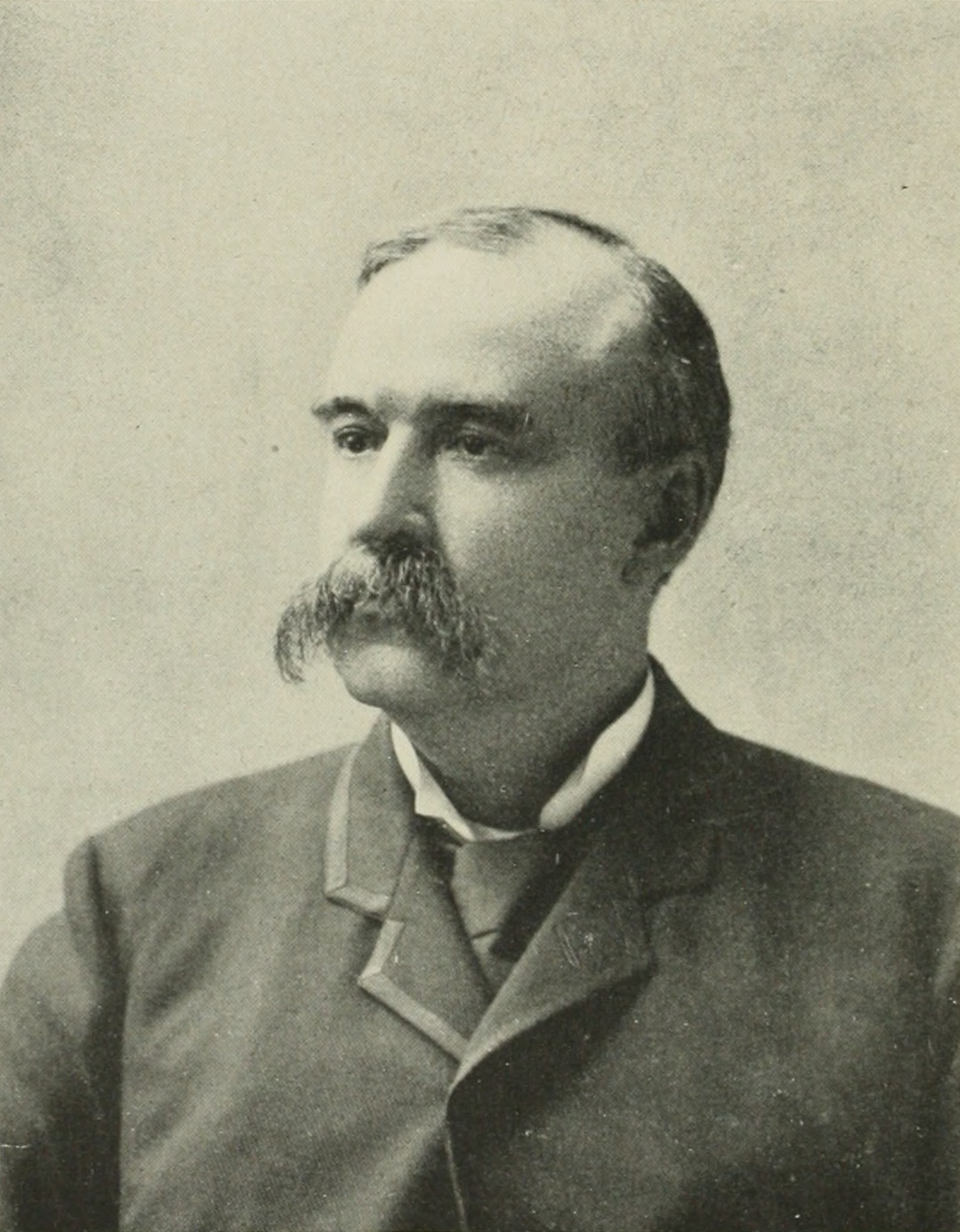
George Gray
Former Circuit Judge · U.S. Court of Appeals for the Third Circuit · 1899–1914 · Appointed by William Mckinley
George Gray served as a circuit judge of the U.S. Court of Appeals for the Third Circuit (1899–1914). Gray was appointed by William Mckinley.
Key facts
- Full name
- George Gray
- Court
- U.S. Court of Appeals for the Third Circuit
- Office
- Circuit Judge (U.S. Court of Appeals)
- Status
- Former circuit judge
- Duty status
- Not serving
- Appointment
- Senate-confirmed
- FJC seat
- CA30301
- Tenure
- 1899–1914
- Confirmed
- 1899-12-18
- Born
- 1840-05-04
- Died
- 1925-08-07
- First year on the bench
- 1899
- Dataset version
- 1.20260711
Appointment & service record
U.S. Court of Appeals for the Third Circuit · 1899–1914
- Seat
- CA30301
- Appointment
- Senate-confirmed
- Appointing president
- William Mckinley
- Confirmed
- 1899-12-18
- Commissioned
- 1899-12-18
- Senior status
- —
Court, FJC seat, appointment type (Senate-confirmed or recess), appointing president, confirmation and commission dates, and senior-status date are drawn from the Federal Judicial Center Biographical Directory and Wikidata.[1][2][3]
Sources
- [1]https://www.fjc.gov/node/1381456fjc · retrieved 2026-07-11
- [2]https://www.fjc.gov/history/judges/biographical-directory-article-iii-federal-judges-exportfjc-directory · retrieved 2026-07-11
- [3]https://www.wikidata.org/wiki/Q249041Wikidata · retrieved 2026-07-11
Biographical narrative
1,124 words · sourced from the Wikipedia REST extract
George Gray was a United States circuit judge who served on the United States Court of Appeals for the Third Circuit from 1899 to 1914, following a distinguished career as a United States senator from Delaware. Born in 1840 and passing away in 1925, Gray's professional life spanned multiple domains of public service, including state government, the United States Senate, the federal judiciary, and international diplomacy. He was appointed to the federal bench by President William McKinley, a Republican, and confirmed by the Senate in December 1899. Beyond his judicial service, Gray participated in numerous international arbitration commissions and served as a member of the Permanent Court of Arbitration at The Hague for a quarter century.
Early life and legal career
George Gray was born on May 4, 1840, in New Castle, located in New Castle County, Delaware. He was the son of Andrew C. Gray, who lived from 1804 to 1885 and worked as a lawyer, banker, businessman, and public official in Delaware. The younger Gray received his early education in the common schools of his community before pursuing higher education at the College of New Jersey, an institution now known as Princeton University. He earned his Bachelor of Arts degree from that institution in 1859, followed by a Master of Arts degree in 1863. Gray also attended Harvard Law School as part of his legal training. Following his formal education, he studied law through the traditional method of reading law under the supervision of his father, and he was admitted to the bar in 1863.
Upon admission to the bar, Gray established a private law practice in New Castle, where he practiced from 1863 to 1879. This sixteen-year period of private practice provided him with substantial experience in the legal profession and established his reputation within Delaware's legal community. In 1879, Gray transitioned from private practice to public service when he was appointed Attorney General of Delaware. He served in this capacity for six years, from 1879 to 1885, representing the state's legal interests and overseeing the prosecution of criminal matters. This position marked the beginning of a long career in public service that would eventually lead to both legislative and judicial roles at the federal level.
Federal appellate service
Gray's path to the federal judiciary followed directly from his service in the United States Senate. He had been elected to the Senate to fill a vacancy created by the resignation of Senator Thomas F. Bayard, beginning his service on March 18, 1885. He was subsequently reelected in 1887 and again in 1893, serving until March 3, 1899. During his Senate tenure, Gray held several committee chairmanships, including the Committee on Patents, the Committee on Privileges and Elections during the 53rd Congress, and the Committee on Revolutionary Claims during the 55th Congress. His attempt at reelection in 1899 proved unsuccessful, bringing his Senate career to a close.
Shortly after leaving the Senate, Gray received a recess appointment from President William McKinley on March 29, 1899, to serve on both the United States Court of Appeals for the Third Circuit and the United States Circuit Courts for the Third Circuit. This appointment was to a newly created joint seat that had been authorized by statute. President McKinley formally nominated Gray to the same position on December 11, 1899, and the Senate confirmed the nomination on December 18, 1899. Gray received his commission on the same day as his confirmation.
Gray's judicial service spanned a period of significant transition in the federal court system. When he first took the bench, he served on both the Court of Appeals and the Circuit Courts for the Third Circuit, as was common at that time. However, on December 31, 1911, Congress abolished the Circuit Courts as part of a reorganization of the federal judiciary, and thereafter Gray served exclusively on the Court of Appeals. He continued in this capacity until he retired from active service on June 1, 1914, having served approximately fifteen years on the federal bench.
Jurisprudence and legacy
While specific details of Gray's judicial opinions and legal philosophy are not extensively documented in the available records, his career on the bench represented one component of a broader life devoted to public service and the resolution of disputes through legal and diplomatic means. His judicial service coincided with a period of active involvement in international arbitration, demonstrating his commitment to the peaceful resolution of conflicts through legal frameworks.
Gray's involvement in international affairs was extensive and ran parallel to his judicial duties. He had been appointed to the Permanent Court of Arbitration at The Hague by President McKinley in 1900, shortly after beginning his judicial service. This appointment was renewed by three subsequent presidents from both major political parties: Theodore Roosevelt reappointed him in 1906, William Howard Taft in 1912, and Woodrow Wilson in 1920. Gray served in this international capacity from 1900 until his death in 1925, participating in various commissions established to arbitrate international disputes.
Before ascending to the federal bench, Gray had already established himself as a diplomat and mediator. He served as a member of the Joint High Commission that convened in Quebec, Canada, in August 1898 to address and resolve differences between the United States and Canada. That same year, he participated in the commission responsible for arranging the terms of the Treaty of Paris between the United States and Spain, which formally ended the Spanish-American War. In 1902, Gray chaired a commission investigating conditions related to a coal strike in Pennsylvania, demonstrating his role in addressing significant domestic labor disputes.
Gray's public service extended to cultural and educational institutions as well. He served as a member of the Board of Regents of the Smithsonian Institution from 1890 until his death in 1925, a tenure of thirty-five years. He also held positions as vice president and trustee of the Carnegie Endowment for International Peace, reflecting his commitment to international cooperation and conflict resolution.
During his lifetime, Gray was considered for higher political office. He was proposed as a potential nominee for the presidency at the Democratic conventions of 1904 and 1908. At the 1904 convention, he received a modest showing of support, while at the 1908 convention he received a more substantial number of votes and finished second in the balloting behind William Jennings Bryan.
George Gray died on August 7, 1925, in Wilmington, Delaware, at the age of eighty-five. He was interred in Presbyterian Cemetery in New Castle, the town of his birth. His career reflected the interconnected nature of legal, political, and diplomatic service during the late nineteenth and early twentieth centuries, and his long tenure on international arbitration bodies demonstrated a sustained commitment to the rule of law in both domestic and international contexts.
Sources & provenance
Every quantitative or attributable claim above carries a per-section [N] marker that resolves to the corresponding URL below. Each entry records the upstream provider, the canonical URL, and the timestamp at which the underlying source was retrieved.
Key facts
- https://www.fjc.gov/node/1381456fjc · retrieved 2026-07-11
- https://www.fjc.gov/history/judges/biographical-directory-article-iii-federal-judges-exportfjc-directory · retrieved 2026-07-11
- https://www.wikidata.org/wiki/Q249041Wikidata · retrieved 2026-07-11
Biographical narrative
- https://en.wikipedia.org/wiki/George_Gray_(Delaware_politician)Wikipedia · retrieved 2026-07-11
Explore the federal judiciary
The U.S. Courts of Appeals are the intermediate appellate courts of the federal judiciary — thirteen circuits sitting between the district courts and the Supreme Court. Browse the full roster of judges on the U.S. Court of Appeals for the Third Circuit, or explore how the appointed federal judiciary fits into the federal government.