
Historical · U.S. Senate · Alaska
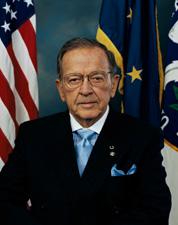
Ted Stevens
Former U.S. Senator from Alaska · 1968–2009 · Republican · Class 2
Ted Stevens represented Alaska in the United States Senate (1968–2009) for the Republican party. The page below collects sourced biographical facts, term history, committee roles, and provenance for Stevens.
Bioguide ID: S000888
Key facts
- Full name
- Ted Stevens
- State
- Alaska
- Party
- Republican
- Senate class
- Class II
- Senate service
- 1968–2009
- First Senate term
- 1968
- Status
- Left office
- Current term ends
- —
- Born
- 1923
- Bioguide ID
- S000888
- Committee assignments
- —
- Dataset version
- 1.20260602
Biographical narrative
949 words · sourced from the Wikipedia REST extract
Ted Stevens was a prominent American politician who served as a U.S. Senator from Alaska for over four decades. A member of the Republican Party, he was known for his long tenure in the Senate, where he played a significant role in shaping legislation and advocating for the interests of his state. Stevens's political career began in the late 1960s, and he remained a key figure in Alaskan and national politics until his departure from the Senate in early 2009.
Early life and career
Ted Stevens was born on November 18, 1923. His early life laid the foundation for his future career in public service and politics. Stevens served in the United States Army Air Forces during World War II, a formative experience that would influence his views and commitment to public service. After the war, he pursued higher education, earning a degree from the University of California, Los Angeles (UCLA). His academic background provided him with the skills necessary for a career in law and politics.
Stevens began his professional career as a lawyer, which further equipped him with the knowledge and experience needed for his future political endeavors. He moved to Alaska in the late 1940s, where he became involved in local politics and community affairs. His commitment to the state was evident as he worked to address the unique challenges faced by Alaskans, particularly in the areas of infrastructure and development.
In the 1960s, Stevens's political aspirations led him to run for the U.S. Senate. He successfully won a seat in 1968, marking the beginning of a lengthy and influential career in the Senate. His election was significant not only for his personal trajectory but also for the representation of Alaska, which had only recently gained statehood in 1959. Stevens's arrival in the Senate coincided with a period of growth and development for Alaska, and he quickly established himself as a key advocate for the state's interests.
Senate tenure
Ted Stevens's Senate career spanned from 1968 until 2009, during which he served a total of seven terms. His lengthy tenure made him one of the longest-serving senators in U.S. history. Throughout his time in the Senate, Stevens was known for his ability to navigate complex political landscapes and build coalitions across party lines. He held various leadership positions and was instrumental in numerous legislative initiatives that affected both Alaska and the nation.
During his time in office, Stevens was a strong proponent of infrastructure development, particularly in relation to transportation and energy projects in Alaska. He recognized the unique geographical challenges of the state and worked diligently to secure federal funding for essential services and infrastructure improvements. His efforts contributed to the expansion of roads, airports, and other critical facilities that enhanced connectivity and accessibility for Alaskans.
Stevens also played a significant role in shaping national policy on issues such as natural resource management, environmental protection, and defense. He was an advocate for the oil and gas industry, which is a vital component of Alaska's economy. His support for energy development was often balanced with a commitment to environmental stewardship, reflecting the complexities of managing Alaska's rich natural resources.
Throughout his Senate career, Stevens faced various challenges, including political opposition and scrutiny. However, he remained a steadfast representative of Alaskan interests and continued to advocate for his constituents. His ability to secure funding for projects in Alaska earned him a reputation as a powerful legislator, and he was often referred to as a "master of the Senate."
Stevens's tenure came to an end in January 2009, following a series of legal challenges and a conviction on corruption charges, which were later overturned. His departure marked the end of an era for Alaska, as he had been a central figure in the state's political landscape for decades.
Legislative focus and committees
Throughout his Senate career, Ted Stevens was involved in a wide range of legislative issues and served on several important committees. His work on committees allowed him to influence policy decisions and advocate for the needs of his constituents effectively. Stevens was known for his expertise in areas such as appropriations, commerce, and defense, which aligned with his interests in infrastructure and economic development.
As a member of the Senate Appropriations Committee, Stevens played a crucial role in determining federal funding allocations. His position allowed him to advocate for significant investments in Alaska, particularly in areas such as transportation, education, and healthcare. Stevens's ability to secure funding for various projects was a hallmark of his legislative approach, and he often emphasized the importance of federal support for state initiatives.
In addition to appropriations, Stevens served on the Senate Commerce Committee, where he focused on issues related to telecommunications, transportation, and energy. His work in this area was particularly relevant to Alaska, as the state's remote location and unique challenges required innovative solutions and federal support. Stevens's commitment to improving communication infrastructure and energy resources was evident in his legislative efforts.
Stevens was also involved in defense-related matters, reflecting Alaska's strategic importance in national security. He advocated for military installations and defense projects in the state, recognizing the economic benefits and job opportunities they provided for Alaskans. His work in this area underscored his understanding of the interconnectedness of military and civilian needs in Alaska.
Throughout his Senate career, Stevens's legislative focus was characterized by a commitment to advancing the interests of Alaska while balancing national priorities. His ability to navigate complex political dynamics and build relationships across party lines contributed to his effectiveness as a legislator. Despite the challenges he faced, Stevens's legacy in the Senate remains significant, particularly in terms of his contributions to Alaska's development and representation on the national stage.
Notable legislation
Sponsored and co-sponsored legislation for Ted Stevens is pending operator curation. The biographical narrative above carries the same provenance trail until per-bill rows are written.
Sources
- [1]https://en.wikipedia.org/wiki/Ted_StevensWikipedia · retrieved 2026-06-02
Notable quotes
Sourced quotes for Ted Stevens are pending operator curation. Narrative-scope provenance remains attached below.
Sources
- [1]https://en.wikipedia.org/wiki/Ted_StevensWikipedia · retrieved 2026-06-02
Key positions
Curated policy positions for Ted Stevens are pending operator review. The biographical narrative above carries the same provenance trail until per-topic positions are written.
Sources
- [1]https://en.wikipedia.org/wiki/Ted_StevensWikipedia · retrieved 2026-06-02
Terms served
- 1968–1973U.S. Senate · Term 1 · Republican · Class II
- 1973–1979U.S. Senate · Term 2 · Republican · Class II
- 1979–1985U.S. Senate · Term 3 · Republican · Class II
- 1985–1991U.S. Senate · Term 4 · Republican · Class II
- 1991–1997U.S. Senate · Term 5 · Republican · Class II
- 1997–2003U.S. Senate · Term 6 · Republican · Class II
- 2003–2009U.S. Senate · Term 7 · Republican · Class II
Sources & provenance
Every attributable claim above carries a per-section [N] marker that resolves to the corresponding URL below. Each entry records the upstream provider, the canonical URL, and the timestamp at which the source was retrieved by the ingest pipeline.
Key facts
- https://bioguide.congress.gov/search/bio/S000888bioguide · retrieved 2026-06-02
- http://stevens.senate.gov/senate.gov · retrieved 2026-06-02
Biographical narrative
- https://en.wikipedia.org/wiki/Ted_Stevenswikipedia · retrieved 2026-06-02
Find your senator
Every U.S. state elects two senators. Browse Alaska’s delegation, the full former-senator roster, or explore the role and term length.
Related on The Candidate
- Preceded by Bob BartlettEarlier holder of the Alaska Class II Senate seat · Democratic.Open
- Succeeded by Mark BegichLater holder of the Alaska Class II Senate seat · Democratic.Open
- Ernest GrueningFormer U.S. Senator from Alaska · DemocraticOpen
- Frank MurkowskiFormer U.S. Senator from Alaska · RepublicanOpen
- Republican PartyFederal candidates and office holders on the Republican line.Open
- Senators from AlaskaEvery former U.S. Senator who has represented Alaska.Open