
Historical · U.S. Senate · Colorado
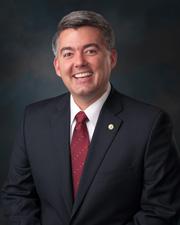
Cory Gardner
Former U.S. Senator from Colorado · 2015–2021 · Republican · Class 2
Cory Gardner represented Colorado in the United States Senate (2015–2021) for the Republican party. The page below collects sourced biographical facts, term history, committee roles, and provenance for Gardner.
Bioguide ID: G000562
Key facts
- Full name
- Cory Gardner
- State
- Colorado
- Party
- Republican
- Senate class
- Class II
- Senate service
- 2015–2021
- First Senate term
- 2015
- Status
- Left office
- Current term ends
- —
- Born
- 1974
- Bioguide ID
- G000562
- Committee assignments
- —
- Dataset version
- 1.20260601-3
Biographical narrative
900 words · sourced from the Wikipedia REST extract
Cory Gardner is a former American politician and attorney who served as a United States senator from Colorado from 2015 until 2021. A member of the Republican Party, Gardner previously represented Colorado's 4th congressional district in the U.S. House of Representatives from 2011 to 2015 and was a member of the Colorado House of Representatives from 2005 to 2011. He is notable for being the last Republican to hold a Senate seat from Colorado as of 2026. Throughout his political career, Gardner was involved in various legislative initiatives and held several committee positions, shaping his contributions to both state and national policies.
Early life and career
Cory Scott Gardner was born on August 22, 1974, in Yuma, Colorado. He is the son of Cindy L. (née Pagel) and John W. Gardner and has a diverse heritage that includes Irish, German, Austrian, and English ancestry. Gardner pursued higher education at Colorado State University, where he graduated summa cum laude with a Bachelor of Arts degree in political science in 1997. During his time at university, he was an active member of the FarmHouse fraternity and made a significant political shift by changing his party affiliation from Democratic to Republican. This change was complemented by an internship at the Colorado State Capitol, which provided him with early exposure to the legislative process.
Following his undergraduate studies, Gardner attended the University of Colorado School of Law, earning his Juris Doctor in 2001. His professional career began in his family's implement business, where he gained practical experience in the agricultural sector. He also served as a spokesman for the National Corn Growers Association, which furthered his understanding of agricultural policy. From 2002 to 2005, Gardner worked as general counsel and legislative director for former U.S. Senator Wayne Allard, where he honed his legal and legislative skills.
Gardner's political career began in earnest when he was appointed to the Colorado House of Representatives in 2005. He subsequently won a full term in the 2006 elections, representing District 63 until 2011. During his tenure in the state legislature, Gardner was known for his fiscal conservatism, advocating for the establishment of a rainy-day fund to safeguard the state against economic downturns. He opposed tax increases and played a role in creating the Colorado Clean Energy Development Authority, which was designed to finance clean energy projects before its repeal in 2012. His committee assignments included the House Education Committee, the House Agriculture and Natural Resources Committee, and the Legislative Council.
Senate tenure
Cory Gardner's ascent to the U.S. Senate began when he won the Republican nomination in 2014 to challenge incumbent Senator Mark Udall. The election was closely contested, with Gardner narrowly defeating Udall in the general election. His victory marked a significant shift in Colorado's political landscape, as he became the first Republican to hold the Senate seat since 2009. Gardner's Senate term commenced in January 2015, and he quickly became involved in various legislative initiatives and party leadership roles.
During his time in the Senate, Gardner served as chair of the National Republican Senatorial Committee from 2017 to 2019. This position placed him in a pivotal role in shaping the Republican Party's strategy for Senate elections across the country. Gardner's tenure was marked by his alignment with President Donald Trump's policies, which he prominently featured in his re-election campaign in 2020. However, his close association with the Trump administration became a focal point of criticism during the campaign.
In the 2020 election, Gardner sought re-election but faced a formidable challenge from Democratic nominee John Hickenlooper, the former governor of Colorado. The campaign was characterized by significant voter mobilization efforts, and Gardner ultimately lost the election by a substantial margin. Following the conclusion of his Senate term on January 3, 2021, Gardner's political career in the Senate came to an end.
Legislative focus and committees
Throughout his Senate tenure, Cory Gardner was a member of several key committees that influenced a wide range of policy areas. He served on the Committee on Commerce, Science, and Transportation, where he participated in subcommittees focusing on aviation safety, communications technology, consumer protection, and scientific research. His role in these committees allowed him to engage with issues related to technology, infrastructure, and public safety.
Gardner was also a member of the Committee on Energy and Natural Resources, where he served as chairman of the Subcommittee on Energy. This position enabled him to address critical energy policy issues, including renewable energy development and resource management. His involvement in the subcommittees related to public lands, forests, and mining further underscored his commitment to addressing environmental and resource management challenges.
In addition to his work on energy and commerce, Gardner served on the Committee on Foreign Relations. His participation in this committee included work on subcommittees focused on the Western Hemisphere, international security, and global women's issues. Gardner's legislative efforts reflected a broad interest in both domestic and international policy matters, demonstrating his engagement with a diverse array of issues affecting Colorado and the nation.
After leaving the Senate, Gardner transitioned to a leadership role in the private sector, becoming the president of NCTA - The Internet and Television Association, which represents cable companies. This position highlights his continued involvement in policy discussions, particularly in the telecommunications and media sectors. His career trajectory illustrates a blend of public service and private sector engagement, reflecting the multifaceted nature of his professional background.
Notable legislation
Sponsored and co-sponsored legislation for Cory Gardner is pending operator curation. The biographical narrative above carries the same provenance trail until per-bill rows are written.
Sources
- [1]https://en.wikipedia.org/wiki/Cory_GardnerWikipedia · retrieved 2026-06-01
Notable quotes
Sourced quotes for Cory Gardner are pending operator curation. Narrative-scope provenance remains attached below.
Sources
- [1]https://en.wikipedia.org/wiki/Cory_GardnerWikipedia · retrieved 2026-06-01
Key positions
Curated policy positions for Cory Gardner are pending operator review. The biographical narrative above carries the same provenance trail until per-topic positions are written.
Sources
- [1]https://en.wikipedia.org/wiki/Cory_GardnerWikipedia · retrieved 2026-06-01
Terms served
- 2011–2013U.S. House · District 4 · Term 1 · Republican
- 2013–2015U.S. House · District 4 · Term 2 · Republican
- 2015–2021U.S. Senate · Term 3 · Republican · Class II
Sources & provenance
Every attributable claim above carries a per-section [N] marker that resolves to the corresponding URL below. Each entry records the upstream provider, the canonical URL, and the timestamp at which the source was retrieved by the ingest pipeline.
Key facts
- https://bioguide.congress.gov/search/bio/G000562bioguide · retrieved 2026-06-01
- https://www.gardner.senate.govsenate.gov · retrieved 2026-06-01
Biographical narrative
- https://en.wikipedia.org/wiki/Cory_Gardnerwikipedia · retrieved 2026-06-01
Find your senator
Every U.S. state elects two senators. Browse Colorado’s delegation, the full former-senator roster, or explore the role and term length.
Related on The Candidate
- Preceded by Mark UdallEarlier holder of the Colorado Class II Senate seat · Democratic.Open
- Alva AdamsFormer U.S. Senator from Colorado · DemocraticOpen
- Ben CampbellFormer U.S. Senator from Colorado · RepublicanOpen
- Charles Hughes Jr.Former U.S. Senator from Colorado · DemocraticOpen
- Charles ThomasFormer U.S. Senator from Colorado · DemocraticOpen
- Republican PartyFederal candidates and office holders on the Republican line.Open