
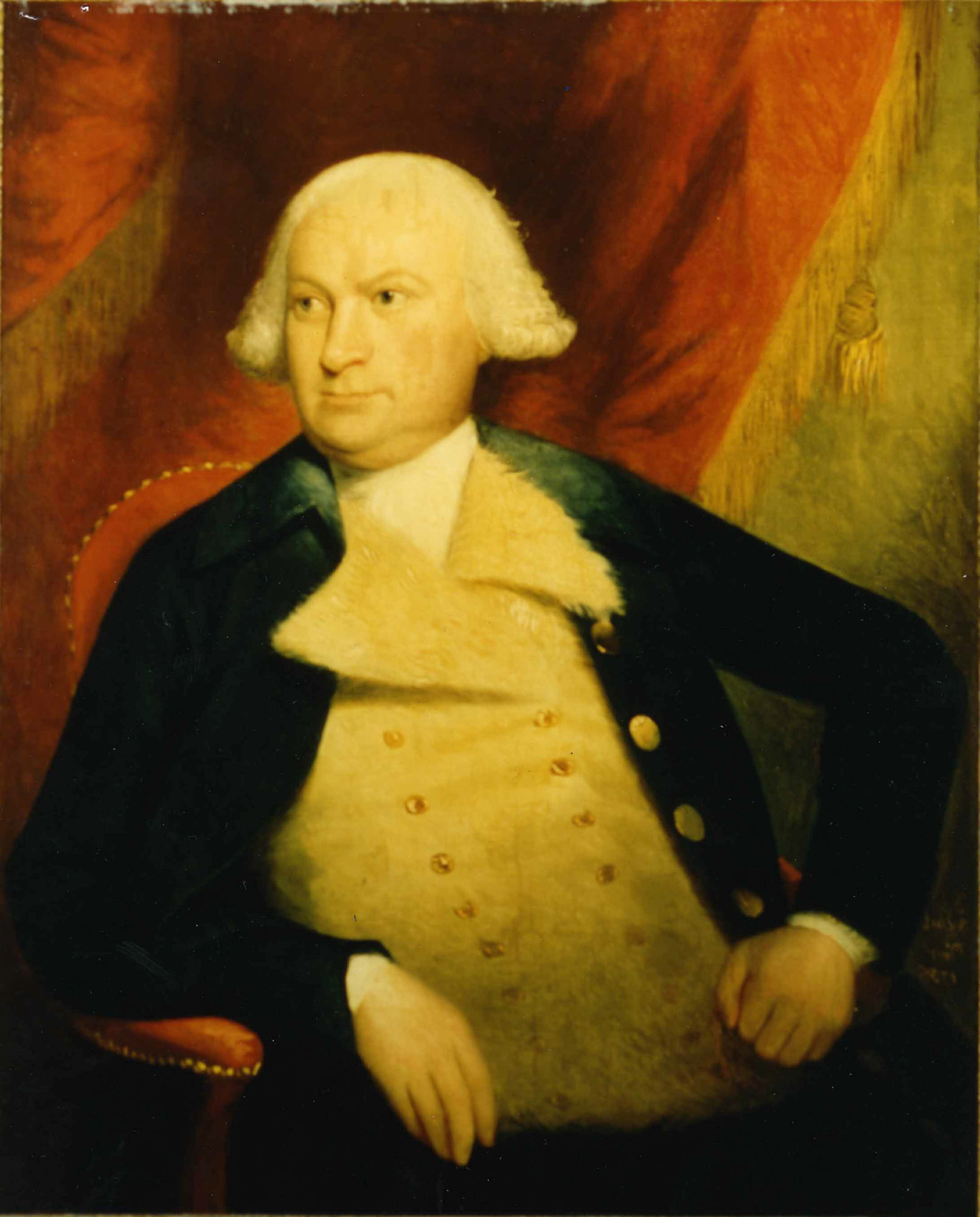
Historical · U.S. Senate · Connecticut
Oliver Ellsworth
Former U.S. Senator from Connecticut · 1789–1797 · Federalist · Class 1
Oliver Ellsworth represented Connecticut in the United States Senate (1789–1797) for the Federalist party. The page below collects sourced biographical facts, term history, committee roles, and provenance for Ellsworth.
Bioguide ID: E000147
Key facts
- Full name
- Oliver Ellsworth
- State
- Connecticut
- Party
- Federalist
- Senate class
- Class I
- Senate service
- 1789–1797
- First Senate term
- 1789
- Status
- Left office
- Current term ends
- —
- Born
- 1745
- Bioguide ID
- E000147
- Committee assignments
- —
- Dataset version
- 1.20260602
Biographical narrative
1,038 words · sourced from the Wikipedia REST extract
Oliver Ellsworth was a prominent American statesman, lawyer, and jurist who played a significant role in the early years of the United States. As a Founding Father, he contributed to the formation of the U.S. Constitution and served as a U.S. Senator from Connecticut. Ellsworth was also the third Chief Justice of the United States, a position he held after his tenure in the Senate. His political career was marked by his affiliation with the Federalist Party and his close association with key figures of the time, including Alexander Hamilton.
Early life and career
Oliver Ellsworth was born on April 29, 1745, in Windsor, Connecticut, to Capt. David Ellsworth and Jemima Leavitt. His family had deep roots in the region, with ancestors residing in Windsor since the mid-17th century. Ellsworth's great-grandfather, Josiah Ellsworth, immigrated from England in 1646 and was known to have served as a juror. His maternal lineage also included notable figures, such as Lieutenant Daniel Pond, who was involved in local governance and military service in early colonial Massachusetts.
Ellsworth's educational journey began at Yale University in 1762, but he transferred to the College of New Jersey, now known as Princeton University, after his second year. While at Princeton, he was instrumental in founding the Cliosophic Society, which remains one of the oldest college debating societies in the United States. He graduated with an A.B. degree in 1766 and was elected to the Phi Beta Kappa honor society after just two years of study.
Following his graduation, Ellsworth pursued a legal career, studying law for four years before being admitted to the bar in 1771. He quickly established a successful law practice in Connecticut. In 1772, he married Abigail Wolcott, who came from a prominent family with connections to the colonial governance of Connecticut. Together, they had nine children, including William Wolcott Ellsworth, who later served in Congress and became Governor of Connecticut, and Henry Leavitt Ellsworth, who held significant roles in the U.S. government and business sectors.
With the onset of the American Revolutionary War, Ellsworth became actively involved in military service. He was commissioned as a captain in the 3rd Connecticut Regiment of the Connecticut militia in 1773 and was promoted to lieutenant colonel by 1774. Ellsworth led cavalry regiments supporting the Continental Army during key military engagements in New York in 1776. His legal expertise and leadership skills soon led to his appointment as the state attorney for Hartford County in 1777.
In the same year, Ellsworth was elected as a delegate to the Continental Congress, where he served intermittently until 1783. During his time in Congress, he participated in various committees, including the Marine Committee and the Board of Treasury, contributing to the governance and military strategies of the fledgling nation.
Senate tenure
Ellsworth's political career took a significant turn when he was elected as one of Connecticut's first U.S. Senators in 1789, following the ratification of the Constitution. He served in the Senate until 1796, representing the Federalist Party, which advocated for a strong central government and commercial interests. During his time in the Senate, Ellsworth was a key figure in shaping early federal legislation and policies.
As a senator, Ellsworth was the chief author of the Judiciary Act of 1789, a landmark piece of legislation that established the federal judiciary system and defined the powers of the Supreme Court. This act allowed the Supreme Court to overturn state court decisions that conflicted with the Constitution, thereby reinforcing the supremacy of federal law. Ellsworth's contributions to the judiciary were pivotal in laying the groundwork for the American legal system.
Ellsworth was also a strong ally of Alexander Hamilton and supported several of Hamilton's financial proposals, including the Funding Act of 1790 and the Bank Bill of 1791. His alignment with Federalist principles guided his legislative actions, as he advocated for policies that promoted economic stability and national unity. Additionally, he played a role in supporting the United States Bill of Rights and the Jay Treaty, which aimed to resolve lingering tensions with Great Britain.
In 1796, after the Senate rejected the nomination of John Rutledge for Chief Justice, President George Washington nominated Ellsworth for the position. He was confirmed by the Senate with overwhelming support and served as Chief Justice until 1800. His tenure on the Supreme Court was marked by a limited number of cases, and he is often remembered for his efforts to discourage the practice of seriatim opinion writing, which involved individual justices issuing separate opinions rather than a unified court opinion.
Legislative focus and committees
Throughout his time in the Senate, Ellsworth's legislative focus included a range of issues pertinent to the early Republic. He was particularly concerned with the establishment and organization of the federal judiciary, recognizing its importance in maintaining the rule of law and protecting individual rights. His authorship of the Judiciary Act of 1789 exemplified his commitment to creating a robust judicial framework that would endure for generations.
Ellsworth's involvement in the Senate also included participation in various committees that shaped national policy. He was active in discussions surrounding fiscal policy, national defense, and foreign relations, reflecting the complexities of governance in the post-Revolutionary War era. His collaboration with other Federalist leaders allowed him to influence significant legislative outcomes that aligned with the party's vision for a strong federal government.
In addition to his legislative work, Ellsworth's diplomatic efforts were notable during his later career. After resigning from the Senate, he served as an envoy to France from 1799 to 1800, where he played a crucial role in negotiating the Convention of 1800, which aimed to resolve conflicts stemming from the Quasi-War between the United States and France. This diplomatic mission underscored his versatility as a statesman and his ability to navigate complex international relations.
Ellsworth's contributions to American governance extended beyond his time in the Senate and the Supreme Court. After his resignation from the judiciary due to health issues, he continued to serve on the Connecticut Governor's Council until his death on November 26, 1807. His legacy as a Founding Father and influential political figure remains significant in the history of the United States, reflecting his dedication to the principles of democracy and the rule of law.
Notable legislation
Sponsored and co-sponsored legislation for Oliver Ellsworth is pending operator curation. The biographical narrative above carries the same provenance trail until per-bill rows are written.
Sources
- [1]https://en.wikipedia.org/wiki/Oliver_EllsworthWikipedia · retrieved 2026-06-02
Notable quotes
Sourced quotes for Oliver Ellsworth are pending operator curation. Narrative-scope provenance remains attached below.
Sources
- [1]https://en.wikipedia.org/wiki/Oliver_EllsworthWikipedia · retrieved 2026-06-02
Key positions
Curated policy positions for Oliver Ellsworth are pending operator review. The biographical narrative above carries the same provenance trail until per-topic positions are written.
Sources
- [1]https://en.wikipedia.org/wiki/Oliver_EllsworthWikipedia · retrieved 2026-06-02
Terms served
- 1789–1791U.S. Senate · Term 1 · Pro-Administration · Class I
- 1791–1797U.S. Senate · Term 2 · Federalist · Class I
Sources & provenance
Every attributable claim above carries a per-section [N] marker that resolves to the corresponding URL below. Each entry records the upstream provider, the canonical URL, and the timestamp at which the source was retrieved by the ingest pipeline.
Key facts
- https://bioguide.congress.gov/search/bio/E000147bioguide · retrieved 2026-06-02
- https://www.govtrack.us/congress/members/403838govtrack · retrieved 2026-06-02
Biographical narrative
- https://en.wikipedia.org/wiki/Oliver_Ellsworthwikipedia · retrieved 2026-06-02
Find your senator
Every U.S. state elects two senators. Browse Connecticut’s delegation, the full former-senator roster, or explore the role and term length.
Related on The Candidate
- Succeeded by Samuel DanaLater holder of the Connecticut Class I Senate seat · Federalist.Open
- Abraham RibicoffFormer U.S. Senator from Connecticut · DemocraticOpen
- Augustine LonerganFormer U.S. Senator from Connecticut · DemocraticOpen
- Brien McMahonFormer U.S. Senator from Connecticut · DemocraticOpen
- Calvin WilleyFormer U.S. Senator from Connecticut · AdamsOpen
- Senators from ConnecticutEvery former U.S. Senator who has represented Connecticut.Open