
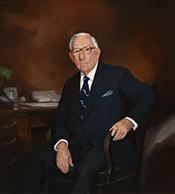
Historical · U.S. Senate · Florida
Claude Pepper
Former U.S. Senator from Florida · 1936–1951 · Democratic · Class 3
Claude Pepper represented Florida in the United States Senate (1936–1951) for the Democratic party. The page below collects sourced biographical facts, term history, committee roles, and provenance for Pepper.
Bioguide ID: P000218
Key facts
- Full name
- Claude Pepper
- State
- Florida
- Party
- Democratic
- Senate class
- Class III
- Senate service
- 1936–1951
- First Senate term
- 1936
- Status
- Left office
- Current term ends
- —
- Born
- 1900
- Bioguide ID
- P000218
- Committee assignments
- —
- Dataset version
- 1.20260602
Biographical narrative
927 words · sourced from the Wikipedia REST extract
Claude Pepper was a prominent American politician who served as a United States Senator from Florida. A member of the Democratic Party, he held office from 1936 until 1951, during which time he became known for his advocacy on issues related to health care, social security, and civil rights. Over his lengthy political career, which included a total of 17 congressional terms, Pepper established himself as a significant figure in American politics, particularly in the context of the New Deal and post-World War II legislation.
Early life and career
Claude Pepper was born on September 8, 1900. His early life laid the foundation for his future career in public service. Growing up in a modest environment, he developed a strong sense of social responsibility and a commitment to improving the lives of others. Pepper pursued higher education, earning a law degree, which equipped him with the skills necessary for a career in politics and public service.
Before entering the Senate, Pepper began his political journey in the U.S. House of Representatives. He was first elected to Congress in 1936, representing Florida's 2nd congressional district. His time in the House was marked by a focus on progressive policies, aligning with the broader Democratic agenda of the time, which was heavily influenced by the New Deal initiatives aimed at economic recovery during the Great Depression. Pepper's early legislative efforts were characterized by a commitment to social welfare programs, reflecting his belief in the government's role in supporting its citizens during times of need.
As a member of the House, Pepper quickly gained a reputation for his dedication to public service and his ability to work across party lines. His experiences in the House provided him with valuable insights into the legislative process and the importance of coalition-building, skills that would prove essential during his subsequent tenure in the Senate.
Senate tenure
Claude Pepper's Senate career began in 1936 when he was elected to represent Florida in the United States Senate. He served in this capacity until January 3, 1951. During his time in the Senate, Pepper was known for his vigorous advocacy on behalf of various social issues, including health care, education, and civil rights. His tenure coincided with a period of significant change in American society, and he played a crucial role in shaping legislation that addressed the needs of a diverse population.
Pepper's approach to governance was deeply rooted in his belief that the federal government should play an active role in improving the quality of life for all Americans. He was particularly focused on issues affecting the elderly and disadvantaged populations, advocating for policies that would enhance social security and access to health care services. His commitment to these causes resonated with many constituents, and he became a leading voice for social justice and equality in the Senate.
Throughout his Senate career, Pepper was involved in numerous legislative initiatives aimed at expanding social welfare programs and ensuring civil rights for all citizens. His work contributed to the broader movement for social reform during the mid-20th century, as the nation grappled with issues of race, poverty, and access to essential services. Pepper's ability to articulate the needs of his constituents and advocate for their interests made him a respected figure in the Senate.
Despite facing challenges and opposition, Pepper remained steadfast in his commitment to his principles. His tenure in the Senate was marked by a willingness to engage in difficult conversations and seek bipartisan solutions to pressing issues. This approach helped him navigate the complexities of the legislative process and build coalitions that advanced his policy goals.
Legislative focus and committees
During his time in the Senate, Claude Pepper served on several key committees that allowed him to influence a wide range of legislative issues. His committee assignments included important roles that aligned with his interests in health care, education, and social welfare. These positions provided him with a platform to advocate for policies that would benefit vulnerable populations and promote social equity.
Pepper's legislative focus was heavily oriented toward enhancing social security and expanding access to health care. He recognized the importance of these issues, particularly in the context of an aging population and the economic challenges faced by many Americans. His efforts in this area included advocating for increased funding for health programs and supporting initiatives that aimed to improve the quality of care available to the elderly and low-income individuals.
In addition to health care, Pepper was also a strong proponent of civil rights. He worked to advance legislation that sought to eliminate racial discrimination and promote equality for all citizens. His commitment to civil rights was evident in his support for various initiatives aimed at dismantling systemic barriers and ensuring that all Americans had access to the same opportunities.
Throughout his Senate career, Pepper's work was characterized by a deep commitment to public service and a belief in the power of government to effect positive change. His legislative efforts were informed by his understanding of the challenges faced by ordinary Americans, and he consistently sought to address these challenges through thoughtful and comprehensive policy solutions.
Claude Pepper's legacy as a U.S. Senator is marked by his dedication to social justice, health care reform, and civil rights. His contributions to American politics during a transformative period in history continue to be recognized for their impact on the lives of many citizens. After serving three terms in the Senate, Pepper's political career transitioned, but his influence on social policy and advocacy for the marginalized remains a significant part of his legacy.
Notable legislation
Sponsored and co-sponsored legislation for Claude Pepper is pending operator curation. The biographical narrative above carries the same provenance trail until per-bill rows are written.
Sources
- [1]https://en.wikipedia.org/wiki/Claude_PepperWikipedia · retrieved 2026-06-02
Notable quotes
Sourced quotes for Claude Pepper are pending operator curation. Narrative-scope provenance remains attached below.
Sources
- [1]https://en.wikipedia.org/wiki/Claude_PepperWikipedia · retrieved 2026-06-02
Key positions
Curated policy positions for Claude Pepper are pending operator review. The biographical narrative above carries the same provenance trail until per-topic positions are written.
Sources
- [1]https://en.wikipedia.org/wiki/Claude_PepperWikipedia · retrieved 2026-06-02
Terms served
- 1936–1939U.S. Senate · Term 1 · Democratic · Class III
- 1939–1945U.S. Senate · Term 2 · Democratic · Class III
- 1945–1951U.S. Senate · Term 3 · Democratic · Class III
- 1963–1965U.S. House · District 3 · Term 4 · Democratic
- 1965–1967U.S. House · District 3 · Term 5 · Democratic
- 1967–1969U.S. House · District 11 · Term 6 · Democratic
- 1969–1971U.S. House · District 11 · Term 7 · Democratic
- 1971–1973U.S. House · District 11 · Term 8 · Democratic
- 1973–1975U.S. House · District 14 · Term 9 · Democratic
- 1975–1977U.S. House · District 14 · Term 10 · Democratic
- 1977–1979U.S. House · District 14 · Term 11 · Democratic
- 1979–1981U.S. House · District 14 · Term 12 · Democratic
- 1981–1983U.S. House · District 14 · Term 13 · Democratic
- 1983–1985U.S. House · District 18 · Term 14 · Democratic
- 1985–1987U.S. House · District 18 · Term 15 · Democratic
- 1987–1989U.S. House · District 18 · Term 16 · Democratic
- 1989–1989U.S. House · District 18 · Term 17 · Democratic
Sources & provenance
Every attributable claim above carries a per-section [N] marker that resolves to the corresponding URL below. Each entry records the upstream provider, the canonical URL, and the timestamp at which the source was retrieved by the ingest pipeline.
Key facts
- https://bioguide.congress.gov/search/bio/P000218bioguide · retrieved 2026-06-02
- https://www.govtrack.us/congress/members/408621govtrack · retrieved 2026-06-02
Biographical narrative
- https://en.wikipedia.org/wiki/Claude_Pepperwikipedia · retrieved 2026-06-02
Find your senator
Every U.S. state elects two senators. Browse Florida’s delegation, the full former-senator roster, or explore the role and term length.
Related on The Candidate
- Preceded by William BryanEarlier holder of the Florida Class III Senate seat · Democratic.Open
- Succeeded by George SmathersLater holder of the Florida Class III Senate seat · Democratic.Open
- Abijah GilbertFormer U.S. Senator from Florida · RepublicanOpen
- Adonijah WelchFormer U.S. Senator from Florida · RepublicanOpen
- Bill NelsonFormer U.S. Senator from Florida · DemocraticOpen
- Bob GrahamFormer U.S. Senator from Florida · DemocraticOpen