
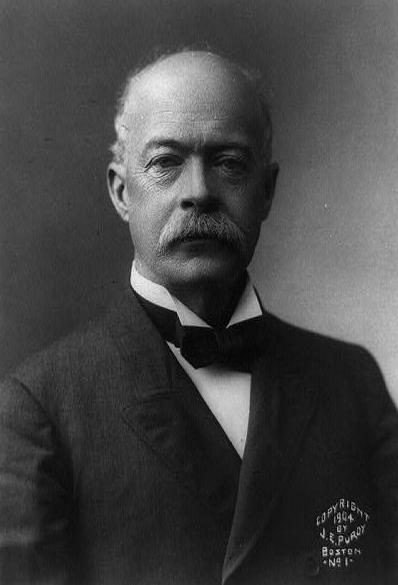
Historical · U.S. Senate · Florida
Stephen Mallory
Former U.S. Senator from Florida · 1897–1907 · Democratic · Class 3
Stephen Mallory represented Florida in the United States Senate (1897–1907) for the Democratic party. The page below collects sourced biographical facts, term history, committee roles, and provenance for Mallory.
Bioguide ID: M000085
Key facts
- Full name
- Stephen Mallory
- State
- Florida
- Party
- Democratic
- Senate class
- Class III
- Senate service
- 1897–1907
- First Senate term
- 1897
- Status
- Left office
- Current term ends
- —
- Born
- 1848
- Bioguide ID
- M000085
- Committee assignments
- —
- Dataset version
- 1.20260602
Biographical narrative
1,047 words · sourced from the Wikipedia REST extract
Stephen Mallory was a prominent U.S. Senator from Florida, serving as a member of the Democratic Party. His political career spanned several decades, during which he held various positions in both state and federal government. Mallory's tenure in the U.S. Senate began in 1897 and concluded with his death in 1907. He was known for his involvement in legislative matters, particularly those concerning corporations and governance within the District of Columbia. His legacy is marked by his familial ties to politics, as he was the son of another U.S. Senator, Stephen Russell Mallory, who also represented Florida.
Early life and career
Stephen Russell Mallory Jr. was born on November 2, 1848, in Columbia, South Carolina. He was the son of Stephen Mallory, a future U.S. senator, and Angela Moreno, who hailed from a wealthy Spanish family based in Pensacola, Florida. The Mallory family returned to Florida shortly after his birth, where his father embarked on a successful political career. This environment likely influenced Mallory's own aspirations in public service.
During the American Civil War, Mallory joined the Confederate Army in the fall of 1864, reflecting the tumultuous times in which he lived. He was appointed as a midshipman in the Confederate Navy in the spring of 1865, serving until the conclusion of the war. Following the conflict, he pursued higher education and graduated from Georgetown College in Washington, D.C., in 1869. His academic journey continued as he took on the role of instructor in Latin and Greek at the same institution until 1871.
After his tenure at Georgetown, Mallory studied law and was admitted to the bar in Louisiana in 1872. He began his legal practice in New Orleans before relocating to Pensacola in 1874, where he continued to build his legal career. His involvement in politics began in earnest when he was elected to the Florida House of Representatives in 1876. He later served in the Florida Senate, first elected in 1880 and then re-elected in 1884. These early political experiences laid the groundwork for his future endeavors at the national level.
Mallory's initial foray into federal politics came when he was elected as a Democrat to the Fifty-second and Fifty-third United States Congresses, serving from March 4, 1891, until March 3, 1895. However, he chose not to seek renomination in 1894, which marked a brief hiatus from his congressional career.
Senate tenure
Stephen Mallory's Senate career began on May 15, 1897, when he was elected to represent Florida in the United States Senate. His election came at a time when the Democratic Party was working to consolidate its influence in the South following the Civil War and Reconstruction. Mallory's political alignment with the Democratic Party positioned him to engage in significant legislative discussions during a period marked by economic growth and social change in the United States.
In 1903, Mallory was appointed to the Senate and subsequently won election to continue serving in that capacity. His time in the Senate was characterized by active participation in various legislative matters, and he was particularly noted for his role as chairman of the Committee on Corporations Organized in the District of Columbia during the Sixtieth United States Congress. This committee was responsible for overseeing the regulation of corporations operating within the nation's capital, a role that underscored Mallory's engagement with issues of governance and corporate oversight.
Throughout his Senate tenure, Mallory was involved in discussions and decisions that shaped the political landscape of the early 20th century. His work contributed to the broader Democratic agenda, which sought to address the needs and concerns of constituents in Florida and across the nation. Mallory's commitment to public service was evident in his legislative activities, as he navigated the complexities of federal governance during a time of significant transformation in American society.
Mallory's time in the Senate came to an end with his death on December 23, 1907, in Pensacola, Florida. His passing marked the conclusion of a notable chapter in Florida's political history, as he was remembered for his contributions to the state and the nation.
Legislative focus and committees
During his time in the Senate, Stephen Mallory's legislative focus encompassed a range of issues pertinent to his constituents and the broader national interest. As a member of the Democratic Party, he aligned himself with policies that aimed to promote economic growth, social welfare, and corporate regulation. His role as chairman of the Committee on Corporations Organized in the District of Columbia was particularly significant, as it placed him at the forefront of discussions regarding the governance of corporations and their impact on society.
The committee's work involved scrutinizing the operations of corporations within the District of Columbia, ensuring that they adhered to legal standards and operated in a manner that served the public interest. Mallory's leadership in this capacity highlighted his commitment to maintaining oversight and accountability in corporate practices, reflecting the concerns of many Americans during a time when industrialization and corporate power were on the rise.
In addition to his work on corporate governance, Mallory's legislative agenda likely included a variety of issues relevant to Florida and the South. This may have encompassed matters related to agriculture, infrastructure, and civil rights, as these were pressing topics during his tenure. While specific legislative achievements are not detailed in the available records, it is clear that Mallory's contributions to the Senate were shaped by the political and social dynamics of his time.
Stephen Mallory's legacy is further underscored by his familial connections to politics, as he was the son of a U.S. senator. This lineage may have influenced his political aspirations and provided him with a unique perspective on the responsibilities and challenges of public service. His burial in St. Michael's Cemetery in Pensacola serves as a reminder of his ties to the community he represented and the impact he had on Florida's political landscape.
In summary, Stephen Mallory's life and career reflect the complexities of American politics in the late 19th and early 20th centuries. His experiences as a soldier, educator, lawyer, and legislator illustrate a commitment to public service that spanned several decades. Through his work in the Senate, he contributed to the ongoing dialogue about governance, corporate regulation, and the role of the federal government in addressing the needs of its citizens.
Notable legislation
Sponsored and co-sponsored legislation for Stephen Mallory is pending operator curation. The biographical narrative above carries the same provenance trail until per-bill rows are written.
Sources
- [1]https://en.wikipedia.org/wiki/Stephen_Mallory_IIWikipedia · retrieved 2026-06-02
Notable quotes
Sourced quotes for Stephen Mallory are pending operator curation. Narrative-scope provenance remains attached below.
Sources
- [1]https://en.wikipedia.org/wiki/Stephen_Mallory_IIWikipedia · retrieved 2026-06-02
Key positions
Curated policy positions for Stephen Mallory are pending operator review. The biographical narrative above carries the same provenance trail until per-topic positions are written.
Sources
- [1]https://en.wikipedia.org/wiki/Stephen_Mallory_IIWikipedia · retrieved 2026-06-02
Terms served
- 1891–1893U.S. House · District 1 · Term 1 · Democratic
- 1893–1895U.S. House · District 1 · Term 2 · Democratic
- 1897–1903U.S. Senate · Term 3 · Democratic · Class III
- 1903–1907U.S. Senate · Term 4 · Democratic · Class III
Sources & provenance
Every attributable claim above carries a per-section [N] marker that resolves to the corresponding URL below. Each entry records the upstream provider, the canonical URL, and the timestamp at which the source was retrieved by the ingest pipeline.
Key facts
- https://bioguide.congress.gov/search/bio/M000085bioguide · retrieved 2026-06-02
- https://www.govtrack.us/congress/members/407111govtrack · retrieved 2026-06-02
Biographical narrative
- https://en.wikipedia.org/wiki/Stephen_Mallory_IIwikipedia · retrieved 2026-06-02
Find your senator
Every U.S. state elects two senators. Browse Florida’s delegation, the full former-senator roster, or explore the role and term length.
Related on The Candidate
- Preceded by Wilkinson CallEarlier holder of the Florida Class III Senate seat · Democratic.Open
- Succeeded by William BryanLater holder of the Florida Class III Senate seat · Democratic.Open
- Abijah GilbertFormer U.S. Senator from Florida · RepublicanOpen
- Adonijah WelchFormer U.S. Senator from Florida · RepublicanOpen
- Bill NelsonFormer U.S. Senator from Florida · DemocraticOpen
- Bob GrahamFormer U.S. Senator from Florida · DemocraticOpen