
Historical · U.S. Senate · Georgia
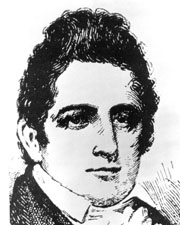
Freeman Walker
Former U.S. Senator from Georgia · 1819–1821 · Republican · Class 2
Freeman Walker represented Georgia in the United States Senate (1819–1821) for the Republican party. The page below collects sourced biographical facts, term history, committee roles, and provenance for Walker.
Bioguide ID: W000052
Key facts
- Full name
- Freeman Walker
- State
- Georgia
- Party
- Republican
- Senate class
- Class II
- Senate service
- 1819–1821
- First Senate term
- 1819
- Status
- Left office
- Current term ends
- —
- Born
- 1780
- Bioguide ID
- W000052
- Committee assignments
- —
- Dataset version
- 1.20260602
Biographical narrative
855 words · sourced from the Wikipedia REST extract
Freeman Walker was a prominent political figure in early 19th-century America, serving as a United States senator from Georgia. A member of the Republican Party, Walker's political career was marked by his involvement in state and national governance during a formative period in U.S. history. His tenure in the Senate, although brief, was part of a larger trajectory that included significant local leadership roles, including serving as mayor of Augusta, Georgia. Walker's legacy continues to be recognized in Georgia, where Walker County is named in his honor.
Early life and career
Freeman Walker was born on October 25, 1780, in Charles City, Virginia. His early education took place in common schools, which provided him with a foundational knowledge that would later support his legal career. In 1797, at the age of 17, Walker relocated to Augusta, Georgia, a decision that would shape his future both personally and professionally.
After settling in Augusta, Walker pursued the study of law, a field that would become his primary vocation. He was admitted to the bar in 1803, marking the beginning of his legal practice in Augusta. His legal career coincided with a growing interest in public service and politics. Walker's commitment to his community was evident as he became involved in local governance. He served as a member of the Georgia House of Representatives from 1807 to 1811, where he participated in the legislative process at the state level.
In addition to his role in the House of Representatives, Walker's leadership capabilities were recognized when he was elected mayor of Augusta in 1818 and again in 1819. His tenure as mayor allowed him to influence local policies and initiatives, further establishing his reputation as a dedicated public servant. These experiences in local government provided Walker with valuable insights into the needs and concerns of his constituents, which would later inform his work at the national level.
Senate tenure
Freeman Walker's entry into national politics came when he was elected to the United States Senate as a member of the Democratic-Republican Party. He was chosen to fill the vacancy left by the resignation of John Forsyth. Walker's Senate term began on November 6, 1819, and he served until August 6, 1821, when he resigned from his position. During his time in the Senate, Walker was involved in the legislative discussions and decisions that shaped the early years of the United States as it navigated various domestic and foreign challenges.
Although Walker's Senate career was relatively short, it occurred during a period of significant political and social change in the nation. The early 19th century was marked by debates over issues such as states' rights, territorial expansion, and the balance of power between the federal government and the states. Walker's participation in the Senate placed him at the center of these critical discussions, contributing to the shaping of policies that would have lasting implications for the country.
Following his resignation from the Senate, Walker continued to engage in public service. He returned to local governance and was elected mayor of Augusta once again in 1823. This return to local leadership underscored his ongoing commitment to the community he had served for many years.
Legislative focus and committees
During his time in the Senate, Freeman Walker was involved in various legislative matters, though specific details about his committee assignments and the bills he supported are not extensively documented. The political landscape of the time was characterized by a focus on issues such as economic development, infrastructure, and the expansion of the United States' territory. Senators of this era often engaged in discussions related to these topics, reflecting the priorities of their constituents and the nation as a whole.
Walker’s background as a lawyer and his experience in local governance likely informed his perspectives on legislative matters. His legal training would have provided him with a strong understanding of the implications of legislation and the importance of effective governance. As a senator, he would have been expected to advocate for the interests of Georgia, addressing the needs of his constituents while balancing national concerns.
Although Walker's legislative contributions may not be extensively recorded, his role as a senator was part of a broader movement in which Southern states sought to assert their interests in the federal government. The early 19th century was a time when regional identities were becoming increasingly pronounced, and Walker's position allowed him to represent the interests of Georgia at a national level.
Freeman Walker passed away on September 23, 1827, in Augusta, Georgia. He was interred in the Walker family cemetery, leaving behind a legacy that included his contributions to both local and national governance. His son, William H.T. Walker, would later gain recognition as a Confederate major general during the American Civil War, further embedding the Walker family in the historical narrative of the South.
In recognition of his contributions, Walker County, Georgia, was named in his honor, serving as a lasting tribute to his impact on the state and its governance. Walker's life and career reflect the complexities of early American politics and the evolving role of public servants in shaping the nation.
Notable legislation
Sponsored and co-sponsored legislation for Freeman Walker is pending operator curation. The biographical narrative above carries the same provenance trail until per-bill rows are written.
Sources
- [1]https://en.wikipedia.org/wiki/Freeman_WalkerWikipedia · retrieved 2026-06-02
Notable quotes
Sourced quotes for Freeman Walker are pending operator curation. Narrative-scope provenance remains attached below.
Sources
- [1]https://en.wikipedia.org/wiki/Freeman_WalkerWikipedia · retrieved 2026-06-02
Key positions
Curated policy positions for Freeman Walker are pending operator review. The biographical narrative above carries the same provenance trail until per-topic positions are written.
Sources
- [1]https://en.wikipedia.org/wiki/Freeman_WalkerWikipedia · retrieved 2026-06-02
Terms served
- 1819–1821U.S. Senate · Term 1 · Republican · Class II
Sources & provenance
Every attributable claim above carries a per-section [N] marker that resolves to the corresponding URL below. Each entry records the upstream provider, the canonical URL, and the timestamp at which the source was retrieved by the ingest pipeline.
Key facts
- https://bioguide.congress.gov/search/bio/W000052bioguide · retrieved 2026-06-02
- https://www.govtrack.us/congress/members/411231govtrack · retrieved 2026-06-02
Biographical narrative
- https://en.wikipedia.org/wiki/Freeman_Walkerwikipedia · retrieved 2026-06-02
Find your senator
Every U.S. state elects two senators. Browse Georgia’s delegation, the full former-senator roster, or explore the role and term length.
Related on The Candidate
- Preceded by William BibbEarlier holder of the Georgia Class II Senate seat · Republican.Open
- Succeeded by Nicholas WareLater holder of the Georgia Class II Senate seat.Open
- Abraham BaldwinFormer U.S. Senator from Georgia · RepublicanOpen
- Alexander ClayFormer U.S. Senator from Georgia · DemocraticOpen
- Alfred ColquittFormer U.S. Senator from Georgia · DemocraticOpen
- Alfred CuthbertFormer U.S. Senator from Georgia · DemocraticOpen