
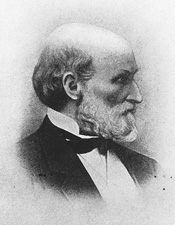
Historical · U.S. Senate · Georgia
John King
Former U.S. Senator from Georgia · 1833–1837 · Democratic · Class 2
John King represented Georgia in the United States Senate (1833–1837) for the Democratic party. The page below collects sourced biographical facts, term history, committee roles, and provenance for King.
Bioguide ID: K000207
Key facts
- Full name
- John King
- State
- Georgia
- Party
- Democratic
- Senate class
- Class II
- Senate service
- 1833–1837
- First Senate term
- 1833
- Status
- Left office
- Current term ends
- —
- Born
- 1799
- Bioguide ID
- K000207
- Committee assignments
- —
- Dataset version
- 1.20260602
Biographical narrative
815 words · sourced from the Wikipedia REST extract
John King was a prominent American attorney, planter, and politician who served as a United States Senator from Georgia during the 1830s. A member of the Democratic Party, he held office from 1833 until his resignation in 1837. Following his political career, King became a successful businessman, notably presiding over the Georgia Railroad and Banking Company for several decades. His legacy is marked by his significant landholdings and involvement in the cotton industry, as well as his contributions to the development of Georgia's infrastructure.
Early life and career
John King was born on April 3, 1799, in Glasgow, Kentucky. His family relocated to Bedford County, Tennessee, shortly after his birth, and eventually settled in Augusta, Georgia, in 1815. King pursued his education at the Academy of Richmond County in Augusta, where he completed his studies before embarking on a legal career. He studied law and was admitted to the bar in 1819, beginning his practice in Augusta.
In addition to his legal career, King was actively involved in the political landscape of Georgia. He participated in the state constitutional conventions in 1830 and 1833, which were significant events that shaped the governance of Georgia. His legal expertise and engagement in state politics led to his appointment as a judge of the Court of Common Pleas in 1831. This position further established his reputation as a respected figure in the legal community.
King's personal life included his marriage to Mary Louise Woodward, the daughter of John Woodward and Harriet Bixby. Together, they had at least three children, including two daughters and a son. His family connections and social standing contributed to his prominence in Georgia society.
In the early 1820s, King expanded his horizons by studying in Europe for a period of two years. Upon his return, he continued his legal practice in Augusta until 1829. His growing influence and connections ultimately led to his election to the United States Senate.
Senate tenure
John King was elected to the United States Senate in 1833 as a Jacksonian, a precursor to the modern Democratic Party, filling the vacancy left by the resignation of George M. Troup. His term began on November 21, 1833, and he was reelected in 1834, serving until November 1, 1837. During his time in the Senate, King was involved in various legislative matters and debates that reflected the political climate of the era.
King's tenure in the Senate coincided with a period of economic turmoil in the United States, particularly the financial panic of 1837. He attributed the economic crisis to the policies of President Andrew Jackson, particularly the removal of federal deposits from the Bank of the United States and the implementation of the Specie Circular, which mandated that federal land purchases be made in gold or silver rather than bank notes. This economic backdrop influenced King's perspectives and actions during his time in office.
Despite his active engagement in the Senate, King chose to resign before the end of his term in 1837. His decision was motivated by a desire to focus on his plantation and business interests, marking a transition from public service to private enterprise.
Legislative focus and committees
During his time in the Senate, John King was involved in various legislative issues, although specific details regarding his committee assignments and legislative initiatives are not extensively documented. His political alignment as a Jacksonian suggests that he was likely supportive of policies that aligned with the Democratic Party's principles at the time, including issues related to states' rights and agrarian interests.
King's resignation from the Senate in 1837 allowed him to concentrate on his business ventures, particularly in the railroad and banking sectors. He became the president of the Georgia Railroad and Banking Company, a position he held from 1841 until 1878. Under his leadership, the company played a significant role in the development of Georgia's transportation infrastructure, facilitating the movement of goods and people throughout the state.
In addition to his business endeavors, King was also an active planter and expanded his agricultural operations significantly. By the 1860s, he had accumulated extensive landholdings and was involved in cotton manufacturing. His plantation activities were supported by a substantial workforce of enslaved individuals, reflecting the economic practices of the time. The number of enslaved people he owned increased significantly during his lifetime, indicative of the growing scale of his agricultural operations.
King's contributions to both the political and economic landscapes of Georgia left a lasting impact. His involvement in the railroad and banking industries helped shape the state's economic development in the years following his Senate tenure. He remained a prominent figure in Georgia until his death on March 19, 1888, in Summerville, Georgia. He was interred in St. Paul's Churchyard in Augusta, leaving behind a legacy that includes the city of Kingston, Georgia, named in his honor, as well as Pendleton King Park, named after his grandson.
Notable legislation
Sponsored and co-sponsored legislation for John King is pending operator curation. The biographical narrative above carries the same provenance trail until per-bill rows are written.
Sources
- [1]https://en.wikipedia.org/wiki/John_Pendleton_KingWikipedia · retrieved 2026-06-02
Notable quotes
Sourced quotes for John King are pending operator curation. Narrative-scope provenance remains attached below.
Sources
- [1]https://en.wikipedia.org/wiki/John_Pendleton_KingWikipedia · retrieved 2026-06-02
Key positions
Curated policy positions for John King are pending operator review. The biographical narrative above carries the same provenance trail until per-topic positions are written.
Sources
- [1]https://en.wikipedia.org/wiki/John_Pendleton_KingWikipedia · retrieved 2026-06-02
Terms served
- 1833–1835U.S. Senate · Term 1 · Jackson · Class II
- 1835–1837U.S. Senate · Term 2 · Democratic · Class II
Sources & provenance
Every attributable claim above carries a per-section [N] marker that resolves to the corresponding URL below. Each entry records the upstream provider, the canonical URL, and the timestamp at which the source was retrieved by the ingest pipeline.
Key facts
- https://bioguide.congress.gov/search/bio/K000207bioguide · retrieved 2026-06-02
- https://www.govtrack.us/congress/members/406368govtrack · retrieved 2026-06-02
Biographical narrative
- https://en.wikipedia.org/wiki/John_Pendleton_Kingwikipedia · retrieved 2026-06-02
Find your senator
Every U.S. state elects two senators. Browse Georgia’s delegation, the full former-senator roster, or explore the role and term length.
Related on The Candidate
- Preceded by George TroupEarlier holder of the Georgia Class II Senate seat · Jackson.Open
- Succeeded by Wilson LumpkinLater holder of the Georgia Class II Senate seat · Democratic.Open
- Abraham BaldwinFormer U.S. Senator from Georgia · RepublicanOpen
- Alexander ClayFormer U.S. Senator from Georgia · DemocraticOpen
- Alfred ColquittFormer U.S. Senator from Georgia · DemocraticOpen
- Alfred CuthbertFormer U.S. Senator from Georgia · DemocraticOpen