
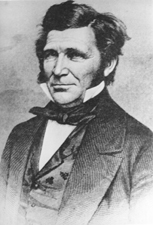
Historical · U.S. Senate · Georgia
William Dawson
Former U.S. Senator from Georgia · 1849–1855 · Whig · Class 3
William Dawson represented Georgia in the United States Senate (1849–1855) for the Whig party. The page below collects sourced biographical facts, term history, committee roles, and provenance for Dawson.
Bioguide ID: D000156
Key facts
- Full name
- William Dawson
- State
- Georgia
- Party
- Whig
- Senate class
- Class III
- Senate service
- 1849–1855
- First Senate term
- 1849
- Status
- Left office
- Current term ends
- —
- Born
- 1798
- Bioguide ID
- D000156
- Committee assignments
- —
- Dataset version
- 1.20260602
Biographical narrative
942 words · sourced from the Wikipedia REST extract
William Dawson was a prominent lawyer, judge, politician, and soldier from Georgia who served as a U.S. Senator from 1849 to 1855. A member of the Whig Party, Dawson's political career was marked by his involvement in various legislative roles and his commitment to issues of his time. He was known for his legal acumen, having established a successful law practice, and for his contributions to both state and national politics, including his participation in military conflicts and his leadership within the Freemason community.
Early life and career
William Dawson was born on January 4, 1798, in Greensboro, Greene County, Georgia, to George Dawson, Sr. and Katie Ruth Marston Skidmore. He received his early education from the Rev. Dr. Cumming and later attended the county academy in Greensboro. Dawson graduated from Franklin College in Athens, Georgia, in 1816, at the age of eighteen. Following his graduation, he pursued a legal education, initially studying under the Hon. Thomas W. Cobb in Lexington, Georgia, before attending the Litchfield Law School in Connecticut, where he was trained by judges Tapping Reeve and James Gould. He was admitted to the bar in 1818.
After establishing his law practice in Greensboro, Dawson gained a reputation as a skilled jury lawyer, particularly noted for his ability to resolve cases amicably outside of court. His legal career was complemented by his personal life; he married Henrietta M. Wingfield in 1819, and the couple had eight children. Following the death of his first wife in 1850, Dawson remarried in 1854 to Eliza M. Williams from Memphis, Tennessee. His commitment to education was evident when he was elected as one of the vice presidents of the Alumni Society of the University of Georgia during its inaugural meeting in 1834.
Dawson's political career began in earnest when he was elected as Clerk of the Georgia House of Representatives in 1821, a position he held for twelve years. During this time, he also compiled "Dawson's Digest of Laws of Georgia," which was published in 1831. His political involvement extended to the state senate, where he served from 1834 to 1835. In 1836, he took on a military role as Captain of Volunteers under General Winfield Scott during the Creek and Seminole Indian War in Florida, showcasing his commitment to public service.
Senate tenure
Dawson's congressional career began when he was elected as a States' Rights candidate to the United States House of Representatives for the 24th Congress in a special election held to fill the vacancy left by the death of General John E. Coffee. He took office on December 26, 1836, and was subsequently re-elected as a Whig to the 25th, 26th, and 27th Congresses, serving until November 13, 1841. During his time in the House, Dawson chaired several committees, including the Committee on Mileage, the Committee on Claims, and the Committee on Military Affairs.
In 1841, Dawson ran for Governor of Georgia as a Whig candidate but was defeated by Charles James McDonald. He believed that this loss was indicative of public disapproval of his congressional actions, particularly a vote he cast earlier that year to impose taxes on coffee and tea. Following his gubernatorial defeat, Dawson resigned from Congress.
Dawson's political career continued to evolve when he was elected by the state legislature in November 1847 as the Whig candidate for Georgia's Class 3 seat in the United States Senate. He served in the Senate from March 4, 1849, until March 3, 1855, during which time he participated in significant legislative discussions, including those surrounding the compromises that aimed to preserve the Union in 1850. His leadership was recognized when he chaired the Committee on Private Land Claims during the 32nd Congress. Additionally, he presided over the Southern convention held in Memphis in 1853, further solidifying his role as a key figure in Southern politics.
Legislative focus and committees
Throughout his Senate tenure, Dawson was involved in various legislative matters that reflected the political climate of the time. He was a supporter of the compromises that sought to maintain the Union amid growing tensions over issues such as slavery and states' rights. His involvement in these discussions was indicative of his broader commitment to finding solutions that would prevent division within the country.
Dawson's committee work included significant roles that allowed him to influence legislation directly. As chair of the Committee on Private Land Claims, he addressed issues related to land ownership and rights, which were particularly pertinent in the context of westward expansion and the settlement of new territories. His leadership in this area demonstrated his understanding of the complexities surrounding land claims and the importance of equitable resolutions.
In addition to his legislative responsibilities, Dawson was active in the Freemason community. He was initiated into the Scottish Rite Freemasonry at the "San Marino" Lodge No. 34 in Greensboro, Georgia, and was elected Grand Master of the Grand Lodge of Free and Accepted Masons in Georgia in 1843, a position he held until his death. His involvement in Freemasonry extended to local lodges, which were named in his honor, reflecting his influence and standing within the community.
Dawson's death occurred on May 5, 1856, in Greensboro, where he was laid to rest with Masonic rites following a service at the local Presbyterian church. His legacy is preserved in various ways, including the naming of Dawson County and its county seat, Dawsonville, in his honor. These designations serve as a testament to his contributions to Georgia and the nation. His life and career exemplify the multifaceted roles that individuals played in shaping the political landscape of the United States during a time of significant change and challenge.
Notable legislation
Sponsored and co-sponsored legislation for William Dawson is pending operator curation. The biographical narrative above carries the same provenance trail until per-bill rows are written.
Sources
- [1]https://en.wikipedia.org/wiki/William_C._DawsonWikipedia · retrieved 2026-06-02
Notable quotes
Sourced quotes for William Dawson are pending operator curation. Narrative-scope provenance remains attached below.
Sources
- [1]https://en.wikipedia.org/wiki/William_C._DawsonWikipedia · retrieved 2026-06-02
Key positions
Curated policy positions for William Dawson are pending operator review. The biographical narrative above carries the same provenance trail until per-topic positions are written.
Sources
- [1]https://en.wikipedia.org/wiki/William_C._DawsonWikipedia · retrieved 2026-06-02
Terms served
- 1835–1837U.S. House · District -1 · Term 1 · Whig
- 1837–1839U.S. House · District -1 · Term 2 · Whig
- 1839–1841U.S. House · District -1 · Term 3 · Whig
- 1841–1843U.S. House · District -1 · Term 4 · Whig
- 1849–1855U.S. Senate · Term 5 · Whig · Class III
Sources & provenance
Every attributable claim above carries a per-section [N] marker that resolves to the corresponding URL below. Each entry records the upstream provider, the canonical URL, and the timestamp at which the source was retrieved by the ingest pipeline.
Key facts
- https://bioguide.congress.gov/search/bio/D000156bioguide · retrieved 2026-06-02
- https://www.govtrack.us/congress/members/403289govtrack · retrieved 2026-06-02
Biographical narrative
- https://en.wikipedia.org/wiki/William_C._Dawsonwikipedia · retrieved 2026-06-02
Find your senator
Every U.S. state elects two senators. Browse Georgia’s delegation, the full former-senator roster, or explore the role and term length.
Related on The Candidate
- Preceded by Herschel JohnsonEarlier holder of the Georgia Class III Senate seat · Democratic.Open
- Succeeded by Alfred Iverson Sr.Later holder of the Georgia Class III Senate seat · Democratic.Open
- Abraham BaldwinFormer U.S. Senator from Georgia · RepublicanOpen
- Alexander ClayFormer U.S. Senator from Georgia · DemocraticOpen
- Alfred ColquittFormer U.S. Senator from Georgia · DemocraticOpen
- Alfred CuthbertFormer U.S. Senator from Georgia · DemocraticOpen