
Historical · U.S. Senate · Iowa
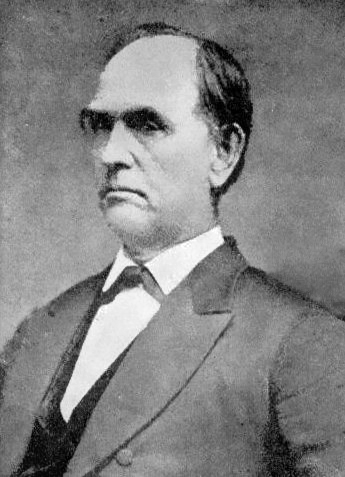
Augustus Dodge
Former U.S. Senator from Iowa · 1848–1855 · Democratic · Class 3
Augustus Dodge represented Iowa in the United States Senate (1848–1855) for the Democratic party. The page below collects sourced biographical facts, term history, committee roles, and provenance for Dodge.
Bioguide ID: D000394
Key facts
- Full name
- Augustus Dodge
- State
- Iowa
- Party
- Democratic
- Senate class
- Class III
- Senate service
- 1848–1855
- First Senate term
- 1848
- Status
- Left office
- Current term ends
- —
- Born
- 1812
- Bioguide ID
- D000394
- Committee assignments
- —
- Dataset version
- 1.20260602
Biographical narrative
1,049 words · sourced from the Wikipedia REST extract
Augustus Dodge was a prominent American politician in the mid-19th century, serving as a U.S. Senator from Iowa and holding various significant roles in government. A member of the Democratic Party, Dodge was one of the first senators to represent Iowa after it achieved statehood. His political career included serving as a delegate to the U.S. House of Representatives for the Iowa Territory prior to its statehood, and later, he was appointed as a minister to Spain. Dodge's legacy is marked by his contributions to the formation of Iowa's political landscape and his involvement in key legislative initiatives during a transformative period in American history.
Early life and career
Augustus Caesar Dodge was born on January 2, 1812, in what is now Ste. Genevieve, Missouri, which was then part of the Louisiana Territory. He was born into a politically active family; his father, Henry Dodge, would later serve as a U.S. senator from Wisconsin. Augustus was largely self-educated and moved to Illinois in 1827, where he settled in Galena. In Galena, he worked in various capacities in his father's lead mines, gaining valuable experience that would later inform his political career.
Dodge's early involvement in military service included participation in the Black Hawk War and other conflicts involving Native American tribes. His experiences during these military engagements likely influenced his views on territorial expansion and governance. In 1837, he relocated to Burlington, Iowa, which was then part of the Wisconsin Territory. There, he served as the register of the land office until 1840, a position that provided him with insights into land management and the burgeoning settlement of the region.
The creation of the Iowa Territory in 1838 marked a significant turning point in Dodge's political career. Following the vacancy of the delegate position to the U.S. House of Representatives in 1840, Dodge was elected to fill the role. He served as a delegate in the Twenty-sixth United States Congress and was subsequently re-elected for three additional terms, serving until Iowa achieved statehood in December 1846. His tenure as a delegate was characterized by his advocacy for the interests of the Iowa Territory, laying the groundwork for his future political endeavors.
Senate tenure
After Iowa became a state, Dodge was elected as one of its first two U.S. senators in 1848, alongside George Wallace Jones. The initial selection of senators was complicated by a lack of consensus within the Iowa General Assembly, which struggled to reach the necessary majority for any candidate. However, following the 1848 elections, the Democratic Party gained a stronger foothold in the legislature, facilitating Dodge's election. He was initially assigned a shorter term, which was set to expire in 1849, but he was re-elected that same year to a full six-year term.
During his time in the Senate, Dodge held several important committee positions. He served as chairman of the Committee on Audit and Control of the Contingent Expenses during the Thirty-first and Thirty-second Congresses, and he was involved with the Committee on Pensions, the Committee on Revolutionary Claims, and the Committee on Public Lands. His committee work reflected his engagement with various aspects of governance, including financial oversight and land management, which were particularly relevant to the rapidly expanding western territories.
One of the notable legislative actions during Dodge's Senate career was his introduction of a bill on December 14, 1853, aimed at organizing the new territory of Nebraska. This initiative was part of a larger legislative effort that culminated in the Kansas-Nebraska Act, which Dodge supported. This act was significant in the context of the national debate over slavery and territorial expansion, as it allowed for the possibility of slavery in territories that had been previously designated as free.
As Dodge's second Senate term approached its conclusion in 1854, the political landscape began to shift. The Iowa General Assembly opted to elect James Harlan, a member of the Free Soil Party and future Republican, instead of Dodge. Although Dodge was favored by the Democratic legislators, the party's influence had waned, leading to a contested election. In a bid to consolidate Democratic support, Dodge withdrew from the race after multiple ballots, marking the end of his Senate career on February 22, 1855. Following his departure from the Senate, President Franklin Pierce appointed him as the U.S. minister to Spain, a position he held until 1859.
Legislative focus and committees
Throughout his congressional career, Augustus Dodge demonstrated a commitment to the interests of his constituents and the broader goals of the Democratic Party. His legislative focus encompassed issues pertinent to the development of the Iowa Territory and the newly established state of Iowa. Dodge's work on various committees allowed him to influence key areas of governance, particularly in relation to land management, veteran affairs, and financial oversight.
As a senator, Dodge's involvement in the Committee on Public Lands was particularly relevant given the importance of land distribution and settlement in the context of westward expansion. His role in this committee underscored his dedication to facilitating the growth of Iowa and ensuring that land policies were favorable to settlers and the state's economic development. Additionally, his chairmanship of the Committee on Audit and Control of the Contingent Expenses highlighted his focus on fiscal responsibility and government accountability.
Dodge's legislative efforts were also reflective of the broader national debates of the era, particularly regarding the expansion of slavery into new territories. His support for the Kansas-Nebraska Act, which allowed for the possibility of slavery in territories that were previously free, positioned him within a contentious political landscape that would ultimately contribute to the sectional tensions leading up to the Civil War.
In summary, Augustus Dodge's political career was marked by significant contributions to the early governance of Iowa and the shaping of legislative policies during a pivotal time in American history. His roles as a delegate, senator, and minister showcased his commitment to public service and his active participation in the evolving political landscape of the United States. After leaving the Senate, Dodge continued to engage in public life, including an unsuccessful bid for the governorship of Iowa and serving as mayor of Burlington, Iowa. He passed away on November 20, 1883, leaving behind a legacy that includes Dodge County, Nebraska, and the Augustus Caesar Dodge House, which is recognized for its historical significance.
Notable legislation
Sponsored and co-sponsored legislation for Augustus Dodge is pending operator curation. The biographical narrative above carries the same provenance trail until per-bill rows are written.
Sources
- [1]https://en.wikipedia.org/wiki/Augustus_C._DodgeWikipedia · retrieved 2026-06-02
Notable quotes
Sourced quotes for Augustus Dodge are pending operator curation. Narrative-scope provenance remains attached below.
Sources
- [1]https://en.wikipedia.org/wiki/Augustus_C._DodgeWikipedia · retrieved 2026-06-02
Key positions
Curated policy positions for Augustus Dodge are pending operator review. The biographical narrative above carries the same provenance trail until per-topic positions are written.
Sources
- [1]https://en.wikipedia.org/wiki/Augustus_C._DodgeWikipedia · retrieved 2026-06-02
Terms served
- 1840–1841U.S. House · District 0 · Term 1 · Democratic
- 1841–1843U.S. House · District 0 · Term 2 · Democratic
- 1843–1845U.S. House · District 0 · Term 3 · Democratic
- 1845–1846U.S. House · District 0 · Term 4 · Democratic
- 1848–1849U.S. Senate · Term 5 · Democratic · Class III
- 1849–1855U.S. Senate · Term 6 · Democratic · Class III
Sources & provenance
Every attributable claim above carries a per-section [N] marker that resolves to the corresponding URL below. Each entry records the upstream provider, the canonical URL, and the timestamp at which the source was retrieved by the ingest pipeline.
Key facts
- https://bioguide.congress.gov/search/bio/D000394bioguide · retrieved 2026-06-02
- https://www.govtrack.us/congress/members/403509govtrack · retrieved 2026-06-02
Biographical narrative
- https://en.wikipedia.org/wiki/Augustus_C._Dodgewikipedia · retrieved 2026-06-02
Find your senator
Every U.S. state elects two senators. Browse Iowa’s delegation, the full former-senator roster, or explore the role and term length.
Related on The Candidate
- Succeeded by James HarlanLater holder of the Iowa Class III Senate seat · Republican.Open
- Albert CumminsFormer U.S. Senator from Iowa · RepublicanOpen
- Bourke HickenlooperFormer U.S. Senator from Iowa · RepublicanOpen
- Charles RawsonFormer U.S. Senator from Iowa · RepublicanOpen
- Clyde HerringFormer U.S. Senator from Iowa · DemocraticOpen
- Democratic PartyFederal candidates and office holders on the Democratic line.Open