
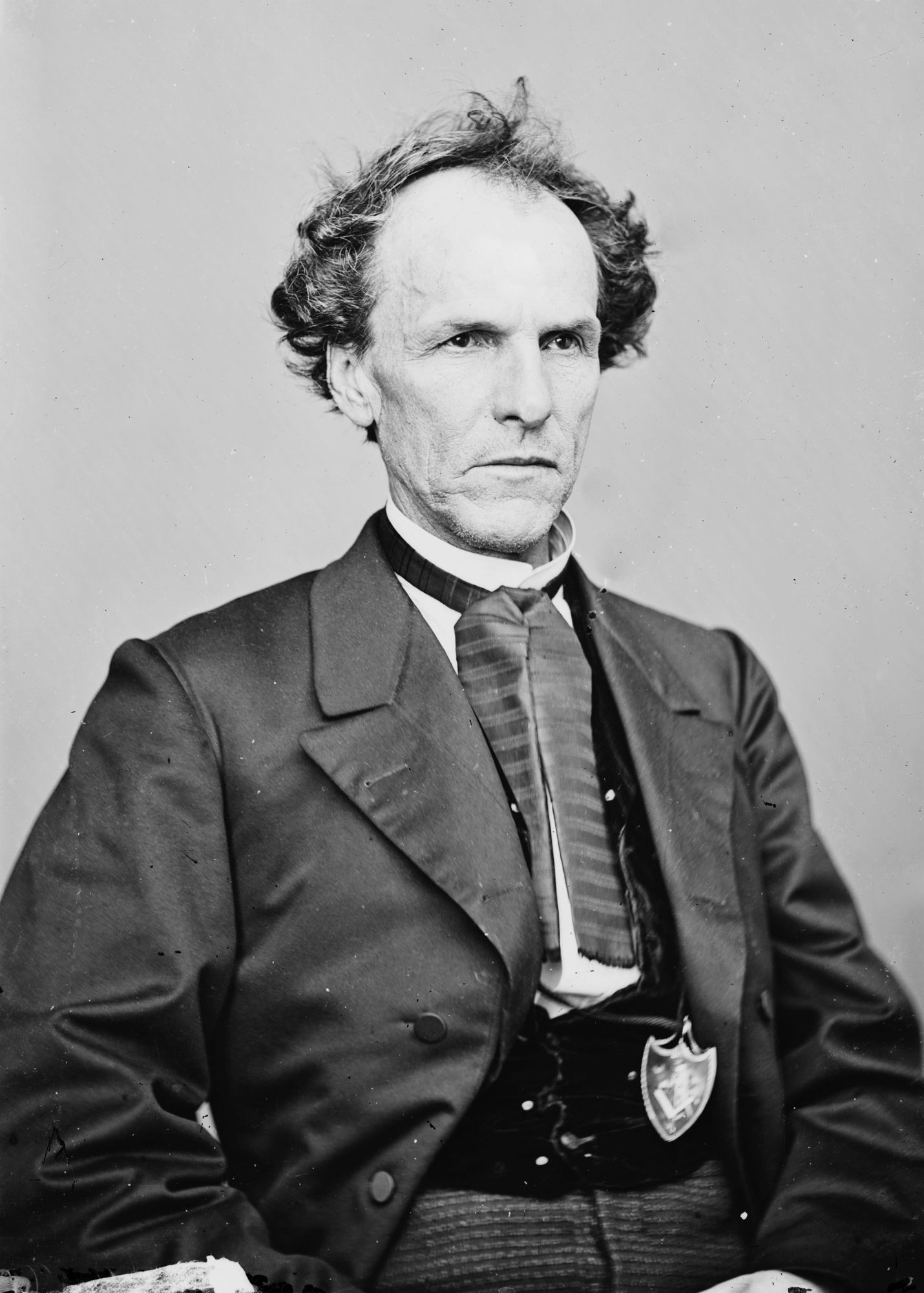
Historical · U.S. Senate · Kansas
James Lane
Former U.S. Senator from Kansas · 1861–1867 · Republican · Class 2
James Lane represented Kansas in the United States Senate (1861–1867) for the Republican party. The page below collects sourced biographical facts, term history, committee roles, and provenance for Lane.
Bioguide ID: L000061
Key facts
- Full name
- James Lane
- State
- Kansas
- Party
- Republican
- Senate class
- Class II
- Senate service
- 1861–1867
- First Senate term
- 1861
- Status
- Left office
- Current term ends
- —
- Born
- 1814
- Bioguide ID
- L000061
- Committee assignments
- —
- Dataset version
- 1.20260602
Biographical narrative
880 words · sourced from the Wikipedia REST extract
James Lane was a prominent American politician and military officer who served as a U.S. Senator from Kansas during a tumultuous period in American history. Born on June 22, 1814, Lane was a key figure in the antislavery movement and played a significant role in the events leading up to and during the American Civil War. His tenure in the Senate began in 1861, and he was reelected in 1865, serving until his death in 1866. Lane's life was marked by his involvement in both politics and military affairs, and he is remembered for his leadership during the Bleeding Kansas era and his contributions to the Union war effort.
Early life and career
James Lane was born in Lawrenceburg, Indiana, to Amos Lane. He pursued a legal career and was admitted to the bar in 1840, establishing himself as a practicing attorney. His early political career began when he was elected to the U.S. House of Representatives, serving from 1853 to 1855. During this time, he voted in favor of the Kansas-Nebraska Act, which allowed territories to decide for themselves whether to allow slavery, a decision that would lead to significant conflict in Kansas.
In 1855, Lane relocated to the Kansas Territory, where he initially identified as a Democrat. However, he soon became an active participant in the antislavery movement, aligning himself with the Republican Party. He emerged as a leader of the Free State Army, a group dedicated to opposing the pro-slavery forces in the region, often referred to as the Jayhawkers. Lane's commitment to the antislavery cause was evident when he presided over the convention that drafted the Topeka Constitution, which sought to establish Kansas as a free state.
Lane's early life was marked by controversy, including a notable incident in 1858 when he shot and killed a man named Gaius Jenkins during a land dispute. The incident, which occurred in Lawrence, led to a trial in which Lane was acquitted, allowing him to continue his political activities without interruption. His involvement in the Kansas Danites, a secret society formed to counter Missouri's influence in Kansas, further solidified his reputation as a staunch advocate for the Free State cause.
Senate tenure
Lane's political career reached a significant milestone when he was elected as one of Kansas's first U.S. Senators after the state was admitted to the Union in 1861. His Senate term began during a critical juncture in American history, as the nation was on the brink of civil war. Lane's election was a reflection of his strong antislavery stance and his leadership in the Free State movement.
During his time in the Senate, Lane was a vocal supporter of the Union war effort. He was actively involved in military affairs, serving as a brigadier general in the Union Army. His military leadership included the formation of a brigade known as the "Kansas Brigade," which was composed of volunteer soldiers from Kansas. Lane's brigade engaged in various military actions against Confederate forces, including notable confrontations in Missouri.
Lane's Senate career was marked by his reelection in 1865, indicating continued support for his leadership during a challenging period. However, his time in office was cut short by personal struggles. In 1866, Lane died by suicide, a tragic end to a life that had been dedicated to public service and the fight against slavery.
Legislative focus and committees
Throughout his Senate tenure, Lane focused on issues related to the Civil War and the broader implications of slavery in America. His commitment to the Union cause was evident in his legislative priorities, which often aligned with the interests of the Republican Party and the antislavery movement. Lane was known for his strong rhetoric and passionate speeches, advocating for measures that would support the war effort and promote the rights of freed slaves.
In addition to his legislative work, Lane's military background influenced his approach to governance. He served as a recruiting commissioner for the State of Kansas during the war, helping to organize and enlist soldiers for the Union Army. Lane's efforts in this capacity were significant, as he played a role in the recruitment of the 1st Regiment Kansas Volunteer Infantry (Colored), one of the first African American units to fight in the Civil War.
Lane's involvement in military affairs extended beyond recruitment; he also participated in strategic military decisions and actions. His leadership during the Civil War included directing raids into Confederate territory, which, while controversial, demonstrated his commitment to the Union cause. However, these actions also drew criticism, particularly regarding their impact on public sentiment in Missouri.
Despite the challenges he faced, Lane's contributions to the Senate and the Union war effort were notable. He navigated the complexities of wartime politics while advocating for the principles he believed in. His legacy is intertwined with the broader narrative of the Civil War and the fight for freedom in America, reflecting the tumultuous times in which he lived.
In summary, James Lane's life and career were characterized by his dedication to the antislavery movement, his military service during the Civil War, and his role as a U.S. Senator from Kansas. His legacy continues to be studied as part of the historical context of the Civil War and the ongoing struggle for civil rights in the United States.
Notable legislation
Sponsored and co-sponsored legislation for James Lane is pending operator curation. The biographical narrative above carries the same provenance trail until per-bill rows are written.
Sources
- [1]https://en.wikipedia.org/wiki/Jim_Lane_(politician)Wikipedia · retrieved 2026-06-02
Notable quotes
Sourced quotes for James Lane are pending operator curation. Narrative-scope provenance remains attached below.
Sources
- [1]https://en.wikipedia.org/wiki/Jim_Lane_(politician)Wikipedia · retrieved 2026-06-02
Key positions
Curated policy positions for James Lane are pending operator review. The biographical narrative above carries the same provenance trail until per-topic positions are written.
Sources
- [1]https://en.wikipedia.org/wiki/Jim_Lane_(politician)Wikipedia · retrieved 2026-06-02
Terms served
- 1853–1855U.S. House · District 4 · Term 1 · Democratic
- 1861–1865U.S. Senate · Term 2 · Republican · Class II
- 1865–1867U.S. Senate · Term 3 · Republican · Class II
Sources & provenance
Every attributable claim above carries a per-section [N] marker that resolves to the corresponding URL below. Each entry records the upstream provider, the canonical URL, and the timestamp at which the source was retrieved by the ingest pipeline.
Key facts
- https://bioguide.congress.gov/search/bio/L000061bioguide · retrieved 2026-06-02
- https://www.govtrack.us/congress/members/406570govtrack · retrieved 2026-06-02
Biographical narrative
- https://en.wikipedia.org/wiki/Jim_Lane_(politician)wikipedia · retrieved 2026-06-02
Find your senator
Every U.S. state elects two senators. Browse Kansas’s delegation, the full former-senator roster, or explore the role and term length.
Related on The Candidate
- Succeeded by Alexander CaldwellLater holder of the Kansas Class II Senate seat · Republican.Open
- Alfred BensonFormer U.S. Senator from Kansas · RepublicanOpen
- Andrew SchoeppelFormer U.S. Senator from Kansas · RepublicanOpen
- Arthur CapperFormer U.S. Senator from Kansas · RepublicanOpen
- Republican PartyFederal candidates and office holders on the Republican line.Open
- Senators from KansasEvery former U.S. Senator who has represented Kansas.Open