
Historical · U.S. Senate · Kansas
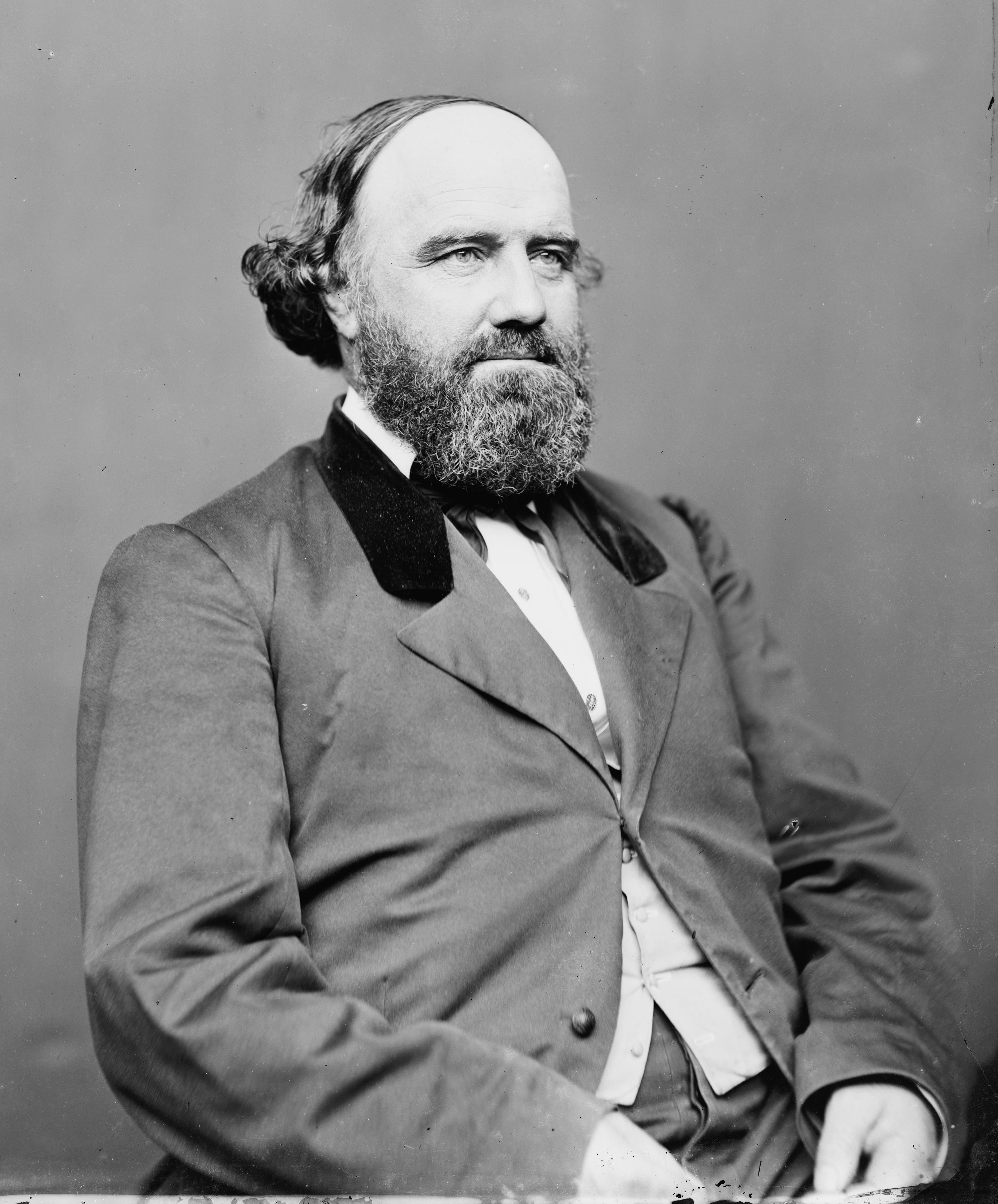
Samuel Pomeroy
Former U.S. Senator from Kansas · 1861–1873 · Republican · Class 3
Samuel Pomeroy represented Kansas in the United States Senate (1861–1873) for the Republican party. The page below collects sourced biographical facts, term history, committee roles, and provenance for Pomeroy.
Bioguide ID: P000423
Key facts
- Full name
- Samuel Pomeroy
- State
- Kansas
- Party
- Republican
- Senate class
- Class III
- Senate service
- 1861–1873
- First Senate term
- 1861
- Status
- Left office
- Current term ends
- —
- Born
- 1816
- Bioguide ID
- P000423
- Committee assignments
- —
- Dataset version
- 1.20260602
Biographical narrative
1,033 words · sourced from the Wikipedia REST extract
Samuel Pomeroy was a prominent American politician who served as a United States Senator from Kansas during a tumultuous period in American history, notably the Civil War. A member of the Republican Party, Pomeroy's political career was marked by significant involvement in both state and national issues, including his efforts in the founding of Kansas and his later controversies surrounding his senatorial tenure. His life and career reflect the complexities of American politics in the mid-19th century, as well as the evolving landscape of the United States during and after the Civil War.
Early life and career
Samuel Clarke Pomeroy was born on January 3, 1816, in Southampton, Massachusetts. He pursued higher education at Amherst College, where he began to develop his political views and aspirations. Pomeroy was notably opposed to the institution of slavery, a stance that would shape his political affiliations and actions throughout his career. In 1854, he became associated with the New England Emigrant Aid Company, an organization aimed at promoting anti-slavery settlement in Kansas. This involvement led him to play a crucial role in the early development of the state.
In the fall of 1854, Pomeroy led a group of settlers to Kansas with the intent of establishing the city of Lawrence, which became a focal point for anti-slavery activism. His leadership in this endeavor underscored his commitment to the anti-slavery cause and his belief in the importance of Kansas as a free state. Pomeroy's political career began to take shape when he served in the Massachusetts House of Representatives prior to his move to Kansas. His experience in state politics equipped him with the skills necessary for his future roles in the federal government.
Pomeroy's political ascent continued when he was elected as the mayor of Atchison, Kansas, serving from 1858 to 1859. His tenure as mayor further solidified his reputation as a leader in the burgeoning state. In addition to his political roles, Pomeroy was involved in the railroad industry, becoming the second president of the Atchison, Topeka and Santa Fe Railroad. His leadership in this capacity began on January 13, 1864, and he was responsible for overseeing the construction and operations of the railroad, which played a vital role in the economic development of the region.
Senate tenure
Pomeroy's significant political career reached a new height when he was elected to the United States Senate. On April 4, 1861, he was chosen by the Kansas legislature to serve as one of the state’s first federal senators, alongside James Lane. His election came at a critical time in American history, as the nation was on the brink of the Civil War. During his time in the Senate, Pomeroy was an active participant in the legislative process, advocating for various issues that were central to the national discourse of the time.
Throughout the Civil War, Pomeroy was involved in several notable events. In 1863, he played a role in facilitating a meeting between the renowned abolitionist Frederick Douglass and War Secretary Edwin Stanton, highlighting his commitment to civil rights and the emancipation of enslaved individuals. Pomeroy's support for the Linconia plan in 1862, which aimed to resettle freed African Americans, further demonstrated his dedication to the cause of abolition and the integration of freedmen into society.
In 1864, Pomeroy was an advocate for Secretary of the Treasury Salmon P. Chase in his bid for the Republican presidential nomination against the incumbent, Abraham Lincoln. He chaired a committee that supported Chase's candidacy and publicly expressed his views in the Senate. However, the efforts of Pomeroy and his committee inadvertently backfired, galvanizing support for Lincoln and undermining Chase's prospects for nomination.
Pomeroy's Senate career faced challenges as he approached the 1873 Kansas senatorial election. Allegations of bribery emerged, claiming that he had paid a state senator to secure his reelection. Despite Pomeroy's denial of the charges and his call for an investigation, the political climate surrounding the election became increasingly contentious. After a protracted voting process in the Kansas legislature, Pomeroy was ultimately defeated, marking the end of his Senate tenure on March 3, 1873.
Legislative focus and committees
During his time in the Senate, Pomeroy was involved in various legislative initiatives that reflected his interests and the pressing issues of his time. One of his notable contributions was the introduction of the Act of Dedication bill on December 18, 1871, which was instrumental in the establishment of Yellowstone National Park. This legislation highlighted Pomeroy's awareness of the importance of conservation and the preservation of natural landscapes for future generations.
Pomeroy's involvement in the railroad industry also informed his legislative focus. His experience as president of the Atchison, Topeka and Santa Fe Railroad provided him with insights into the economic and infrastructural needs of the nation. He understood the significance of railroads in facilitating commerce and connecting communities, which was a crucial aspect of American expansion during the 19th century.
The bribery allegations that surfaced during the 1873 election were a significant turning point in Pomeroy's career. While the Special Committee on the Kansas Senatorial Election ultimately found insufficient evidence to support the bribery claims, the controversy surrounding the allegations tarnished his reputation. Pomeroy's assertion that the payment in question was intended for a different purpose did not fully quell the doubts cast upon his integrity. The political fallout from this incident was compounded by the public's growing skepticism regarding the ethical conduct of politicians, a theme that would resonate throughout American history.
Pomeroy's legacy is further complicated by his later political activities. In the 1880 presidential election, he served as the running mate for John W. Phelps on the revived Anti-Masonic Party ticket. This affiliation reflected his ongoing engagement in the political landscape, even after his Senate career had concluded.
Samuel Pomeroy's life and career encapsulate the complexities of American politics during a transformative era. His contributions to the founding of Kansas, his involvement in the Civil War, and his legislative efforts in the Senate illustrate a commitment to the principles he espoused. However, the controversies that marked the end of his political career serve as a reminder of the challenges faced by public figures in maintaining their integrity amidst the pressures of political life.
Notable legislation
Sponsored and co-sponsored legislation for Samuel Pomeroy is pending operator curation. The biographical narrative above carries the same provenance trail until per-bill rows are written.
Sources
- [1]https://en.wikipedia.org/wiki/Samuel_C._PomeroyWikipedia · retrieved 2026-06-02
Notable quotes
Sourced quotes for Samuel Pomeroy are pending operator curation. Narrative-scope provenance remains attached below.
Sources
- [1]https://en.wikipedia.org/wiki/Samuel_C._PomeroyWikipedia · retrieved 2026-06-02
Key positions
Curated policy positions for Samuel Pomeroy are pending operator review. The biographical narrative above carries the same provenance trail until per-topic positions are written.
Sources
- [1]https://en.wikipedia.org/wiki/Samuel_C._PomeroyWikipedia · retrieved 2026-06-02
Terms served
- 1861–1867U.S. Senate · Term 1 · Republican · Class III
- 1867–1873U.S. Senate · Term 2 · Republican · Class III
Sources & provenance
Every attributable claim above carries a per-section [N] marker that resolves to the corresponding URL below. Each entry records the upstream provider, the canonical URL, and the timestamp at which the source was retrieved by the ingest pipeline.
Key facts
- https://bioguide.congress.gov/search/bio/P000423bioguide · retrieved 2026-06-02
- https://www.govtrack.us/congress/members/408814govtrack · retrieved 2026-06-02
Biographical narrative
- https://en.wikipedia.org/wiki/Samuel_C._Pomeroywikipedia · retrieved 2026-06-02
Find your senator
Every U.S. state elects two senators. Browse Kansas’s delegation, the full former-senator roster, or explore the role and term length.
Related on The Candidate
- Succeeded by John IngallsLater holder of the Kansas Class III Senate seat · Republican.Open
- Alexander CaldwellFormer U.S. Senator from Kansas · RepublicanOpen
- Alfred BensonFormer U.S. Senator from Kansas · RepublicanOpen
- Andrew SchoeppelFormer U.S. Senator from Kansas · RepublicanOpen
- Arthur CapperFormer U.S. Senator from Kansas · RepublicanOpen
- Republican PartyFederal candidates and office holders on the Republican line.Open