
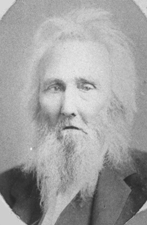
Historical · U.S. Senate · Kentucky
David Meriwether
Former U.S. Senator from Kentucky · 1852–1853 · Democratic · Class 3
David Meriwether represented Kentucky in the United States Senate (1852–1853) for the Democratic party. The page below collects sourced biographical facts, term history, committee roles, and provenance for Meriwether.
Bioguide ID: M000650
Key facts
- Full name
- David Meriwether
- State
- Kentucky
- Party
- Democratic
- Senate class
- Class III
- Senate service
- 1852–1853
- First Senate term
- 1852
- Status
- Left office
- Current term ends
- —
- Born
- 1800
- Bioguide ID
- M000650
- Committee assignments
- —
- Dataset version
- 1.20260602
Biographical narrative
1,010 words · sourced from the Wikipedia REST extract
David Meriwether was a prominent political figure in the 19th century, serving as a United States senator from Kentucky and later as the governor of the New Mexico Territory. His political career was marked by a commitment to the Democratic Party and a series of significant roles within Kentucky's state government. Born in 1800 in Virginia, Meriwether's early life and subsequent political endeavors reflect the complexities of American governance during a period of considerable change.
Early life and career
David Meriwether was born on October 30, 1800, in Louisa County, Virginia. His family relocated to Jefferson County, Kentucky, shortly after his birth in 1803. This move placed him in a region that was rapidly developing during the early 19th century, influenced by westward expansion and the burgeoning agricultural economy. Meriwether's education was rooted in the common schools of the time, which provided the foundational knowledge necessary for his future pursuits.
In 1818, at the age of 18, Meriwether ventured into fur trading near what is now known as Council Bluffs, Iowa. This early experience in commerce and trade likely contributed to his understanding of economic issues that would later inform his political career. Following his time in fur trading, he returned to Jefferson County, where he engaged in agricultural activities, further grounding himself in the economic realities of his home state.
Meriwether's ambition led him to study law, and he was eventually admitted to the bar, allowing him to commence a legal practice. His legal career coincided with his growing interest in politics. He entered the political arena as a member of the Kentucky House of Representatives, where he served from 1832 to 1845. During this period, he gained valuable experience in legislative processes and governance, which would later serve him well in higher offices.
Despite his political involvement, Meriwether faced challenges in his career. He was an unsuccessful candidate for election to the Thirtieth Congress in 1847, which may have influenced his subsequent political strategies. In 1849, he was a delegate to the state constitutional convention, a significant event that aimed to address the governance of Kentucky. His political journey continued when he was appointed Secretary of State of Kentucky in 1851, a role that further solidified his position within the state's political landscape.
Senate tenure
Meriwether's tenure in the United States Senate began when he was appointed as a Democrat to fill the vacancy left by the death of the prominent senator Henry Clay. He served from July 6, 1852, until August 31, 1852, when Archibald Dixon was elected as his successor. Meriwether's time in the Senate was relatively brief, lasting just a little over a month. During this period, he did not seek renomination, which suggests a strategic decision to focus on other political opportunities rather than pursuing a longer Senate career.
The context of Meriwether's appointment is significant, as it occurred during a tumultuous time in American politics. The early 1850s were marked by intense debates over issues such as slavery, states' rights, and westward expansion. While specific details of his actions in the Senate are not recorded, his affiliation with the Democratic Party during this period indicates that he was likely involved in the prevailing political discussions of the time.
Following his short Senate tenure, Meriwether transitioned to a role that would further expand his political influence. In 1853, he was appointed by President Franklin Pierce as the Governor of the Territory of New Mexico. This appointment came after Solon Borland declined the position. Meriwether's governorship lasted until 1855, during which he faced the challenges of governing a territory that was experiencing significant demographic and political changes. His time in New Mexico was marked by the complexities of territorial governance, including issues related to land, law, and the integration of diverse populations.
While Meriwether was out of state from April to July 1854, the Secretary of the Territory, William S. Messervy, served as acting governor. This period highlights the challenges of governance in a territory that was still developing its political and administrative structures. After his governorship, Meriwether returned to Kentucky, where he continued to engage in politics.
Legislative focus and committees
After returning to Kentucky, David Meriwether resumed his political career in the state legislature. He served again in the Kentucky House of Representatives from 1858 to 1885, a lengthy tenure that underscores his sustained influence in state politics. During this period, he held the position of speaker in 1859, which placed him in a leadership role within the legislative body. His extended service in the House allowed him to contribute to various legislative initiatives and engage with the evolving political landscape of Kentucky.
Throughout his career, Meriwether's legislative focus likely reflected the concerns of his constituents and the broader political climate of the time. While specific details regarding the bills he supported or the committees he served on are not documented, his long-standing involvement in the legislature suggests a commitment to addressing the needs and interests of the people of Kentucky. His experience in the Senate and as governor would have informed his approach to state governance, allowing him to navigate complex political issues effectively.
After retiring from active politics, Meriwether settled on his plantation near Louisville, Kentucky. This decision marked the conclusion of a long and varied political career that spanned several decades and included significant roles at both the state and federal levels. He passed away on April 4, 1893, at the age of 92, leaving behind a legacy intertwined with the political history of Kentucky and the broader narrative of American governance during a transformative era.
Meriwether's life and career reflect the complexities of 19th-century American politics, characterized by rapid changes and the challenges of governance in a growing nation. His contributions to the political landscape of Kentucky and his brief tenure in the U.S. Senate are notable aspects of his biography, illustrating the multifaceted nature of public service during this period. He was interred in Cave Hill Cemetery, a testament to his long life and the impact he had on the political fabric of his time.
Notable legislation
Sponsored and co-sponsored legislation for David Meriwether is pending operator curation. The biographical narrative above carries the same provenance trail until per-bill rows are written.
Sources
- [1]https://en.wikipedia.org/wiki/David_Meriwether_(Kentucky_politician)Wikipedia · retrieved 2026-06-02
Notable quotes
Sourced quotes for David Meriwether are pending operator curation. Narrative-scope provenance remains attached below.
Sources
- [1]https://en.wikipedia.org/wiki/David_Meriwether_(Kentucky_politician)Wikipedia · retrieved 2026-06-02
Key positions
Curated policy positions for David Meriwether are pending operator review. The biographical narrative above carries the same provenance trail until per-topic positions are written.
Sources
- [1]https://en.wikipedia.org/wiki/David_Meriwether_(Kentucky_politician)Wikipedia · retrieved 2026-06-02
Terms served
- 1852–1853U.S. Senate · Term 1 · Democratic · Class III
Sources & provenance
Every attributable claim above carries a per-section [N] marker that resolves to the corresponding URL below. Each entry records the upstream provider, the canonical URL, and the timestamp at which the source was retrieved by the ingest pipeline.
Key facts
- https://bioguide.congress.gov/search/bio/M000650bioguide · retrieved 2026-06-02
- https://www.govtrack.us/congress/members/407636govtrack · retrieved 2026-06-02
Biographical narrative
- https://en.wikipedia.org/wiki/David_Meriwether_(Kentucky_politician)wikipedia · retrieved 2026-06-02
Find your senator
Every U.S. state elects two senators. Browse Kentucky’s delegation, the full former-senator roster, or explore the role and term length.
Related on The Candidate
- Preceded by Thomas MetcalfeEarlier holder of the Kentucky Class III Senate seat · Whig.Open
- Succeeded by Garrett DavisLater holder of the Kentucky Class III Senate seat · Democratic.Open
- Alben BarkleyFormer U.S. Senator from Kentucky · DemocraticOpen
- Archibald DixonFormer U.S. Senator from Kentucky · WhigOpen
- Augustus StanleyFormer U.S. Senator from Kentucky · DemocraticOpen
- Ben WilliamsonFormer U.S. Senator from Kentucky · DemocraticOpen