
Historical · U.S. Senate · Kentucky
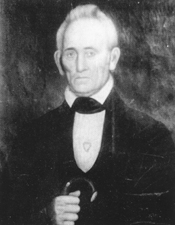
John Edwards
Former U.S. Senator from Kentucky · 1792–1795 · Anti-Administration · Class 3
John Edwards represented Kentucky in the United States Senate (1792–1795) for the Anti-Administration party. The page below collects sourced biographical facts, term history, committee roles, and provenance for Edwards.
Bioguide ID: E000075
Key facts
- Full name
- John Edwards
- State
- Kentucky
- Party
- Anti-Administration
- Senate class
- Class III
- Senate service
- 1792–1795
- First Senate term
- 1792
- Status
- Left office
- Current term ends
- —
- Born
- —
- Bioguide ID
- E000075
- Committee assignments
- —
- Dataset version
- 1.20260602
Biographical narrative
847 words · sourced from the Wikipedia REST extract
John Edwards was an American planter and statesman who served as a U.S. Senator from Kentucky during the early years of the state's admission to the Union. A member of the Anti-Administration party, Edwards played a significant role in the establishment of Kentucky as a state and was instrumental in shaping its early governance. His political career included a notable tenure in the Senate, where he contributed to the formation of federal policies during a formative period in American history.
Early life and career
John Edwards was born in 1748 in Stafford County, Virginia. His early life was marked by the agricultural practices of the time, as he would later become a planter. Around 1780, he relocated to Fayette County, which is part of present-day Bourbon County, Kentucky. This move was significant as it placed him in a region that was undergoing rapid development and change, particularly with the push for statehood.
In Kentucky, Edwards became actively involved in local governance. He served as a representative for his county in the Virginia House of Delegates on multiple occasions, reflecting his growing influence in the region. His political involvement extended beyond local matters; in 1788, he was appointed to a commission tasked with determining the borders of Kentucky, a critical step in the state's journey toward statehood. This commission played a vital role in defining the geographical and political landscape of the new state.
Edwards's contributions to Kentucky's political framework continued as he was selected as a delegate to the convention that drafted the first constitution for the state in 1792. This constitution laid the groundwork for Kentucky's governance and established the legal framework for its operations as a state. Following the successful achievement of statehood, Edwards, alongside John Brown, became one of the first U.S. Senators to represent Kentucky, marking a significant milestone in his political career.
Senate tenure
John Edwards's tenure in the United States Senate began in 1792, shortly after Kentucky was admitted to the Union. As a member of the Senate, Edwards represented the interests of his state during a crucial period in American history, characterized by the establishment of federal institutions and the formulation of national policies. His affiliation with the Anti-Administration party placed him in opposition to the prevailing Federalist policies of the time, which influenced his legislative priorities and actions.
Edwards served in the Senate until March 3, 1795, completing a single term in this capacity. During his time in office, he participated in the early legislative processes that shaped the new nation. Although specific details regarding his voting record or the legislation he supported are not documented, his role as a senator was significant in representing Kentucky's interests at the federal level.
After concluding his term in the Senate, Edwards continued his public service by engaging in state politics. He held positions in both houses of the Kentucky state legislature, further demonstrating his commitment to public service and governance. His involvement in state politics allowed him to remain influential in shaping Kentucky's legislative landscape even after his time in the U.S. Senate.
Legislative focus and committees
While specific details regarding John Edwards's legislative focus and committee assignments during his Senate tenure are not available, it is understood that his role as a senator would have involved addressing the pressing issues of the time. The early years of the United States were marked by debates over federal authority, state rights, and the establishment of a cohesive national policy. As a senator from a newly admitted state, Edwards likely engaged in discussions surrounding these topics, advocating for Kentucky's needs and interests.
Given the political climate of the late 18th century, it is reasonable to infer that Edwards's legislative priorities may have included matters related to land use, agriculture, and the economic development of Kentucky. His background as a planter would have provided him with insights into the agricultural needs of his constituents, which were critical to the state's economy. Additionally, as Kentucky was a frontier state during this period, issues related to westward expansion and land settlement may have been significant topics of discussion.
After his Senate service, Edwards's continued involvement in the state legislature suggests that he remained committed to addressing the needs of his constituents and contributing to the governance of Kentucky. His experience in both the U.S. Senate and the state legislature positioned him as a knowledgeable figure in the political landscape of Kentucky, allowing him to influence policy decisions that affected the lives of many residents.
John Edwards passed away in 1837 on his plantation, where he was laid to rest in the family graveyard near Paris, Kentucky. His legacy includes not only his contributions to the establishment of Kentucky as a state but also his role in the early governance of the United States. His sons, Haden Edwards and Benjamin W. Edwards, became involved in land speculation in Texas and were notable figures in the Fredonian Rebellion, which sought to challenge Mexican control in the region. This connection to subsequent historical events further highlights the enduring impact of the Edwards family in American history.
Notable legislation
Sponsored and co-sponsored legislation for John Edwards is pending operator curation. The biographical narrative above carries the same provenance trail until per-bill rows are written.
Sources
- [1]https://en.wikipedia.org/wiki/John_Edwards_(Kentucky_politician)Wikipedia · retrieved 2026-06-02
Notable quotes
Sourced quotes for John Edwards are pending operator curation. Narrative-scope provenance remains attached below.
Sources
- [1]https://en.wikipedia.org/wiki/John_Edwards_(Kentucky_politician)Wikipedia · retrieved 2026-06-02
Key positions
Curated policy positions for John Edwards are pending operator review. The biographical narrative above carries the same provenance trail until per-topic positions are written.
Sources
- [1]https://en.wikipedia.org/wiki/John_Edwards_(Kentucky_politician)Wikipedia · retrieved 2026-06-02
Terms served
- 1792–1795U.S. Senate · Term 1 · Anti-Administration · Class III
Sources & provenance
Every attributable claim above carries a per-section [N] marker that resolves to the corresponding URL below. Each entry records the upstream provider, the canonical URL, and the timestamp at which the source was retrieved by the ingest pipeline.
Key facts
- https://bioguide.congress.gov/search/bio/E000075bioguide · retrieved 2026-06-02
- https://www.govtrack.us/congress/members/403764govtrack · retrieved 2026-06-02
Biographical narrative
- https://en.wikipedia.org/wiki/John_Edwards_(Kentucky_politician)wikipedia · retrieved 2026-06-02
Find your senator
Every U.S. state elects two senators. Browse Kentucky’s delegation, the full former-senator roster, or explore the role and term length.
Related on The Candidate
- Succeeded by Humphrey MarshallLater holder of the Kentucky Class III Senate seat · Federalist.Open
- Alben BarkleyFormer U.S. Senator from Kentucky · DemocraticOpen
- Archibald DixonFormer U.S. Senator from Kentucky · WhigOpen
- Augustus StanleyFormer U.S. Senator from Kentucky · DemocraticOpen
- Ben WilliamsonFormer U.S. Senator from Kentucky · DemocraticOpen
- Senators from KentuckyEvery former U.S. Senator who has represented Kentucky.Open