
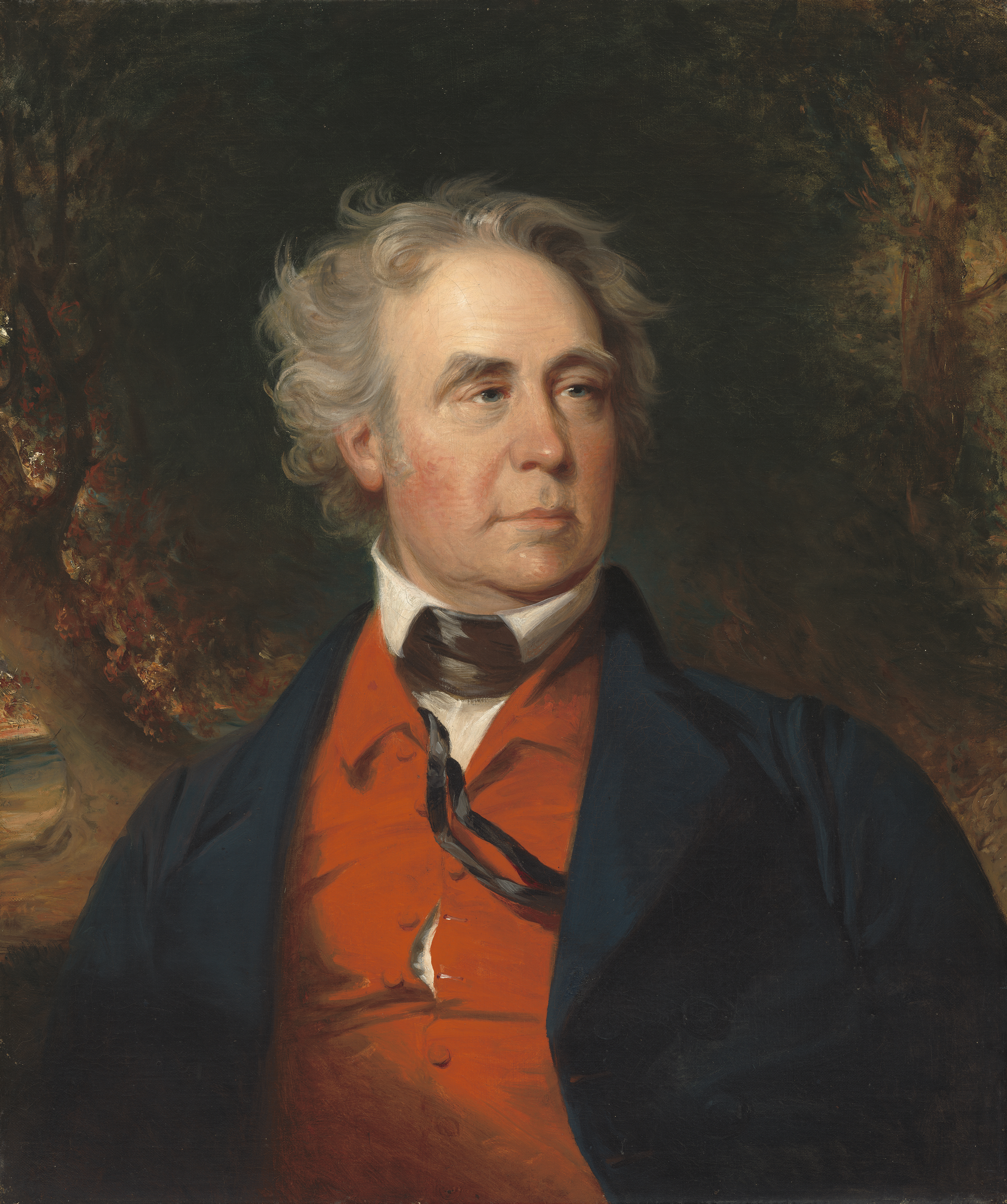
Historical · U.S. Senate · Kentucky
Richard Johnson
Former U.S. Senator from Kentucky · 1819–1829 · Jackson · Class 2
Richard Johnson represented Kentucky in the United States Senate (1819–1829) for the Jackson party. The page below collects sourced biographical facts, term history, committee roles, and provenance for Johnson.
Bioguide ID: J000170
Key facts
- Full name
- Richard Johnson
- State
- Kentucky
- Party
- Jackson
- Senate class
- Class II
- Senate service
- 1819–1829
- First Senate term
- 1819
- Status
- Left office
- Current term ends
- —
- Born
- 1780
- Bioguide ID
- J000170
- Committee assignments
- —
- Dataset version
- 1.20260602
Biographical narrative
996 words · sourced from the Wikipedia REST extract
Richard Johnson was a prominent American politician and military officer who served as a U.S. Senator from Kentucky and later as the ninth Vice President of the United States. His political career spanned several decades, during which he was involved in significant events, including the War of 1812. Johnson's legacy is marked by his complex personal life, particularly his interracial relationship with Julia Chinn, which garnered both support and criticism. His tenure in public office included service in both the U.S. House of Representatives and the Senate, reflecting his influence in Kentucky and national politics during the early 19th century.
Early life and career
Richard Mentor Johnson was born on October 17, 1780, in Beargrass, a settlement on the Kentucky frontier that is now part of Louisville. He was the fifth child of Robert and Jemima Johnson, who had a total of eleven children, including eight sons. His father, Robert Johnson, was a surveyor who acquired land in what was then Virginia and later became Kentucky. The family moved to Bryan's Station, near present-day Lexington, where they lived in a fortified outpost due to the threat of Native American attacks. Jemima Johnson gained recognition for her bravery during a raid on Bryan's Station, demonstrating the resilience of the family in the face of adversity.
As Kentucky transitioned from a frontier territory to a more settled region, the Johnson family established their home on land purchased by Robert Johnson. Richard grew up in a supportive environment, characterized by his father's successful land dealings and his mother's strong community involvement. He received a basic education at a local grammar school before attending Transylvania University, the first college west of the Appalachian Mountains. There, he studied law under the guidance of notable legal figures, including George Nicholas and James Brown.
After being admitted to the Kentucky bar in 1802, Johnson opened a law office in Great Crossing. His legal career was marked by a commitment to serving the less fortunate, as he often took on pro bono cases for those unable to afford legal representation. In addition to his law practice, he engaged in various business ventures, including operating a retail store. His community involvement extended beyond his professional life; he provided shelter to disabled veterans, widows, and orphans, reflecting his dedication to social responsibility. Johnson also became an active member of the Freemasons, further establishing his presence in the social and political fabric of Kentucky.
Senate tenure
Richard Johnson's political career began in earnest when he was elected to the U.S. House of Representatives in 1806. He quickly aligned himself with the War Hawks, a faction advocating for war against Britain, which culminated in the War of 1812. During this conflict, Johnson was commissioned as a colonel in the Kentucky Militia, where he commanded a regiment of mounted volunteers. His military service included participation in the Battle of the Thames, where he reportedly killed the Shawnee chief Tecumseh, a claim that would later become a significant aspect of his political narrative.
After the war, Johnson returned to the House of Representatives but was appointed to the U.S. Senate in 1819 to fill the vacancy left by John J. Crittenden. His Senate term was marked by increasing prominence, but it was also a time of personal controversy due to his relationship with Julia Chinn, a mixed-race woman he acknowledged as his common-law wife. This relationship, along with their two daughters, drew criticism from some constituents and ultimately influenced his political career. In 1828, the Kentucky legislature chose another candidate for the Senate, leading to Johnson's departure from that office in 1829. However, he was quickly re-elected to the House of Representatives by his Congressional district.
Johnson's political journey continued as he sought higher office. In the 1836 election, he was nominated as the Democratic candidate for Vice President alongside Martin Van Buren. Despite a vigorous campaign, he fell short of the necessary electoral votes to secure the position outright, although he was subsequently elected by the Senate. His tenure as Vice President lasted from 1837 to 1841, during which he faced challenges related to his personal life, particularly his relationships with women of African descent, which became a liability for the Democratic Party. In the 1840 election, the party opted not to renominate him, leading to Van Buren's campaign without a running mate.
Legislative focus and committees
Throughout his time in the Senate and House of Representatives, Richard Johnson's legislative focus reflected the issues of his era. His early alignment with the War Hawks indicated a strong interest in military affairs and national defense, particularly during the War of 1812. Johnson's military background and experiences likely informed his perspectives on various legislative matters, especially those concerning the military and veterans' affairs.
In the Senate, Johnson was involved in discussions and decisions that shaped the direction of Kentucky and national policies. His relationship with Julia Chinn and their children brought attention to issues of race and social justice, which were increasingly relevant in the political discourse of the time. Johnson's acknowledgment of his family and his efforts to provide for them stood in contrast to the prevailing attitudes of many of his contemporaries, who often concealed such relationships.
Johnson's political career was characterized by a commitment to his constituents and a willingness to engage in the pressing issues of his time. His involvement in the Democratic Party and his eventual election as Vice President underscored his influence within the party, despite the controversies that surrounded him. After his vice presidency, Johnson returned to the Kentucky House of Representatives, where he continued to serve until his death in 1850, just weeks after beginning a new term.
Richard Johnson's life and career illustrate the complexities of American politics in the early 19th century, marked by personal challenges, military service, and significant contributions to legislative processes. His legacy remains a topic of interest for historians and political scholars examining the intersection of race, politics, and personal relationships in American history.
Notable legislation
Sponsored and co-sponsored legislation for Richard Johnson is pending operator curation. The biographical narrative above carries the same provenance trail until per-bill rows are written.
Sources
- [1]https://en.wikipedia.org/wiki/Richard_Mentor_JohnsonWikipedia · retrieved 2026-06-02
Notable quotes
Sourced quotes for Richard Johnson are pending operator curation. Narrative-scope provenance remains attached below.
Sources
- [1]https://en.wikipedia.org/wiki/Richard_Mentor_JohnsonWikipedia · retrieved 2026-06-02
Key positions
Curated policy positions for Richard Johnson are pending operator review. The biographical narrative above carries the same provenance trail until per-topic positions are written.
Sources
- [1]https://en.wikipedia.org/wiki/Richard_Mentor_JohnsonWikipedia · retrieved 2026-06-02
Terms served
- 1807–1809U.S. House · District 4 · Term 1 · Republican
- 1809–1811U.S. House · District 4 · Term 2 · Republican
- 1811–1813U.S. House · District 4 · Term 3 · Republican
- 1813–1815U.S. House · District 3 · Term 4 · Republican
- 1815–1817U.S. House · District 3 · Term 5 · Republican
- 1817–1819U.S. House · District 3 · Term 6 · Republican
- 1819–1823U.S. Senate · Term 7 · Republican · Class II
- 1823–1829U.S. Senate · Term 8 · Jackson · Class II
- 1829–1831U.S. House · District 5 · Term 9 · Jackson
- 1831–1833U.S. House · District 5 · Term 10 · Jackson
- 1833–1835U.S. House · District 13 · Term 11 · Jackson
- 1835–1837U.S. House · District 13 · Term 12 · Jackson
Sources & provenance
Every attributable claim above carries a per-section [N] marker that resolves to the corresponding URL below. Each entry records the upstream provider, the canonical URL, and the timestamp at which the source was retrieved by the ingest pipeline.
Key facts
- https://bioguide.congress.gov/search/bio/J000170bioguide · retrieved 2026-06-02
- https://www.govtrack.us/congress/members/406067govtrack · retrieved 2026-06-02
Biographical narrative
- https://en.wikipedia.org/wiki/Richard_Mentor_Johnsonwikipedia · retrieved 2026-06-02
Find your senator
Every U.S. state elects two senators. Browse Kentucky’s delegation, the full former-senator roster, or explore the role and term length.
Related on The Candidate
- Preceded by Martin HardinEarlier holder of the Kentucky Class II Senate seat · Federalist.Open
- Succeeded by James MoreheadLater holder of the Kentucky Class II Senate seat · Whig.Open
- Alben BarkleyFormer U.S. Senator from Kentucky · DemocraticOpen
- Archibald DixonFormer U.S. Senator from Kentucky · WhigOpen
- Augustus StanleyFormer U.S. Senator from Kentucky · DemocraticOpen
- Ben WilliamsonFormer U.S. Senator from Kentucky · DemocraticOpen