
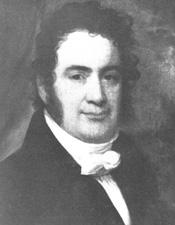
Historical · U.S. Senate · Louisiana
Alexander Porter
Former U.S. Senator from Louisiana · 1833–1837 · Anti-Jacksonian · Class 3
Alexander Porter represented Louisiana in the United States Senate (1833–1837) for the Anti-Jacksonian party. The page below collects sourced biographical facts, term history, committee roles, and provenance for Porter.
Bioguide ID: P000436
Key facts
- Full name
- Alexander Porter
- State
- Louisiana
- Party
- Anti-Jacksonian
- Senate class
- Class III
- Senate service
- 1833–1837
- First Senate term
- 1833
- Status
- Left office
- Current term ends
- —
- Born
- 1785
- Bioguide ID
- P000436
- Committee assignments
- —
- Dataset version
- 1.20260602
Biographical narrative
1,000 words · sourced from the Wikipedia REST extract
Alexander Porter was a prominent American attorney, politician, and planter who served as a United States Senator from Louisiana from 1833 to 1837. Born in Ireland in 1785, Porter emigrated to the United States at the age of 16 and eventually became a significant figure in Louisiana's early political landscape. His career included roles as a state legislator and a justice of the Louisiana Supreme Court prior to his election to the Senate. Porter's tenure in the Senate was marked by his affiliation with the Anti-Jacksonian Party, and he played a role in shaping the legislative framework of his time. After leaving the Senate, he returned to his legal practice and plantation management until his death in 1844.
Early life and career
Alexander Porter was born on June 24, 1785, in County Donegal, Ireland. His early life was marked by significant events, including the execution of his father, James Porter, a Presbyterian minister and satirist, during the United Irishmen Rebellion of 1798. This tragic event is part of a local tradition that suggests young Porter may have participated in the Battle of Ballynahinch, although the veracity of this claim is uncertain.
In 1801, at the age of 16, Porter emigrated to the United States with an uncle, settling in Nashville, Tennessee. His educational opportunities were limited, but he attended Clemenceau College, which has since closed. Despite the constraints of his education, Porter pursued a legal career by studying law as an apprentice. He was admitted to the bar in 1807, marking the beginning of his professional journey.
Porter's legal career commenced in Attakapas Parish, located in the Territory of Orleans, where he established himself as a practicing attorney. His political involvement began to take shape when he was elected as a delegate to the convention that framed Louisiana's first Constitution in 1812. This foundational role in the state's governance highlighted his commitment to public service and set the stage for his future political endeavors.
From 1816 to 1818, Porter served as a member of the lower branch of the Louisiana Legislature, further solidifying his political influence. His legal expertise and growing reputation led to his appointment as a justice of the Louisiana Supreme Court, a position he held from 1821 until 1833. This role allowed him to shape the judicial landscape of Louisiana and contributed to his understanding of the legislative process.
Senate tenure
In 1833, Alexander Porter was selected by the Louisiana state legislature to fill a vacancy in the United States Senate caused by the death of Senator Josiah S. Johnston. He was affiliated with the Anti-Jacksonian Party, which opposed the policies of President Andrew Jackson and sought to promote a more conservative approach to governance. Porter's Senate term began on December 19, 1833, and lasted until January 5, 1837, when he resigned due to health issues.
During his time in the Senate, Porter participated in various legislative discussions and decisions that were pivotal to the era. The political climate of the time was characterized by significant debates over issues such as states' rights, economic policy, and the role of the federal government. Although specific details of his legislative contributions are not extensively documented, his experience as a state legislator and Supreme Court justice likely informed his perspectives and decisions in the Senate.
Porter’s health began to decline towards the end of his Senate term, prompting his resignation. After leaving the Senate, he returned to St. Mary Parish, Louisiana, where he resumed his legal practice and managed his plantation, Oaklawn. His plantation was notable for its reliance on slave labor, with a workforce that grew to 320 slaves by the 1840s. This aspect of his life reflects the broader socio-economic context of the Southern United States during this period.
In 1843, Porter was again chosen by the Louisiana legislature for a Senate term beginning March 4, 1843. However, due to ongoing health issues, he was unable to take his seat, and the legislature subsequently elected Henry Johnson, a former governor of Louisiana, to replace him. This decision underscored the impact of Porter's declining health on his political career and ambitions.
Legislative focus and committees
While specific details regarding Alexander Porter's legislative focus and committee assignments during his Senate tenure are not extensively documented, his background as a lawyer and a state Supreme Court justice likely influenced his areas of interest. As a member of the Anti-Jacksonian Party, Porter would have been engaged in discussions surrounding the principles of governance that contrasted with Jacksonian democracy, which emphasized populism and the expansion of executive power.
Porter's legal background may have led him to prioritize issues related to the judiciary, property rights, and the legal framework governing the states. His experience in Louisiana's political landscape, including his role in framing the state's constitution and serving in the legislature, would have equipped him with insights into the unique challenges faced by the southern states during this period.
The political environment of the early 1830s was marked by significant national debates, including those surrounding economic policies, the Second Bank of the United States, and the implications of westward expansion. As a senator, Porter would have had to navigate these complex issues, balancing the interests of his constituents in Louisiana with the broader national agenda.
After his resignation from the Senate, Porter continued to influence his community through his legal practice and plantation management. He remained a figure of local significance until his death on January 13, 1844. His remains were interred in Nashville City Cemetery, alongside those of his wife, Evilina Baker Porter, who had passed away in 1819.
In summary, Alexander Porter was a notable figure in early American politics, whose career spanned various roles in the legal and political arenas of Louisiana. His tenure in the U.S. Senate, though brief, was marked by his commitment to the principles of governance that defined the Anti-Jacksonian movement. His legacy is intertwined with the early development of Louisiana's political identity and the broader context of American governance in the 19th century.
Notable legislation
Sponsored and co-sponsored legislation for Alexander Porter is pending operator curation. The biographical narrative above carries the same provenance trail until per-bill rows are written.
Sources
- [1]https://en.wikipedia.org/wiki/Alexander_PorterWikipedia · retrieved 2026-06-02
Notable quotes
Sourced quotes for Alexander Porter are pending operator curation. Narrative-scope provenance remains attached below.
Sources
- [1]https://en.wikipedia.org/wiki/Alexander_PorterWikipedia · retrieved 2026-06-02
Key positions
Curated policy positions for Alexander Porter are pending operator review. The biographical narrative above carries the same provenance trail until per-topic positions are written.
Sources
- [1]https://en.wikipedia.org/wiki/Alexander_PorterWikipedia · retrieved 2026-06-02
Terms served
- 1833–1837U.S. Senate · Term 1 · Anti-Jacksonian · Class III
Sources & provenance
Every attributable claim above carries a per-section [N] marker that resolves to the corresponding URL below. Each entry records the upstream provider, the canonical URL, and the timestamp at which the source was retrieved by the ingest pipeline.
Key facts
- https://bioguide.congress.gov/search/bio/P000436bioguide · retrieved 2026-06-02
- https://www.govtrack.us/congress/members/408827govtrack · retrieved 2026-06-02
Biographical narrative
- https://en.wikipedia.org/wiki/Alexander_Porterwikipedia · retrieved 2026-06-02
Find your senator
Every U.S. state elects two senators. Browse Louisiana’s delegation, the full former-senator roster, or explore the role and term length.
Related on The Candidate
- Preceded by Josiah JohnstonEarlier holder of the Louisiana Class III Senate seat.Open
- Succeeded by Alexander MoutonLater holder of the Louisiana Class III Senate seat · Democratic.Open
- Alexander BarrowFormer U.S. Senator from Louisiana · WhigOpen
- Allan MagruderFormer U.S. Senator from Louisiana · RepublicanOpen
- Allen EllenderFormer U.S. Senator from Louisiana · DemocraticOpen
- Senators from LouisianaEvery former U.S. Senator who has represented Louisiana.Open