
Historical · U.S. Senate · Massachusetts
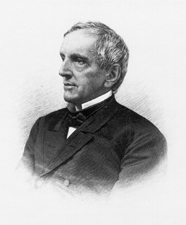
Julius Rockwell
Former U.S. Senator from Massachusetts · 1854–1855 · Whig · Class 2
Julius Rockwell represented Massachusetts in the United States Senate (1854–1855) for the Whig party. The page below collects sourced biographical facts, term history, committee roles, and provenance for Rockwell.
Bioguide ID: R000368
Key facts
- Full name
- Julius Rockwell
- State
- Massachusetts
- Party
- Whig
- Senate class
- Class II
- Senate service
- 1854–1855
- First Senate term
- 1854
- Status
- Left office
- Current term ends
- —
- Born
- 1805
- Bioguide ID
- R000368
- Committee assignments
- —
- Dataset version
- 1.20260602
Biographical narrative
891 words · sourced from the Wikipedia REST extract
Julius Rockwell was a prominent American politician from Massachusetts, affiliated with the Whig Party. He served as a U.S. Senator for a brief period in the mid-1850s, having been appointed to fill a vacancy in the Senate. Prior to his tenure in the Senate, Rockwell had an extensive political career at both the state and federal levels, including service in the Massachusetts House of Representatives and the U.S. House of Representatives. His contributions to Massachusetts politics and his legal career were significant, and he continued to influence the state's governance even after his time in the Senate.
Early life and career
Julius Rockwell was born on April 26, 1805, in Colebrook, Connecticut. He received his early education at private schools before attending Yale University, where he pursued a degree in law. He graduated from Yale in 1826 and subsequently gained admission to the bar, allowing him to practice law. In 1830, Rockwell began his legal career in Pittsfield, Massachusetts, where he established himself as a practicing attorney. His legal expertise and involvement in the community laid the groundwork for his future political endeavors.
Rockwell's political career began in earnest in 1834 when he was elected to the Massachusetts House of Representatives. His tenure in the House lasted four years, during which he served three years as Speaker. This role positioned him as a significant figure in Massachusetts politics, allowing him to influence legislative processes and state governance. In addition to his legislative responsibilities, Rockwell was appointed as a commissioner of the Bank of Massachusetts from 1838 to 1840, further expanding his experience in public service and finance.
In 1842, Rockwell transitioned to federal politics when he successfully ran as a Whig candidate for the U.S. House of Representatives. He was re-elected three times, serving from 1843 until 1851. During this period, he played an active role in shaping national policy and representing the interests of his constituents. After completing his term in the House, Rockwell chose not to seek renomination in 1850, opting instead to focus on other political opportunities.
In 1853, Rockwell was a delegate to the state constitutional convention, an experience that further solidified his standing in Massachusetts politics. His involvement in this convention reflected his commitment to public service and his interest in the legal and constitutional framework of the state. The following year, he was appointed to the U.S. Senate to fill the vacancy left by the resignation of Edward Everett.
Senate tenure
Julius Rockwell's Senate tenure was relatively short, beginning on June 3, 1854, and concluding on January 31, 1855. He was appointed to the Senate as a member of the Whig Party, which was a significant political force during the mid-19th century. His appointment came at a time of considerable political upheaval in the United States, as the nation grappled with issues related to slavery, territorial expansion, and the balance of power between free and slave states.
During his time in the Senate, Rockwell participated in the legislative process and contributed to discussions on various national issues. However, his Senate career was marked by its brevity, as he served only until his successor, Henry Wilson, was elected. Despite the limited duration of his Senate service, Rockwell's involvement in the electoral college during the presidential election of 1856 is noteworthy. He cast his vote for the Republican candidate John C. Frémont, reflecting the shifting political landscape of the time and the emergence of the Republican Party as a significant force in American politics.
Following his departure from the Senate, Rockwell returned to state politics and continued to play a vital role in Massachusetts governance. His experience in the Senate, although brief, contributed to his understanding of federal legislative processes and enhanced his reputation as a seasoned political figure.
Legislative focus and committees
While specific details regarding Julius Rockwell's legislative focus during his Senate tenure are not extensively documented, his prior experience in the Massachusetts House of Representatives and the U.S. House of Representatives likely influenced his approach to governance. Throughout his political career, Rockwell demonstrated a commitment to public service and an interest in the legal and financial matters affecting his constituents.
After leaving the Senate, Rockwell returned to the Massachusetts House of Representatives, where he resumed his role as Speaker in 1858. This position allowed him to influence state legislation and policy once again. His leadership in the House was characterized by a focus on effective governance and the promotion of legislative initiatives that aligned with the interests of his constituents.
In 1859, Rockwell transitioned from legislative leadership to the judiciary when he was appointed to the Massachusetts Superior Court. This appointment marked a significant shift in his career, as he moved from the legislative arena to the judicial branch of government. As a judge, Rockwell applied his legal expertise to interpret and uphold the law, contributing to the administration of justice in Massachusetts.
Rockwell continued to serve as a judge until his retirement in 1886, after which he remained active in his community and continued to influence public affairs. He passed away on May 19, 1888, in Lenox, Massachusetts, where he was laid to rest. His legacy as a politician and jurist reflects a lifetime of dedication to public service and a commitment to the principles of governance that shaped Massachusetts and the nation during a pivotal period in American history.
Notable legislation
Sponsored and co-sponsored legislation for Julius Rockwell is pending operator curation. The biographical narrative above carries the same provenance trail until per-bill rows are written.
Sources
- [1]https://en.wikipedia.org/wiki/Julius_RockwellWikipedia · retrieved 2026-06-02
Notable quotes
Sourced quotes for Julius Rockwell are pending operator curation. Narrative-scope provenance remains attached below.
Sources
- [1]https://en.wikipedia.org/wiki/Julius_RockwellWikipedia · retrieved 2026-06-02
Key positions
Curated policy positions for Julius Rockwell are pending operator review. The biographical narrative above carries the same provenance trail until per-topic positions are written.
Sources
- [1]https://en.wikipedia.org/wiki/Julius_RockwellWikipedia · retrieved 2026-06-02
Terms served
- 1843–1845U.S. House · District 7 · Term 1 · Whig
- 1845–1847U.S. House · District 7 · Term 2 · Whig
- 1847–1849U.S. House · District 7 · Term 3 · Whig
- 1849–1851U.S. House · District 7 · Term 4 · Whig
- 1854–1855U.S. Senate · Term 5 · Whig · Class II
Sources & provenance
Every attributable claim above carries a per-section [N] marker that resolves to the corresponding URL below. Each entry records the upstream provider, the canonical URL, and the timestamp at which the source was retrieved by the ingest pipeline.
Key facts
- https://bioguide.congress.gov/search/bio/R000368bioguide · retrieved 2026-06-02
- https://www.govtrack.us/congress/members/409338govtrack · retrieved 2026-06-02
Biographical narrative
- https://en.wikipedia.org/wiki/Julius_Rockwellwikipedia · retrieved 2026-06-02
Find your senator
Every U.S. state elects two senators. Browse Massachusetts’s delegation, the full former-senator roster, or explore the role and term length.
Related on The Candidate
- Preceded by John DavisEarlier holder of the Massachusetts Class II Senate seat · Whig.Open
- Succeeded by Henry WilsonLater holder of the Massachusetts Class II Senate seat · Republican.Open
- Benjamin GoodhueFormer U.S. Senator from Massachusetts · FederalistOpen
- Benjamin Smith IIFormer U.S. Senator from Massachusetts · DemocraticOpen
- Caleb StrongFormer U.S. Senator from Massachusetts · FederalistOpen
- Charles SumnerFormer U.S. Senator from Massachusetts · Liberal RepublicanOpen