
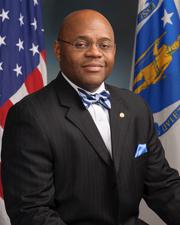
Historical · U.S. Senate · Massachusetts
Mo Cowan
Former U.S. Senator from Massachusetts · 2013–2013 · Democratic · Class 2
Mo Cowan represented Massachusetts in the United States Senate (2013–2013) for the Democratic party. The page below collects sourced biographical facts, term history, committee roles, and provenance for Cowan.
Bioguide ID: C001099
Key facts
- Full name
- Mo Cowan
- State
- Massachusetts
- Party
- Democratic
- Senate class
- Class II
- Senate service
- 2013–2013
- First Senate term
- 2013
- Status
- Left office
- Current term ends
- —
- Born
- 1969
- Bioguide ID
- C001099
- Committee assignments
- —
- Dataset version
- 1.20260601-3
Biographical narrative
932 words · sourced from the Wikipedia REST extract
William M. Cowan is a former United States senator from Massachusetts who served from February to July 2013. A member of the Democratic Party, Cowan was appointed to fill the vacancy left by John Kerry, who resigned to become U.S. Secretary of State. His tenure marked a significant moment in U.S. history, as he became the second African-American senator from Massachusetts and one of only three African-American senators serving during the 113th Congress. Following his brief time in the Senate, Cowan chose not to run for election to complete the remainder of Kerry's term and was succeeded by Ed Markey.
Early life and career
William Maurice Cowan was born on April 4, 1969, in Yadkinville, North Carolina. He grew up in a modest household, the son of a machinist and a seamstress. His father passed away when Cowan was 16 years old, an event that likely had a profound impact on his formative years. Cowan completed his secondary education at Forbush High School, where he initially aspired to pursue a career in medicine. However, he shifted his focus and graduated from Duke University in 1991 with a degree in sociology.
Following his undergraduate studies, Cowan attended Northeastern University School of Law, where he earned his Juris Doctor in 1994. During his time at Northeastern, he participated in a cooperative education program that provided him with practical legal experience. His assignments included working in the office of a state trial court, with North Carolina Prison Legal Services, and at the Palm Beach County Public Defender's Office. These experiences laid the groundwork for his future career in law and public service.
Cowan began his professional career in 1997 when he joined the law firm Mintz Levin as an associate. He specialized in civil litigation and eventually became a partner at the firm. His legal expertise extended to public service when he assisted Massachusetts Governor Mitt Romney in identifying qualified African-American candidates for judicial appointments, addressing concerns regarding diversity in the governor's selections.
In 2009, Cowan transitioned to public service by joining the administration of Governor Deval Patrick. Initially serving as the governor's legal counsel, Cowan was responsible for overseeing the legal operations of the executive branch and managing judicial nominations, including that of Roderick L. Ireland as Chief Justice of the Supreme Judicial Court. His role expanded as he took on the position of chief of staff in January 2011, a role he held until November 2012. During this time, he worked on significant legislative initiatives aimed at controlling healthcare costs and expanding gaming in Massachusetts. He also played a key role in investigating and reorganizing the state Parole Board.
Despite his growing prominence in Massachusetts politics, Cowan made it clear that he did not intend to pursue a long-term political career. He expressed his intention to return to the private sector after his interim Senate appointment, stating that he did not plan to run for office in the future.
Senate tenure
Cowan's appointment to the U.S. Senate came in December 2012, following the announcement that John Kerry would be nominated as Secretary of State by President Barack Obama. Under Massachusetts law, the governor has the authority to fill vacant U.S. Senate seats with an interim appointment. Governor Deval Patrick sought candidates who had not previously run for office and ultimately selected Cowan for the position. This decision was notable, as Cowan became the second African-American U.S. senator from Massachusetts, following Edward Brooke.
Cowan's official Senate term began on February 1, 2013, coinciding with the effective date of Kerry's resignation. He was sworn in on February 7, 2013, by Vice President Joe Biden. During his brief tenure, Cowan served alongside Tim Scott of South Carolina, marking a historic moment as two African-American senators served simultaneously in the Senate.
Cowan's time in the Senate was relatively short, concluding on July 15, 2013, when Ed Markey was sworn in following a special election to complete the remainder of Kerry's term. Despite the brevity of his service, Cowan's appointment was significant in terms of representation and diversity within the U.S. Senate.
Legislative focus and committees
During his time in the Senate, Cowan was assigned to several committees that reflected his interests and expertise. He served on the Committee on Agriculture, Nutrition and Forestry, where he was involved in various subcommittees, including those focused on jobs, rural economic growth, and energy innovation. He also chaired the Subcommittee on Nutrition, Specialty Crops, Food and Agricultural Research, which underscored his commitment to issues related to food security and agricultural research.
In addition to his work on agricultural issues, Cowan was a member of the Committee on Commerce, Science and Transportation. His assignments included participation in subcommittees that addressed aviation safety, communications technology, consumer protection, and oceanic and atmospheric concerns. This wide-ranging involvement allowed him to engage with critical issues affecting commerce and innovation in the United States.
Cowan also served on the Committee on Small Business and Entrepreneurship, which focused on policies and initiatives aimed at supporting small businesses, a vital component of the American economy. His committee assignments reflected a commitment to addressing a variety of issues, from agricultural policy to small business development.
Following his Senate tenure, Cowan returned to private life, but he remained active in various civic and professional organizations. He has served on several nonprofit boards and has been involved in initiatives aimed at promoting diversity and inclusion within the legal profession and beyond. Cowan's contributions to public service and his brief but impactful Senate career continue to be recognized as part of his legacy in Massachusetts and the broader political landscape.
Notable legislation
Sponsored and co-sponsored legislation for Mo Cowan is pending operator curation. The biographical narrative above carries the same provenance trail until per-bill rows are written.
Sources
- [1]https://en.wikipedia.org/wiki/Mo_CowanWikipedia · retrieved 2026-06-01
Notable quotes
Sourced quotes for Mo Cowan are pending operator curation. Narrative-scope provenance remains attached below.
Sources
- [1]https://en.wikipedia.org/wiki/Mo_CowanWikipedia · retrieved 2026-06-01
Key positions
Curated policy positions for Mo Cowan are pending operator review. The biographical narrative above carries the same provenance trail until per-topic positions are written.
Sources
- [1]https://en.wikipedia.org/wiki/Mo_CowanWikipedia · retrieved 2026-06-01
Terms served
- 2013–2013U.S. Senate · Term 1 · Democratic · Class II
Sources & provenance
Every attributable claim above carries a per-section [N] marker that resolves to the corresponding URL below. Each entry records the upstream provider, the canonical URL, and the timestamp at which the source was retrieved by the ingest pipeline.
Key facts
- https://bioguide.congress.gov/search/bio/C001099bioguide · retrieved 2026-06-01
- http://www.cowan.senate.govsenate.gov · retrieved 2026-06-01
Biographical narrative
- https://en.wikipedia.org/wiki/Mo_Cowanwikipedia · retrieved 2026-06-01
Find your senator
Every U.S. state elects two senators. Browse Massachusetts’s delegation, the full former-senator roster, or explore the role and term length.
Related on The Candidate
- Preceded by John KerryEarlier holder of the Massachusetts Class II Senate seat · Democratic.Open
- Benjamin GoodhueFormer U.S. Senator from Massachusetts · FederalistOpen
- Benjamin Smith IIFormer U.S. Senator from Massachusetts · DemocraticOpen
- Caleb StrongFormer U.S. Senator from Massachusetts · FederalistOpen
- Charles SumnerFormer U.S. Senator from Massachusetts · Liberal RepublicanOpen
- Democratic PartyFederal candidates and office holders on the Democratic line.Open