
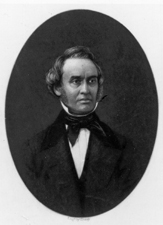
Historical · U.S. Senate · Massachusetts
Robert Rantoul Jr.
Former U.S. Senator from Massachusetts · 1851–1851 · Democratic · Class 1
Robert Rantoul Jr. represented Massachusetts in the United States Senate (1851–1851) for the Democratic party. The page below collects sourced biographical facts, term history, committee roles, and provenance for Jr..
Bioguide ID: R000063
Key facts
- Full name
- Robert Rantoul Jr.
- State
- Massachusetts
- Party
- Democratic
- Senate class
- Class I
- Senate service
- 1851–1851
- First Senate term
- 1851
- Status
- Left office
- Current term ends
- —
- Born
- 1805
- Bioguide ID
- R000063
- Committee assignments
- —
- Dataset version
- 1.20260602
Biographical narrative
951 words · sourced from the Wikipedia REST extract
Robert Rantoul Jr. was an American lawyer and politician from Massachusetts who served as a U.S. Senator and a member of the House of Representatives in the mid-19th century. A member of the Democratic Party, Rantoul's political career was marked by his commitment to justice and advocacy for the rights of the common man. He was born on August 13, 1805, and passed away on August 7, 1852. His brief but impactful tenure in the Senate lasted from February 1, 1851, to March 3, 1851, after which he served in the House of Representatives until his death.
Early life and career
Robert Rantoul Jr. was born in Beverly, Massachusetts, to Robert and Joanna Lovett Rantoul. He was the eldest of their children and displayed a keen intellect and a passion for learning from an early age. Rantoul attended local common schools before enrolling at Phillips Academy in Andover at the age of 14. There, he studied under the renowned educator John Adams, who influenced his academic pursuits. Rantoul's classmates noted his insatiable thirst for knowledge, which extended across various fields of inquiry, from literature to science.
In 1822, Rantoul entered Harvard College, where he continued to demonstrate exceptional diligence in his studies. He was known for his industrious nature, reportedly dedicating long hours to his academic work. After graduating in 1826, Rantoul began his legal education in Salem, Massachusetts, under the guidance of prominent lawyers John Pickering and Leverett Saltonstall. He was admitted to the Massachusetts state bar in 1829.
Rantoul's legal career began with a notable case in which he defended a man accused of murder. This case, which was highly unpopular in the community, showcased Rantoul's commitment to fairness and justice, even in the face of public disapproval. His defense of the accused, despite the hostility he faced, marked the beginning of his reputation as a principled lawyer. However, this decision led to significant personal and professional consequences, including a loss of friends and widespread criticism, ultimately prompting him to leave Salem.
Following his departure from Salem, Rantoul moved to South Reading, Massachusetts, in 1830, and later to Gloucester, where he served in the Massachusetts state legislature for four consecutive years. In 1838, he relocated to Boston, where he continued to face challenges as a liberal advocate for the rights of the common man in a city dominated by wealthy elites. Rantoul's legal practice in Boston was characterized by his dedication to social justice and his willingness to take on landmark cases that aligned with his principles.
One of Rantoul's significant legal cases was Commonwealth v. Hunt, which addressed the rights of organized labor in Massachusetts. His arguments in favor of labor rights contributed to the evolving legal landscape regarding workers' rights and the recognition of labor unions. Rantoul's advocacy for the common man and his commitment to justice defined his professional life and laid the groundwork for his subsequent political career.
Senate tenure
Robert Rantoul Jr. was appointed to the United States Senate in 1851 to fill a vacancy created by the resignation of Robert Charles Winthrop. His Senate term began on February 1, 1851, and concluded on March 3, 1851. Rantoul's time in the Senate was brief, lasting only a little over a month. During this period, he represented Massachusetts as a member of the Democratic Party.
Rantoul's appointment to the Senate came at a time of significant political change in the United States, as the nation grappled with issues related to slavery, states' rights, and the balance of power between the federal government and the states. Although his tenure was short, Rantoul's participation in the Senate was part of a larger political narrative that included debates over these pressing national issues.
After his brief Senate term, Rantoul transitioned to the House of Representatives, where he continued to serve the interests of his constituents until his death in 1852. His political career, though limited in duration, reflected the complexities of the political landscape of the time and his commitment to advocating for the rights of the people he represented.
Legislative focus and committees
Throughout his political career, Robert Rantoul Jr. was known for his dedication to social justice and the rights of the common man. His legislative focus included issues related to labor rights, education, and legal reform. Rantoul's background as a lawyer informed his approach to legislation, as he sought to address injustices and advocate for policies that would benefit the broader population rather than the interests of the wealthy elite.
During his time in the Massachusetts House of Representatives, Rantoul was involved in efforts to reform the state's laws and improve the educational system. He served on the Massachusetts Board of Education from 1837 to 1842, where he contributed to the advancement of public education in the state. His commitment to education was part of a broader belief in the importance of knowledge and access to learning for all individuals.
In the Senate, Rantoul's legislative priorities were likely influenced by the pressing national issues of his time, particularly those surrounding the rights of individuals and the role of government in protecting those rights. Although specific details of his Senate committee assignments and legislative actions are not extensively documented, it is clear that Rantoul's principles guided his approach to governance.
Rantoul's career was ultimately cut short by his untimely death in 1852, but his contributions to the legal and political landscape of Massachusetts and the United States remain noteworthy. He was buried in Central Cemetery in Beverly, Massachusetts, leaving behind a legacy of advocacy for justice and the rights of the common man. Rantoul's life and career reflect the complexities of 19th-century American politics and the ongoing struggle for social justice and equality.
Notable legislation
Sponsored and co-sponsored legislation for Robert Rantoul Jr. is pending operator curation. The biographical narrative above carries the same provenance trail until per-bill rows are written.
Sources
- [1]https://en.wikipedia.org/wiki/Robert_Rantoul_Jr.Wikipedia · retrieved 2026-06-02
Notable quotes
Sourced quotes for Robert Rantoul Jr. are pending operator curation. Narrative-scope provenance remains attached below.
Sources
- [1]https://en.wikipedia.org/wiki/Robert_Rantoul_Jr.Wikipedia · retrieved 2026-06-02
Key positions
Curated policy positions for Robert Rantoul Jr. are pending operator review. The biographical narrative above carries the same provenance trail until per-topic positions are written.
Sources
- [1]https://en.wikipedia.org/wiki/Robert_Rantoul_Jr.Wikipedia · retrieved 2026-06-02
Terms served
- 1851–1851U.S. Senate · Term 1 · Democratic · Class I
- 1851–1852U.S. House · District 2 · Term 2 · Democratic
Sources & provenance
Every attributable claim above carries a per-section [N] marker that resolves to the corresponding URL below. Each entry records the upstream provider, the canonical URL, and the timestamp at which the source was retrieved by the ingest pipeline.
Key facts
- https://bioguide.congress.gov/search/bio/R000063bioguide · retrieved 2026-06-02
- https://www.govtrack.us/congress/members/409043govtrack · retrieved 2026-06-02
Biographical narrative
- https://en.wikipedia.org/wiki/Robert_Rantoul_Jr.wikipedia · retrieved 2026-06-02
Find your senator
Every U.S. state elects two senators. Browse Massachusetts’s delegation, the full former-senator roster, or explore the role and term length.
Related on The Candidate
- Preceded by Robert WinthropEarlier holder of the Massachusetts Class I Senate seat · Whig.Open
- Succeeded by Charles SumnerLater holder of the Massachusetts Class I Senate seat · Liberal Republican.Open
- Benjamin GoodhueFormer U.S. Senator from Massachusetts · FederalistOpen
- Benjamin Smith IIFormer U.S. Senator from Massachusetts · DemocraticOpen
- Caleb StrongFormer U.S. Senator from Massachusetts · FederalistOpen
- Democratic PartyFederal candidates and office holders on the Democratic line.Open