
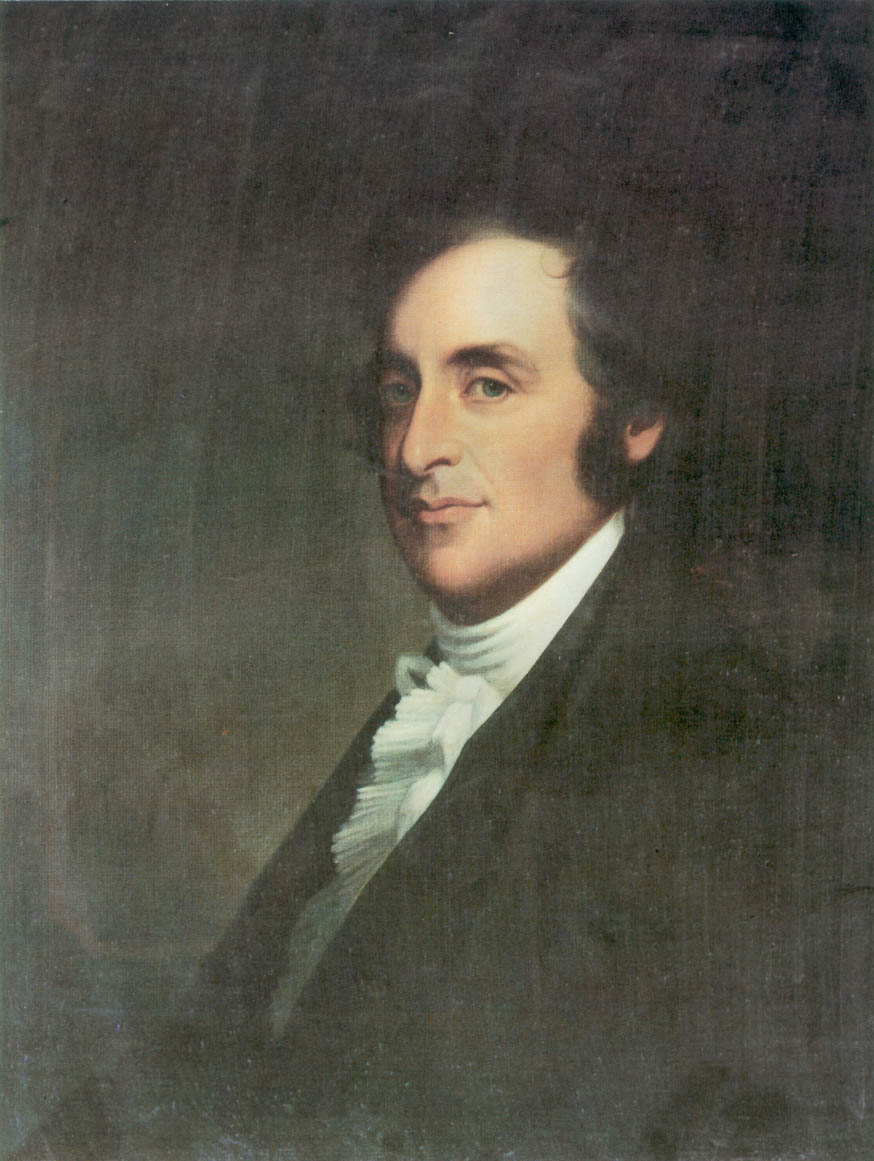
Historical · U.S. Senate · Massachusetts
Samuel Dexter
Former U.S. Senator from Massachusetts · 1799–1801 · Federalist · Class 2
Samuel Dexter represented Massachusetts in the United States Senate (1799–1801) for the Federalist party. The page below collects sourced biographical facts, term history, committee roles, and provenance for Dexter.
Bioguide ID: D000296
Key facts
- Full name
- Samuel Dexter
- State
- Massachusetts
- Party
- Federalist
- Senate class
- Class II
- Senate service
- 1799–1801
- First Senate term
- 1799
- Status
- Left office
- Current term ends
- —
- Born
- 1761
- Bioguide ID
- D000296
- Committee assignments
- —
- Dataset version
- 1.20260602
Biographical narrative
868 words · sourced from the Wikipedia REST extract
Samuel Dexter was an early American statesman who served as a U.S. Senator from Massachusetts and held significant positions in the presidential cabinets of both John Adams and Thomas Jefferson. A member of the Federalist Party, Dexter's political career spanned the late 18th and early 19th centuries, during a formative period in American history. His contributions to the legislative process and his roles in the executive branch highlight his influence on early American governance.
Early life and career
Samuel Dexter was born on May 14, 1761, in Boston, Massachusetts, during the period of colonial rule. He was the son of Samuel Dexter, a politician in Massachusetts, and Hannah Sigourney Dexter. His lineage included a notable grandfather, who served as the fourth minister of Dedham, Massachusetts. Dexter's educational journey culminated in his graduation from Harvard College in 1781, where he received a comprehensive education that would later serve as a foundation for his legal and political career.
After completing his studies, Dexter pursued a career in law, studying under Levi Lincoln Sr. in Worcester, Massachusetts. He gained admission to the bar in 1784 and began practicing law in Lunenburg, Massachusetts. His legal background provided him with the skills necessary for a career in public service, and he quickly transitioned into politics.
Dexter's political career began in the Massachusetts House of Representatives, where he served from 1788 to 1790. His involvement in state politics paved the way for his election to the United States House of Representatives in 1792, where he served during the 3rd Congress. Although he made an unsuccessful bid for re-election in 1796, his political trajectory continued upward as he was subsequently elected to the United States Senate.
Senate tenure
Samuel Dexter's tenure in the U.S. Senate began on March 4, 1799, and lasted until May 30, 1800. He represented Massachusetts as a member of the Federalist Party during a time of significant political and social change in the United States. His time in the Senate was marked by a brief but impactful period of service, during which he engaged in various legislative discussions and contributed to the development of early American law.
During his Senate career, Dexter was involved in notable debates, including a discussion on a Naturalization Bill in 1795, which highlighted the complexities of immigration and citizenship in the new nation. His comments during this debate drew attention to the treatment of Catholics in America, illustrating the contentious nature of religious and political affiliations at the time. Dexter's remarks prompted a defense from James Madison, showcasing the dynamic and often contentious relationships among early American legislators.
In December 1799, Dexter delivered the Senate eulogy for George Washington, reflecting the esteem in which Washington was held and the impact of his leadership on the nation. Despite his relatively short time in the Senate, Dexter's contributions were significant, and he resigned from his position to accept an appointment as the United States Secretary of War under President John Adams.
Legislative focus and committees
Following his resignation from the Senate, Dexter served as the fourth United States Secretary of War from 1800 to 1801. In this role, he advocated for congressional action to allow for the appointment and compensation of field officers for general staff duties, indicating his commitment to strengthening the military infrastructure of the young nation. His tenure as Secretary of War was characterized by efforts to enhance the organization and efficiency of the military during a time of potential conflict.
In January 1801, Dexter was appointed as the third United States Secretary of the Treasury, a position he held until shortly before his fortieth birthday. His appointment came during a transitional period in American politics, as Thomas Jefferson's administration was preparing to take office. Dexter's willingness to continue serving in this role during the early days of Jefferson's presidency demonstrated his dedication to public service, even amidst political shifts.
After leaving his official roles in the federal government, Dexter returned to Boston in 1805, where he resumed his legal practice. He also engaged in various business ventures, including investments in the Dedham Manufacturing Company. His political affiliations evolved over time, as he transitioned from the Federalist Party to the Democratic-Republican Party, aligning himself with its support for the War of 1812.
In addition to his legal and political pursuits, Dexter was an advocate for the temperance movement and played a role in its formal organization in Massachusetts. His commitment to social issues and civic engagement was evident throughout his life, and he was recognized as a Fellow of the American Academy of Arts and Sciences in 1800.
Samuel Dexter's life came to an end on May 4, 1816, in Athens, New York, just days before his fifty-fifth birthday. He was buried at Mount Auburn Cemetery in Cambridge, Massachusetts. His legacy includes not only his contributions to early American governance but also his familial connections, as his son Samuel W. Dexter became the founder of Dexter, Michigan. Additionally, Dexter's name is honored in various locations, including Dexter, Maine, and the USRC Dexter, a vessel named in his memory. His life and career reflect the complexities and challenges of early American politics and the evolving nature of the nation during its formative years.
Notable legislation
Sponsored and co-sponsored legislation for Samuel Dexter is pending operator curation. The biographical narrative above carries the same provenance trail until per-bill rows are written.
Sources
- [1]https://en.wikipedia.org/wiki/Samuel_DexterWikipedia · retrieved 2026-06-02
Notable quotes
Sourced quotes for Samuel Dexter are pending operator curation. Narrative-scope provenance remains attached below.
Sources
- [1]https://en.wikipedia.org/wiki/Samuel_DexterWikipedia · retrieved 2026-06-02
Key positions
Curated policy positions for Samuel Dexter are pending operator review. The biographical narrative above carries the same provenance trail until per-topic positions are written.
Sources
- [1]https://en.wikipedia.org/wiki/Samuel_DexterWikipedia · retrieved 2026-06-02
Terms served
- 1793–1795U.S. House · District 1 · Term 1 · Federalist
- 1799–1801U.S. Senate · Term 2 · Federalist · Class II
Sources & provenance
Every attributable claim above carries a per-section [N] marker that resolves to the corresponding URL below. Each entry records the upstream provider, the canonical URL, and the timestamp at which the source was retrieved by the ingest pipeline.
Key facts
- https://bioguide.congress.gov/search/bio/D000296bioguide · retrieved 2026-06-02
- https://www.govtrack.us/congress/members/403419govtrack · retrieved 2026-06-02
Biographical narrative
- https://en.wikipedia.org/wiki/Samuel_Dexterwikipedia · retrieved 2026-06-02
Find your senator
Every U.S. state elects two senators. Browse Massachusetts’s delegation, the full former-senator roster, or explore the role and term length.
Related on The Candidate
- Preceded by Theodore SedgwickEarlier holder of the Massachusetts Class II Senate seat · Federalist.Open
- Succeeded by Timothy PickeringLater holder of the Massachusetts Class II Senate seat · Federalist.Open
- Benjamin GoodhueFormer U.S. Senator from Massachusetts · FederalistOpen
- Benjamin Smith IIFormer U.S. Senator from Massachusetts · DemocraticOpen
- Caleb StrongFormer U.S. Senator from Massachusetts · FederalistOpen
- Charles SumnerFormer U.S. Senator from Massachusetts · Liberal RepublicanOpen