
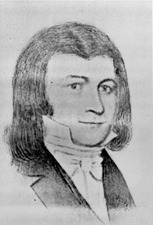
Historical · U.S. Senate · Maine
Judah Dana
Former U.S. Senator from Maine · 1836–1837 · Jackson · Class 1
Judah Dana represented Maine in the United States Senate (1836–1837) for the Jackson party. The page below collects sourced biographical facts, term history, committee roles, and provenance for Dana.
Bioguide ID: D000022
Key facts
- Full name
- Judah Dana
- State
- Maine
- Party
- Jackson
- Senate class
- Class I
- Senate service
- 1836–1837
- First Senate term
- 1836
- Status
- Left office
- Current term ends
- —
- Born
- 1772
- Bioguide ID
- D000022
- Committee assignments
- —
- Dataset version
- 1.20260602
Biographical narrative
1,005 words · sourced from the Wikipedia REST extract
Judah Dana was an American lawyer, judge, and politician who served as a United States Senator from Maine during the late 1830s. A member of the Jacksonian Party, Dana's political career was marked by his involvement in various judicial roles and his contributions to the establishment of Maine as a state. His tenure in the Senate was brief, but his earlier legal and political work laid a foundation for his public service.
Early life and career
Judah Dana was born on April 25, 1772, in Pomfret, Vermont. He was the son of John Winchester Dana and Hannah Putnam Dana. Growing up in a family with a strong emphasis on education and civic duty, Dana pursued his studies diligently. He graduated from Dartmouth College in 1795, an institution known for its rigorous academic standards and commitment to developing leaders. Following his graduation, Dana turned his focus to law, a profession that would define much of his early career.
In 1798, Dana was admitted to the bar, allowing him to begin his legal practice in Fryeburg, Maine, which at that time was part of Massachusetts. His legal career began to flourish as he established himself in the community. Dana's legal expertise and commitment to public service soon led him to take on various roles within the judicial system. From 1805 to 1811, he served as the district attorney for Oxford County, where he was responsible for prosecuting criminal cases and representing the interests of the state. This position provided him with valuable experience in the legal system and helped him build a reputation as a competent lawyer.
In addition to his role as district attorney, Dana served as judge of probate for Oxford County from 1811 to 1822. This position involved overseeing matters related to wills, estates, and guardianships, further solidifying his standing in the legal community. His judicial career continued to expand when he became a judge of the Court of Common Pleas from 1811 to 1823, a role that allowed him to preside over civil cases and contribute to the development of legal precedents in the region. Dana also served as a judge on the circuit court, further enhancing his judicial experience.
Dana's contributions to the legal framework of Maine extended beyond his judicial roles. In 1819, he was a delegate to the convention that framed the state constitution of Maine, which was a significant event in the state's history as it transitioned from a district of Massachusetts to an independent state. His involvement in this convention demonstrated his commitment to the governance and legal structure of Maine. Additionally, he served as a trustee for Bowdoin College from 1820 to 1843, reflecting his dedication to education and the development of future leaders.
In 1836, Dana was appointed as a bank commissioner, a role that involved overseeing the operations and regulations of financial institutions in the state. This position further showcased his versatility and understanding of various aspects of governance and public service. His political career also included a brief tenure as a member of the Governor's Council for Governor Samuel E. Smith, where he served in 1834. These various roles in the legal and political arenas laid the groundwork for his later appointment to the United States Senate.
Senate tenure
Judah Dana's tenure in the United States Senate was relatively short, spanning from December 21, 1836, to March 3, 1837. He was appointed to the Senate following the resignation of Ether Shepley, who left the position to become a judge on the Maine Supreme Judicial Court. Dana's appointment was part of the Jacksonian Party's efforts to maintain its influence in the Senate during a time of political transition.
During his brief time in the Senate, Dana participated in the legislative process and contributed to discussions on various issues facing the nation. However, specific details regarding the legislation he supported or opposed during his tenure are not extensively documented. His time in the Senate ended when a successor was elected and qualified to take over the position. Despite the brevity of his Senate career, Dana's appointment represented a continuation of his long-standing commitment to public service and governance.
Legislative focus and committees
While specific details about Judah Dana's legislative focus during his time in the Senate are limited, his extensive background in law and public service likely influenced his approach to the issues of the day. As a member of the Jacksonian Party, Dana would have aligned with the party's principles, which included a focus on agrarian interests, opposition to the concentration of power in the federal government, and support for the rights of the common man. These principles were reflective of the broader political landscape of the time, which was characterized by debates over states' rights, economic policy, and the role of the federal government.
In addition to his legislative responsibilities, Dana's prior experience as a judge and district attorney would have provided him with valuable insights into legal matters and the implications of legislation on the judicial system. His background in law may have informed his perspectives on issues related to justice, civil rights, and governance. However, due to the limited duration of his Senate career, his specific contributions to legislative committees or particular policy initiatives are not well-documented.
Following the conclusion of his Senate term, Dana returned to his legal and political pursuits in Maine. His earlier roles in the judiciary and his involvement in the state's constitutional development continued to shape his legacy as a public servant. Dana's commitment to the legal profession and his contributions to the governance of Maine remained significant aspects of his life until his passing.
Judah Dana passed away on December 27, 1845, in Fryeburg, Maine, at the age of 73. He is interred at Village Cemetery in Fryeburg, where his contributions to the legal and political landscape of Maine are remembered. His legacy includes not only his brief tenure in the Senate but also his extensive work in the judiciary and his role in shaping the state of Maine during its formative years.
Notable legislation
Sponsored and co-sponsored legislation for Judah Dana is pending operator curation. The biographical narrative above carries the same provenance trail until per-bill rows are written.
Sources
- [1]https://en.wikipedia.org/wiki/Judah_DanaWikipedia · retrieved 2026-06-02
Notable quotes
Sourced quotes for Judah Dana are pending operator curation. Narrative-scope provenance remains attached below.
Sources
- [1]https://en.wikipedia.org/wiki/Judah_DanaWikipedia · retrieved 2026-06-02
Key positions
Curated policy positions for Judah Dana are pending operator review. The biographical narrative above carries the same provenance trail until per-topic positions are written.
Sources
- [1]https://en.wikipedia.org/wiki/Judah_DanaWikipedia · retrieved 2026-06-02
Terms served
- 1836–1837U.S. Senate · Term 1 · Jackson · Class I
Sources & provenance
Every attributable claim above carries a per-section [N] marker that resolves to the corresponding URL below. Each entry records the upstream provider, the canonical URL, and the timestamp at which the source was retrieved by the ingest pipeline.
Key facts
- https://bioguide.congress.gov/search/bio/D000022bioguide · retrieved 2026-06-02
- https://www.govtrack.us/congress/members/403163govtrack · retrieved 2026-06-02
Biographical narrative
- https://en.wikipedia.org/wiki/Judah_Danawikipedia · retrieved 2026-06-02
Find your senator
Every U.S. state elects two senators. Browse Maine’s delegation, the full former-senator roster, or explore the role and term length.
Related on The Candidate
- Preceded by John HolmesEarlier holder of the Maine Class I Senate seat · Adams.Open
- Succeeded by Reuel WilliamsLater holder of the Maine Class I Senate seat · Democratic.Open
- Albion ParrisFormer U.S. Senator from Maine · JacksonOpen
- Amos NourseFormer U.S. Senator from Maine · RepublicanOpen
- Arthur GouldFormer U.S. Senator from Maine · RepublicanOpen
- Bert FernaldFormer U.S. Senator from Maine · RepublicanOpen