
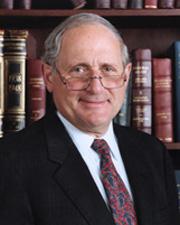
Historical · U.S. Senate · Michigan
Carl Levin
Former U.S. Senator from Michigan · 1979–2015 · Democratic · Class 2
Carl Levin represented Michigan in the United States Senate (1979–2015) for the Democratic party. The page below collects sourced biographical facts, term history, committee roles, and provenance for Levin.
Bioguide ID: L000261
Key facts
- Full name
- Carl Levin
- State
- Michigan
- Party
- Democratic
- Senate class
- Class II
- Senate service
- 1979–2015
- First Senate term
- 1979
- Status
- Left office
- Current term ends
- —
- Born
- 1934
- Bioguide ID
- L000261
- Committee assignments
- —
- Dataset version
- 1.20260601-3
Biographical narrative
912 words · sourced from the Wikipedia REST extract
Carl Levin was an American attorney and politician who served as a United States Senator from Michigan for 36 years, from 1979 until 2015. A member of the Democratic Party, Levin was known for his leadership roles, particularly as the chair of the Senate Armed Services Committee, where he played a significant part in shaping U.S. military policy. Levin's tenure in the Senate was marked by a commitment to public service, civil rights, and government accountability.
Early life and career
Carl Levin was born on June 28, 1934, in Detroit, Michigan, to Jewish parents, Bess Rachel and Saul R. Levin. His father was involved in public service, serving on the Michigan Corrections Commission. Levin completed his secondary education at Detroit Central High School, graduating in 1952. He pursued higher education at Swarthmore College, where he earned a Bachelor of Arts degree in political science in 1956. During his time at Swarthmore, Levin worked various jobs, including as a taxi driver and on an auto factory assembly line, which provided him with firsthand experience of the working-class struggles in his community.
Following his undergraduate studies, Levin attended Harvard Law School, obtaining his Juris Doctor in 1959. After being admitted to the State Bar of Michigan, he began his legal career in private practice, working for the law firm Grossman, Hyman and Grossman. Levin also contributed to legal education by teaching law at Wayne State University and the University of Detroit Mercy.
From 1964 to 1967, Levin served as the General Counsel for the Michigan Civil Rights Commission, where he was instrumental in establishing the Detroit Public Defender's Office and led its Appellate Division. His commitment to civil rights continued as he worked as a special assistant attorney general for the state of Michigan and served as the chief appellate defender for the city of Detroit from 1968 to 1969.
Levin's political career began in earnest when he was elected to the Detroit City Council in 1969. He served two four-year terms, during which he was president of the council for the entirety of his second term. Levin's leadership on the council was characterized by his proactive approach to urban issues, including his frustration with the federal government's handling of repossessed properties, which contributed to urban decay in Detroit. His close relationship with Coleman Young, the city's first African-American mayor, further solidified his political influence in the region.
Senate tenure
Levin's political career advanced significantly when he ran for the United States Senate in 1978, successfully defeating the incumbent Republican Senator Robert P. Griffin. His first term in the Senate began in January 1979, and he would go on to serve a total of six terms, becoming Michigan's longest-serving senator. Levin's re-election campaigns were successful in 1984, 1990, 1996, 2002, and 2008, demonstrating his sustained popularity and support among Michigan voters.
During his time in the Senate, Levin held various leadership positions, most notably as the chair of the Senate Armed Services Committee. He first assumed this role in 2001 and continued until 2003, later resuming the chairmanship from 2007 until his retirement in 2015. Levin's tenure on the Armed Services Committee began when he joined the Senate, reflecting his desire to understand military affairs and contribute to national defense policy.
In March 2013, Levin announced that he would not seek a seventh term, marking the end of an extensive and impactful career in the Senate. He officially retired on January 3, 2015, and shortly thereafter joined the Detroit-based law firm Honigman Miller Schwartz and Cohn LLP. Levin also established the Levin Center at Wayne State University Law School, which focuses on promoting good governance and accountability in public institutions.
Legislative focus and committees
Throughout his Senate career, Levin was involved in numerous legislative initiatives and committee assignments. He was a member of several key committees, including the Committee on Armed Services, where he served as chair and was an ex officio member of all subcommittees. Levin's leadership on this committee allowed him to influence military policy and advocate for cost controls in military procurement processes.
In addition to the Armed Services Committee, Levin served on the Committee on Homeland Security and Governmental Affairs, where he was involved in oversight of government management and federal services. He also chaired the Subcommittee on Oversight of Government Management, the Federal Workforce, and the District of Columbia, as well as the Permanent Subcommittee on Investigations. His work in these roles highlighted his commitment to government accountability and transparency.
Levin sponsored a total of 51 bills that became law during his time in the Senate, reflecting his active engagement in legislative processes. His advocacy extended to various issues, including civil rights, government oversight, and military affairs. Levin's dedication to these causes was evident in his efforts to declassify government documents and reduce secrecy in military operations.
As a senior senator from Michigan, Levin played a crucial role in representing the interests of his constituents and addressing national issues. His long-standing commitment to public service and governance earned him recognition as a significant figure in U.S. politics. Levin's legacy includes his contributions to civil rights, military policy, and the promotion of good governance, which continue to influence discussions in these areas.
In summary, Carl Levin's career spanned decades of public service, marked by significant achievements in the Senate and a dedication to the principles of accountability and transparency in government. His work has left a lasting impact on both Michigan and the nation as a whole.
Notable legislation
Sponsored and co-sponsored legislation for Carl Levin is pending operator curation. The biographical narrative above carries the same provenance trail until per-bill rows are written.
Sources
- [1]https://en.wikipedia.org/wiki/Carl_LevinWikipedia · retrieved 2026-06-01
Notable quotes
Sourced quotes for Carl Levin are pending operator curation. Narrative-scope provenance remains attached below.
Sources
- [1]https://en.wikipedia.org/wiki/Carl_LevinWikipedia · retrieved 2026-06-01
Key positions
Curated policy positions for Carl Levin are pending operator review. The biographical narrative above carries the same provenance trail until per-topic positions are written.
Sources
- [1]https://en.wikipedia.org/wiki/Carl_LevinWikipedia · retrieved 2026-06-01
Terms served
- 1979–1985U.S. Senate · Term 1 · Democratic · Class II
- 1985–1991U.S. Senate · Term 2 · Democratic · Class II
- 1991–1997U.S. Senate · Term 3 · Democratic · Class II
- 1997–2003U.S. Senate · Term 4 · Democratic · Class II
- 2003–2009U.S. Senate · Term 5 · Democratic · Class II
- 2009–2015U.S. Senate · Term 6 · Democratic · Class II
Sources & provenance
Every attributable claim above carries a per-section [N] marker that resolves to the corresponding URL below. Each entry records the upstream provider, the canonical URL, and the timestamp at which the source was retrieved by the ingest pipeline.
Key facts
- https://bioguide.congress.gov/search/bio/L000261bioguide · retrieved 2026-06-01
- http://www.levin.senate.govsenate.gov · retrieved 2026-06-01
Biographical narrative
- https://en.wikipedia.org/wiki/Carl_Levinwikipedia · retrieved 2026-06-01
Find your senator
Every U.S. state elects two senators. Browse Michigan’s delegation, the full former-senator roster, or explore the role and term length.
Related on The Candidate
- Preceded by Robert GriffinEarlier holder of the Michigan Class II Senate seat · Republican.Open
- Alpheus FelchFormer U.S. Senator from Michigan · DemocraticOpen
- Arthur MoodyFormer U.S. Senator from Michigan · DemocraticOpen
- Arthur VandenbergFormer U.S. Senator from Michigan · RepublicanOpen
- Augustus PorterFormer U.S. Senator from Michigan · WhigOpen
- Democratic PartyFederal candidates and office holders on the Democratic line.Open