
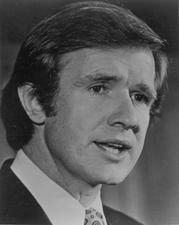
Historical · U.S. Senate · Michigan
Donald Riegle Jr.
Former U.S. Senator from Michigan · 1977–1995 · Democratic · Class 1
Donald Riegle Jr. represented Michigan in the United States Senate (1977–1995) for the Democratic party. The page below collects sourced biographical facts, term history, committee roles, and provenance for Jr..
Bioguide ID: R000249
Key facts
- Full name
- Donald Riegle Jr.
- State
- Michigan
- Party
- Democratic
- Senate class
- Class I
- Senate service
- 1977–1995
- First Senate term
- 1977
- Status
- Left office
- Current term ends
- —
- Born
- 1938
- Bioguide ID
- R000249
- Committee assignments
- —
- Dataset version
- 1.20260602
Biographical narrative
929 words · sourced from the Wikipedia REST extract
Donald W. Riegle Jr. is a former United States Senator who represented the state of Michigan as a member of the Democratic Party. His tenure in the Senate spanned from 1977 until 1995, during which he served three terms. Riegle's political career is marked by his involvement in various legislative initiatives and his commitment to public service, culminating in a total of eight congressional terms.
Early life and career
Donald W. Riegle Jr. was born on February 4, 1938. He grew up in Michigan, where he developed an early interest in public affairs and governance. Riegle pursued higher education, earning a degree from the University of Michigan, which laid the foundation for his future endeavors in politics and public service.
Before entering the Senate, Riegle began his political career in the U.S. House of Representatives. He was elected to the House, where he served multiple terms. His experience in the House provided him with valuable insights into the legislative process and helped him build a network of relationships that would benefit his later work in the Senate. Riegle's time in the House was characterized by his focus on issues pertinent to his constituents and his commitment to advancing the interests of Michigan residents.
Riegle's transition to the Senate in 1977 marked a significant step in his political journey. His election to the Senate was a reflection of his growing influence and the trust placed in him by the voters of Michigan. As a senator, Riegle continued to advocate for policies that aligned with the needs and aspirations of his constituents, further solidifying his reputation as a dedicated public servant.
Senate tenure
Donald W. Riegle Jr. served in the U.S. Senate from 1977 until January 3, 1995. During his time in the Senate, he was a member of the Democratic Party and participated actively in various legislative initiatives. His tenure was marked by a commitment to addressing the challenges faced by Michigan and the nation as a whole.
Throughout his Senate career, Riegle was involved in a range of issues, including economic development, healthcare, and education. He worked to promote policies that aimed to improve the quality of life for his constituents and to foster economic growth in Michigan. Riegle's efforts in the Senate were characterized by his willingness to collaborate with colleagues across party lines, which allowed him to build coalitions and advance important legislation.
Riegle's legislative work was informed by his deep understanding of the issues affecting his state, particularly in the context of the changing economic landscape of the late 20th century. He was attentive to the needs of industries that were vital to Michigan's economy, such as manufacturing and automotive sectors, and sought to implement policies that would support these industries while also addressing broader national concerns.
As a senator, Riegle was known for his dedication to public service and his ability to engage with constituents. He held town hall meetings and other events to connect with the people he represented, ensuring that their voices were heard in the legislative process. This approach helped him maintain a strong relationship with his constituents throughout his time in office.
Riegle's Senate career came to an end in 1995, after which he continued to be involved in public life and various civic engagements. His departure from the Senate marked the conclusion of a significant chapter in his political journey, but his impact on Michigan and national politics remained evident.
Legislative focus and committees
During his time in the Senate, Donald W. Riegle Jr. served on several committees that played a crucial role in shaping legislation. His committee assignments allowed him to focus on issues that were important to both his constituents and the broader American public. Riegle's work on these committees enabled him to influence policy in key areas, including finance, health, and education.
Riegle's legislative focus included economic development initiatives aimed at revitalizing Michigan's economy, particularly during periods of economic downturn. He advocated for policies that supported job creation and workforce development, recognizing the importance of a strong economy for the well-being of his constituents. His efforts in this area were particularly relevant during the economic challenges faced by the state in the 1980s and early 1990s.
Healthcare was another significant area of focus for Riegle. He worked on legislation aimed at improving access to healthcare services and addressing the rising costs of medical care. Riegle's commitment to healthcare reform was driven by his belief in the importance of providing quality care to all Americans, particularly those in underserved communities.
In addition to economic and healthcare issues, Riegle was also involved in education policy. He supported initiatives that aimed to improve educational opportunities for students in Michigan and across the country. Riegle recognized the critical role that education plays in shaping the future of individuals and communities, and he sought to enhance access to quality education for all.
Riegle's committee work and legislative initiatives were characterized by a collaborative approach, as he often sought to build bipartisan support for his proposals. This ability to work across party lines contributed to his effectiveness as a legislator and allowed him to achieve meaningful outcomes during his Senate career.
In summary, Donald W. Riegle Jr. is a notable figure in Michigan's political history, having served as a U.S. Senator for nearly two decades. His dedication to public service, combined with his legislative focus on economic development, healthcare, and education, left a lasting impact on both his constituents and the broader legislative landscape. Riegle's career reflects the complexities and challenges of governance during a transformative period in American history.
Notable legislation
Sponsored and co-sponsored legislation for Donald Riegle Jr. is pending operator curation. The biographical narrative above carries the same provenance trail until per-bill rows are written.
Sources
- [1]https://en.wikipedia.org/wiki/Donald_RiegleWikipedia · retrieved 2026-06-02
Notable quotes
Sourced quotes for Donald Riegle Jr. are pending operator curation. Narrative-scope provenance remains attached below.
Sources
- [1]https://en.wikipedia.org/wiki/Donald_RiegleWikipedia · retrieved 2026-06-02
Key positions
Curated policy positions for Donald Riegle Jr. are pending operator review. The biographical narrative above carries the same provenance trail until per-topic positions are written.
Sources
- [1]https://en.wikipedia.org/wiki/Donald_RiegleWikipedia · retrieved 2026-06-02
Terms served
- 1967–1969U.S. House · District 7 · Term 1 · Republican
- 1969–1971U.S. House · District 7 · Term 2 · Republican
- 1971–1973U.S. House · District 7 · Term 3 · Republican
- 1973–1975U.S. House · District 7 · Term 4 · Republican
- 1975–1977U.S. House · District 7 · Term 5 · Democratic
- 1977–1983U.S. Senate · Term 6 · Democratic · Class I
- 1983–1989U.S. Senate · Term 7 · Democratic · Class I
- 1989–1995U.S. Senate · Term 8 · Democratic · Class I
Sources & provenance
Every attributable claim above carries a per-section [N] marker that resolves to the corresponding URL below. Each entry records the upstream provider, the canonical URL, and the timestamp at which the source was retrieved by the ingest pipeline.
Key facts
- https://bioguide.congress.gov/search/bio/R000249bioguide · retrieved 2026-06-02
- https://www.govtrack.us/congress/members/409225govtrack · retrieved 2026-06-02
Biographical narrative
- https://en.wikipedia.org/wiki/Donald_Rieglewikipedia · retrieved 2026-06-02
Find your senator
Every U.S. state elects two senators. Browse Michigan’s delegation, the full former-senator roster, or explore the role and term length.
Related on The Candidate
- Preceded by Philip HartEarlier holder of the Michigan Class I Senate seat · Democratic.Open
- Succeeded by Spencer AbrahamLater holder of the Michigan Class I Senate seat · Republican.Open
- Alpheus FelchFormer U.S. Senator from Michigan · DemocraticOpen
- Arthur MoodyFormer U.S. Senator from Michigan · DemocraticOpen
- Arthur VandenbergFormer U.S. Senator from Michigan · RepublicanOpen
- Augustus PorterFormer U.S. Senator from Michigan · WhigOpen