
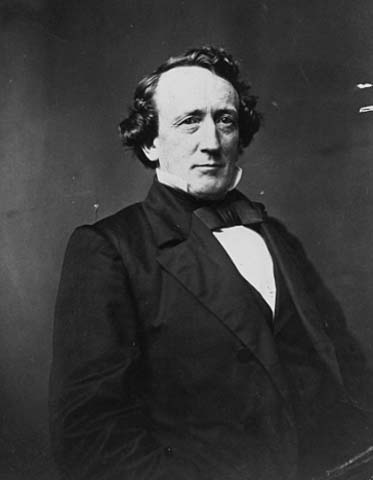
Historical · U.S. Senate · Minnesota
Henry Rice
Former U.S. Senator from Minnesota · 1858–1863 · Democratic · Class 1
Henry Rice represented Minnesota in the United States Senate (1858–1863) for the Democratic party. The page below collects sourced biographical facts, term history, committee roles, and provenance for Rice.
Bioguide ID: R000198
Key facts
- Full name
- Henry Rice
- State
- Minnesota
- Party
- Democratic
- Senate class
- Class I
- Senate service
- 1858–1863
- First Senate term
- 1858
- Status
- Left office
- Current term ends
- —
- Born
- 1816
- Bioguide ID
- R000198
- Committee assignments
- —
- Dataset version
- 1.20260602
Biographical narrative
872 words · sourced from the Wikipedia REST extract
Henry Rice was a prominent American politician and fur trader who played a significant role in the early statehood of Minnesota. Serving as a U.S. Senator from Minnesota from 1858 to 1863, Rice was a member of the Democratic Party and was involved in various political and social initiatives throughout his career. His contributions to the state and his influence in negotiations with Native American tribes marked him as a notable figure in Minnesota's history.
Early life and career
Henry Mower Rice was born on November 29, 1816, in Waitsfield, Vermont, to Edmund Rice and Ellen Durkee Rice. His family had deep roots in New England, with English ancestry tracing back to the early 1600s. Following the death of his father, Rice lived with family friends during his formative years. At the age of 18, he relocated to Detroit, Michigan, where he participated in the surveying of a canal route around the rapids of Sault Ste. Marie, which connects Lake Superior and Lake Huron. This early experience in surveying would lay the groundwork for his later endeavors.
In 1839, Rice moved to Fort Snelling, near present-day Minneapolis, Minnesota, where he began his career as a fur trader. He established relationships with the Ho-Chunk and Chippewa (Ojibwe) tribes, gaining their trust and becoming a significant figure in the fur trade. His prominence in this field allowed him to play a crucial role in negotiating treaties between the United States government and Native American tribes. Notably, he was instrumental in the 1847 treaty with the Ojibwe, which involved the cession of extensive lands.
Rice's political career began to take shape as he lobbied for the establishment of the Minnesota Territory in 1849. He served as a delegate to the U.S. Congress from March 4, 1853, to March 4, 1857, representing the Minnesota Territory in the 33rd and 34th Congresses. During this time, he faced allegations of corruption related to his influence in government land acquisitions; however, he was not expelled from Congress. His involvement in the Minnesota Enabling Act, which facilitated the state's admission to the Union, further solidified his political standing.
In addition to his political activities, Rice was involved in various civic organizations. He served on the board of regents for the University of Minnesota from 1851 to 1859 and held the presidency of the Minnesota Historical Society. His engagement in these roles reflected his commitment to the development of education and historical preservation in the state.
Senate tenure
Henry Rice was elected to the U.S. Senate when Minnesota achieved statehood on May 11, 1858. He served as a Democratic senator in Class 1 until March 4, 1863, during the 35th, 36th, and 37th Congresses. His tenure in the Senate coincided with a tumultuous period in American history, marked by the onset of the Civil War. Initially, Rice had supported the southern states' secession; however, as the war progressed, he shifted his stance to support the Union's efforts.
Throughout his time in the Senate, Rice was involved in various legislative matters, although specific details regarding his voting record and legislative initiatives during this period are not extensively documented. His political career in the Senate was characterized by his alignment with the Democratic Party, particularly the faction known as the "Moccasin Democrats," which was linked to the fur trade and Indian Agency contracts. Rice's political rivalries, particularly with fellow Democrat Henry H. Sibley, also shaped his political landscape.
Despite his contributions, Rice did not seek re-election for a fourth term in Congress. In 1865, he was the Democratic nominee for Governor of Minnesota, but his campaign faced challenges in convincing the electorate of his loyalty to the Union, given his earlier associations. Ultimately, he did not win the governorship.
Legislative focus and committees
During his time in the Senate, Henry Rice's legislative focus was influenced by his background as a fur trader and his relationships with Native American tribes. His previous experience in negotiating treaties with the Ojibwe and other tribes provided him with a unique perspective on issues related to indigenous peoples and land rights. While specific legislative initiatives and committee assignments during his Senate tenure are not detailed in the available records, it is evident that his background informed his approach to various political matters.
Rice's involvement in the Minnesota Enabling Act and his advocacy for the establishment of the Minnesota Territory highlight his commitment to the development and governance of the state. His work in these areas was essential in shaping Minnesota's political landscape during its formative years. Additionally, his participation in numerous treaties with Native American tribes demonstrated his engagement in issues of land and sovereignty, which were critical during a time of significant change in the region.
After concluding his Senate term in 1863, Rice continued to be involved in public life, although specific details about his activities post-Senate are limited. He passed away on January 15, 1894, while visiting San Antonio, Texas. His legacy includes a marble statue in the National Statuary Hall Collection at the United States Capitol, donated by the state of Minnesota in 1916, and the naming of Rice County in his honor. His contributions to Minnesota's statehood and his role in early American politics remain significant aspects of his biography.
Notable legislation
Sponsored and co-sponsored legislation for Henry Rice is pending operator curation. The biographical narrative above carries the same provenance trail until per-bill rows are written.
Sources
- [1]https://en.wikipedia.org/wiki/Henry_M._RiceWikipedia · retrieved 2026-06-02
Notable quotes
Sourced quotes for Henry Rice are pending operator curation. Narrative-scope provenance remains attached below.
Sources
- [1]https://en.wikipedia.org/wiki/Henry_M._RiceWikipedia · retrieved 2026-06-02
Key positions
Curated policy positions for Henry Rice are pending operator review. The biographical narrative above carries the same provenance trail until per-topic positions are written.
Sources
- [1]https://en.wikipedia.org/wiki/Henry_M._RiceWikipedia · retrieved 2026-06-02
Terms served
- 1853–1855U.S. House · District -1 · Term 1 · Democratic
- 1855–1857U.S. House · District -1 · Term 2 · Democratic
- 1858–1863U.S. Senate · Term 3 · Democratic · Class I
Sources & provenance
Every attributable claim above carries a per-section [N] marker that resolves to the corresponding URL below. Each entry records the upstream provider, the canonical URL, and the timestamp at which the source was retrieved by the ingest pipeline.
Key facts
- https://bioguide.congress.gov/search/bio/R000198bioguide · retrieved 2026-06-02
- https://www.govtrack.us/congress/members/409174govtrack · retrieved 2026-06-02
Biographical narrative
- https://en.wikipedia.org/wiki/Henry_M._Ricewikipedia · retrieved 2026-06-02
Find your senator
Every U.S. state elects two senators. Browse Minnesota’s delegation, the full former-senator roster, or explore the role and term length.
Related on The Candidate
- Succeeded by Alexander RamseyLater holder of the Minnesota Class I Senate seat · Republican.Open
- Al FrankenFormer U.S. Senator from Minnesota · DemocraticOpen
- Alonzo EdgertonFormer U.S. Senator from Minnesota · RepublicanOpen
- Arthur NelsonFormer U.S. Senator from Minnesota · RepublicanOpen
- Democratic PartyFederal candidates and office holders on the Democratic line.Open
- Senators from MinnesotaEvery former U.S. Senator who has represented Minnesota.Open