
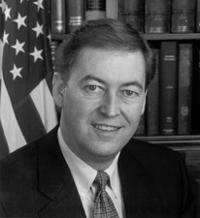
Historical · U.S. Senate · Minnesota
Rod Grams
Former U.S. Senator from Minnesota · 1995–2001 · Republican · Class 1
Rod Grams represented Minnesota in the United States Senate (1995–2001) for the Republican party. The page below collects sourced biographical facts, term history, committee roles, and provenance for Grams.
Bioguide ID: G000367
Key facts
- Full name
- Rod Grams
- State
- Minnesota
- Party
- Republican
- Senate class
- Class I
- Senate service
- 1995–2001
- First Senate term
- 1995
- Status
- Left office
- Current term ends
- —
- Born
- 1948
- Bioguide ID
- G000367
- Committee assignments
- —
- Dataset version
- 1.20260602
Biographical narrative
940 words · sourced from the Wikipedia REST extract
Rod Grams is a former United States Senator from Minnesota, representing the Republican Party. His tenure in the Senate spanned from 1995 until January 3, 2001. Grams is recognized for his contributions to legislative discussions during his time in office, as well as for his background in both business and media prior to entering politics. His career reflects a blend of public service and private sector experience, which shaped his approach to governance and policy-making.
Early life and career
Rod Grams was born on February 4, 1948. He grew up in Minnesota, where he developed an early interest in public affairs and community service. Grams pursued higher education, which laid the foundation for his future endeavors in both business and politics. Before entering the political arena, Grams built a career in the media industry. He worked as a television broadcaster, gaining experience in communication and public engagement. This background in media likely influenced his ability to connect with constituents and articulate his positions on various issues.
In addition to his work in broadcasting, Grams ventured into the business sector. He was involved in various entrepreneurial activities, which provided him with insights into the challenges faced by businesses and the importance of economic policies. This combination of media experience and business acumen equipped Grams with a unique perspective that he would later bring to his role as a legislator.
Grams's entry into politics was marked by his election to the United States Senate. He was elected to represent Minnesota, succeeding a Democratic incumbent. His campaign focused on issues that resonated with the electorate, including economic growth, fiscal responsibility, and a commitment to conservative values. Grams's background in media and business likely contributed to his ability to effectively communicate his message and connect with voters.
Senate tenure
Rod Grams was elected to the U.S. Senate in 1994, marking the beginning of his first term in office in 1995. As a member of the Republican Party, he aligned himself with the party's platform, which emphasized limited government, lower taxes, and a strong national defense. Grams's tenure in the Senate was characterized by his involvement in various legislative initiatives and his participation in key debates on national issues.
During his time in the Senate, Grams served on several committees, which allowed him to influence legislation in areas that were important to his constituents and the nation. His committee assignments provided him with opportunities to engage in discussions about economic policy, healthcare, and national security. Grams's approach to governance was informed by his belief in the principles of free enterprise and individual responsibility, which guided his voting record and legislative priorities.
Grams's Senate career was marked by his efforts to address issues relevant to Minnesota and the broader American public. He was known for advocating policies that aimed to stimulate economic growth and improve the quality of life for his constituents. Throughout his time in office, Grams worked to build relationships with fellow senators, which was essential for advancing his legislative goals.
While in the Senate, Grams faced various challenges, including navigating the complexities of partisan politics and addressing the diverse needs of his constituents. His ability to engage in bipartisan discussions was crucial in fostering collaboration on key issues. Grams's tenure lasted until January 3, 2001, when he completed his term and chose not to seek re-election.
Legislative focus and committees
Throughout his Senate career, Rod Grams focused on a range of legislative issues that reflected his commitment to conservative principles and the needs of his constituents. His work in the Senate encompassed various areas, including economic policy, healthcare, and national security. Grams's legislative priorities were shaped by his background in business and media, which informed his understanding of the challenges faced by individuals and businesses alike.
Grams was an advocate for fiscal responsibility and sought to promote policies that would encourage economic growth. He supported initiatives aimed at reducing government spending and lowering taxes, believing that such measures would benefit both individuals and businesses. His commitment to economic issues resonated with many constituents who valued a strong economy and job creation.
In addition to economic policy, Grams was involved in discussions surrounding healthcare reform. He recognized the importance of accessible and affordable healthcare for Americans and engaged in legislative efforts to address these concerns. Grams's focus on healthcare reflected a broader national dialogue about the need for reform in the healthcare system.
National security was another area of focus for Grams during his time in the Senate. He supported policies aimed at strengthening the nation's defense and ensuring the safety of American citizens. Grams's commitment to national security was informed by the geopolitical landscape of the time, and he sought to address emerging threats to the United States.
Grams served on several Senate committees, which allowed him to play a role in shaping legislation in these critical areas. His committee assignments provided him with a platform to advocate for the interests of Minnesota and contribute to national discussions on important issues. Through his work on these committees, Grams was able to collaborate with colleagues from both parties and engage in meaningful dialogue about the future of the country.
In summary, Rod Grams's career as a U.S. Senator was marked by his dedication to conservative principles and his efforts to address the needs of his constituents. His background in media and business informed his approach to governance, allowing him to effectively communicate his positions and engage with the public. Grams's tenure in the Senate reflected a commitment to economic growth, healthcare reform, and national security, shaping his legacy as a public servant dedicated to the interests of Minnesota and the nation.
Notable legislation
Sponsored and co-sponsored legislation for Rod Grams is pending operator curation. The biographical narrative above carries the same provenance trail until per-bill rows are written.
Sources
- [1]https://en.wikipedia.org/wiki/Rod_GramsWikipedia · retrieved 2026-06-02
Notable quotes
Sourced quotes for Rod Grams are pending operator curation. Narrative-scope provenance remains attached below.
Sources
- [1]https://en.wikipedia.org/wiki/Rod_GramsWikipedia · retrieved 2026-06-02
Key positions
Curated policy positions for Rod Grams are pending operator review. The biographical narrative above carries the same provenance trail until per-topic positions are written.
Sources
- [1]https://en.wikipedia.org/wiki/Rod_GramsWikipedia · retrieved 2026-06-02
Terms served
- 1993–1995U.S. House · District 6 · Term 1 · Republican
- 1995–2001U.S. Senate · Term 2 · Republican · Class I
Sources & provenance
Every attributable claim above carries a per-section [N] marker that resolves to the corresponding URL below. Each entry records the upstream provider, the canonical URL, and the timestamp at which the source was retrieved by the ingest pipeline.
Key facts
- https://bioguide.congress.gov/search/bio/G000367bioguide · retrieved 2026-06-02
- https://www.govtrack.us/congress/members/400560govtrack · retrieved 2026-06-02
Biographical narrative
- https://en.wikipedia.org/wiki/Rod_Gramswikipedia · retrieved 2026-06-02
Find your senator
Every U.S. state elects two senators. Browse Minnesota’s delegation, the full former-senator roster, or explore the role and term length.
Related on The Candidate
- Preceded by David DurenbergerEarlier holder of the Minnesota Class I Senate seat · Republican.Open
- Succeeded by Mark DaytonLater holder of the Minnesota Class I Senate seat · Democratic.Open
- Al FrankenFormer U.S. Senator from Minnesota · DemocraticOpen
- Alexander RamseyFormer U.S. Senator from Minnesota · RepublicanOpen
- Alonzo EdgertonFormer U.S. Senator from Minnesota · RepublicanOpen
- Arthur NelsonFormer U.S. Senator from Minnesota · RepublicanOpen