
Historical · U.S. Senate · Missouri
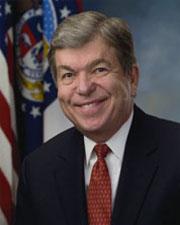
Roy Blunt
Former U.S. Senator from Missouri · 2011–2023 · Republican · Class 3
Roy Blunt represented Missouri in the United States Senate (2011–2023) for the Republican party. The page below collects sourced biographical facts, term history, committee roles, and provenance for Blunt.
Bioguide ID: B000575
Key facts
- Full name
- Roy Blunt
- State
- Missouri
- Party
- Republican
- Senate class
- Class III
- Senate service
- 2011–2023
- First Senate term
- 2011
- Status
- Left office
- Current term ends
- —
- Born
- 1950
- Bioguide ID
- B000575
- Committee assignments
- —
- Dataset version
- 1.20260601-3
Biographical narrative
859 words · sourced from the Wikipedia REST extract
Roy Blunt is a former United States Senator from Missouri, representing the Republican Party from 2011 until the conclusion of his term in January 2023. Prior to his tenure in the Senate, Blunt served in various political capacities, including as the Missouri Secretary of State and as a U.S. Representative. His political career spans several decades, during which he has held significant leadership roles within the Republican Party.
Early life and career
Roy Blunt was born on January 10, 1950, in Niangua, Missouri. He is the son of Leroy Blunt, who was also involved in politics, and Neva Dora (née Letterman). Blunt pursued higher education at Southwest Baptist University, where he earned a Bachelor of Arts degree in history in 1970. He continued his academic journey at Southwest Missouri State University, obtaining a master's degree in history in 1972. During his college years, he received multiple draft deferments from the Vietnam War.
Following his education, Blunt began his professional career as a high school history teacher at Marshfield High School in Marshfield, Missouri, from 1970 to 1972. He later transitioned to higher education, teaching at Southwest Baptist University and serving as an adjunct faculty member at Drury University. His commitment to education culminated in his role as president of Southwest Baptist University from 1993 to 1996.
Blunt's entry into politics began in 1973 when he was appointed as the county clerk and chief election official of Greene County, Missouri. He was subsequently elected to this position three times, serving a total of 12 years. His political aspirations grew, and in 1980, he ran for the office of Lieutenant Governor of Missouri after the incumbent decided to run for governor. Although he won the Republican primary, he was defeated in the general election.
In 1984, Blunt successfully ran for the position of Missouri Secretary of State, becoming the first Republican to hold the office in 50 years. He won the Republican primary with a significant majority and subsequently defeated his Democratic opponent in the general election. Blunt was re-elected in 1988, solidifying his position in Missouri politics. In 1992, he sought the governorship but was unsuccessful in the Republican primary.
Senate tenure
Blunt's congressional career began in 1997 when he was elected to the U.S. House of Representatives, representing Missouri's 7th congressional district. This district is known for its conservative leanings, located in the Ozark Mountains of southwestern Missouri. Blunt won the Republican primary in 1996 and subsequently defeated his Democratic opponent in the general election.
During his time in the House, Blunt held several leadership positions, including serving as the Republican Whip from 2003 to 2009. His influence within the party grew, and in 2010, he successfully ran for the U.S. Senate, taking office in January 2011. Blunt's Senate career included various leadership roles, such as being elected vice chairman of the Senate Republican Conference and later serving as the chairman of the Senate Policy Committee.
In March 2021, Blunt announced that he would not seek re-election in 2022, concluding his Senate tenure on January 3, 2023. He was succeeded by Eric Schmitt, the Attorney General of Missouri. Following his departure from the Senate, Blunt transitioned to a career in lobbying, joining the firm Husch Blackwell Strategies, and became a member of the board of directors for Southwest Airlines.
Legislative focus and committees
Throughout his political career, Blunt has been involved in a range of legislative issues, reflecting his priorities and the interests of his constituents. His focus has included education, fiscal policy, health care, gun rights, and social issues.
In education, Blunt supported initiatives such as the No Child Left Behind Act and advocated for school prayer. He expressed support for school vouchers in the District of Columbia but opposed broader legislation that would allow states to use federal funds for private or religious school vouchers. His voting record on education issues included a low rating from the National Education Association.
On fiscal matters, Blunt maintained a strong alignment with business interests, receiving a high rating from the United States Chamber of Commerce. He supported reforms to U.S. bankruptcy laws and opposed federal cap and trade legislation. Blunt also endorsed domestic oil drilling and expressed skepticism regarding the scientific consensus on climate change.
In the realm of gun policy, Blunt voted to protect gun manufacturers and dealers from lawsuits related to crimes committed with their products. He supported background checks for gun purchases at gun shows and received an "A" rating from the National Rifle Association Political Victory Fund.
Health care was another significant area of focus for Blunt. He chaired the House Republican Health Care Solutions Group and was instrumental in passing legislation aimed at restricting the sale of over-the-counter cold medicines that could be used in methamphetamine production. His comments on health care systems in other countries, particularly regarding age-related medical procedures, drew scrutiny and were fact-checked by media organizations.
Blunt's legislative record also included votes on social issues, although specific details on his positions in this area are less documented. Overall, his tenure in Congress reflected a commitment to conservative principles and a focus on issues pertinent to his constituents in Missouri.
Notable legislation
Sponsored and co-sponsored legislation for Roy Blunt is pending operator curation. The biographical narrative above carries the same provenance trail until per-bill rows are written.
Sources
- [1]https://en.wikipedia.org/wiki/Roy_BluntWikipedia · retrieved 2026-06-01
Notable quotes
Sourced quotes for Roy Blunt are pending operator curation. Narrative-scope provenance remains attached below.
Sources
- [1]https://en.wikipedia.org/wiki/Roy_BluntWikipedia · retrieved 2026-06-01
Key positions
Curated policy positions for Roy Blunt are pending operator review. The biographical narrative above carries the same provenance trail until per-topic positions are written.
Sources
- [1]https://en.wikipedia.org/wiki/Roy_BluntWikipedia · retrieved 2026-06-01
Terms served
- 1997–1999U.S. House · District 7 · Term 1 · Republican
- 1999–2001U.S. House · District 7 · Term 2 · Republican
- 2001–2003U.S. House · District 7 · Term 3 · Republican
- 2003–2005U.S. House · District 7 · Term 4 · Republican
- 2005–2007U.S. House · District 7 · Term 5 · Republican
- 2007–2009U.S. House · District 7 · Term 6 · Republican
- 2009–2011U.S. House · District 7 · Term 7 · Republican
- 2011–2017U.S. Senate · Term 8 · Republican · Class III
- 2017–2023U.S. Senate · Term 9 · Republican · Class III
Sources & provenance
Every attributable claim above carries a per-section [N] marker that resolves to the corresponding URL below. Each entry records the upstream provider, the canonical URL, and the timestamp at which the source was retrieved by the ingest pipeline.
Key facts
- https://bioguide.congress.gov/search/bio/B000575bioguide · retrieved 2026-06-01
- https://www.blunt.senate.govsenate.gov · retrieved 2026-06-01
Biographical narrative
- https://en.wikipedia.org/wiki/Roy_Bluntwikipedia · retrieved 2026-06-01
Find your senator
Every U.S. state elects two senators. Browse Missouri’s delegation, the full former-senator roster, or explore the role and term length.
Related on The Candidate
- Preceded by Kit BondEarlier holder of the Missouri Class III Senate seat · Republican.Open
- Alexander BucknerFormer U.S. Senator from Missouri · JacksonOpen
- Benjamin BrownFormer U.S. Senator from Missouri · RepublicanOpen
- Carl SchurzFormer U.S. Senator from Missouri · Liberal RepublicanOpen
- Charles DrakeFormer U.S. Senator from Missouri · RepublicanOpen
- Republican PartyFederal candidates and office holders on the Republican line.Open