
Historical · U.S. Senate · Missouri
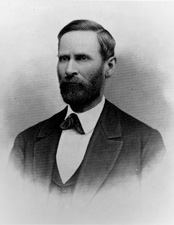
Waldo Johnson
Former U.S. Senator from Missouri · 1861–1863 · Democratic · Class 3
Waldo Johnson represented Missouri in the United States Senate (1861–1863) for the Democratic party. The page below collects sourced biographical facts, term history, committee roles, and provenance for Johnson.
Bioguide ID: J000179
Key facts
- Full name
- Waldo Johnson
- State
- Missouri
- Party
- Democratic
- Senate class
- Class III
- Senate service
- 1861–1863
- First Senate term
- 1861
- Status
- Left office
- Current term ends
- —
- Born
- 1817
- Bioguide ID
- J000179
- Committee assignments
- —
- Dataset version
- 1.20260602
Biographical narrative
806 words · sourced from the Wikipedia REST extract
Waldo Johnson was a prominent American lawyer and politician who served as a U.S. Senator from Missouri during a tumultuous period in American history. Born in 1817 in Virginia, Johnson's political career spanned several significant events, including the Civil War, during which he aligned with the Confederacy. His tenure in the Senate was marked by controversy, leading to his expulsion for disloyalty. After the war, he continued to engage in public service, including a role in a state constitutional convention.
Early life and career
Waldo Porter Johnson was born on September 16, 1817, in Bridgeport, Virginia, which is now part of West Virginia. He was the son of Olive Waldo and William Johnson, who was a postmaster in Bridgeport. Johnson grew up in a large family, having a total of twelve siblings. His family had political connections; his uncle, Joseph Johnson, was a notable local farmer and politician who served as a Congressman and later became the Governor of Virginia in 1851. This familial backdrop likely influenced Johnson's early interest in law and politics.
Johnson received his education at both public and private institutions, culminating in his graduation from Rector College, a Baptist-affiliated institution in Pruntytown, Virginia, in 1839. Following his graduation, he pursued a legal career by studying law and gaining admission to the Virginia bar in 1841. He began practicing law in Harrison County, Virginia, before relocating to Osceola, Missouri, in 1842. This move placed him at the forefront of the evolving political landscape in the border region between Missouri and what would become Kansas.
In addition to his legal career, Johnson volunteered for military service during the Mexican-American War, enlisting as a private in the First Missouri Regiment of Mounted Volunteers. His political career began to take shape when he was elected to the Missouri House of Representatives in 1847. He subsequently held several legal and judicial positions, including circuit attorney in 1848 and judge of the seventh judicial circuit in 1851. After resigning from these roles in 1852, he returned to private practice while also filing multiple land claims with the General Land Office during the 1850s.
Senate tenure
Waldo Johnson's political career reached a significant milestone when he was elected as a Democrat to the United States Senate in 1860. He officially took office on March 17, 1861. His time in the Senate was brief, as he was expelled on January 10, 1862, due to accusations of disloyalty to the Union government amid the rising tensions of the Civil War. His expulsion was a reflection of the intense political divisions that characterized the era.
During his brief Senate tenure, Johnson participated in a peace convention in Washington, D.C., in 1861, which aimed to find solutions to prevent the impending Civil War. However, following his expulsion, he aligned himself with the Confederate cause, volunteering to serve in the Confederate Army. He achieved the rank of Major in the Missouri State Guard and played a role in recruiting a battalion that fought in the Battle of Pea Ridge in Arkansas.
In April 1862, Johnson's military unit was reorganized in Memphis, Tennessee, as the 4th Missouri Infantry Regiment, with Johnson serving as lieutenant colonel. His military service continued until the end of the Civil War, and in 1863, he was appointed to the Confederate States Senate to fill a vacancy, serving until 1865.
Legislative focus and committees
Waldo Johnson's legislative focus during his time in the Senate was influenced by the political climate of the Civil War. His initial efforts were aimed at finding a peaceful resolution to the conflict, as evidenced by his participation in the peace convention. However, after his expulsion, his alignment with the Confederacy marked a significant shift in his political stance.
After the Civil War, Johnson returned to private life and resumed his legal practice in Osceola, Missouri. He was granted a presidential pardon, allowing him to reintegrate into society following the war's conclusion. In 1875, he was appointed as the president of the Missouri constitutional convention, a role that highlighted his continued involvement in state politics and governance.
Johnson's legacy is intertwined with the complex history of Missouri during the Civil War and Reconstruction. His political career, marked by both service in the U.S. Senate and the Confederate Senate, reflects the divided loyalties that characterized many individuals during this period. He passed away on August 14, 1885, in Osceola, Missouri, and was later reburied in a family tomb at Forest Hill Calvary Cemetery in Kansas City.
Johnson's family continued his legacy in law and politics; his son William Tell Johnson became a lawyer and judge, while other family members also pursued careers in public service. The impact of Waldo Johnson's life and career remains a point of interest for those studying the political history of Missouri and the broader context of the Civil War era.
Notable legislation
Sponsored and co-sponsored legislation for Waldo Johnson is pending operator curation. The biographical narrative above carries the same provenance trail until per-bill rows are written.
Sources
- [1]https://en.wikipedia.org/wiki/Waldo_P._JohnsonWikipedia · retrieved 2026-06-02
Notable quotes
Sourced quotes for Waldo Johnson are pending operator curation. Narrative-scope provenance remains attached below.
Sources
- [1]https://en.wikipedia.org/wiki/Waldo_P._JohnsonWikipedia · retrieved 2026-06-02
Key positions
Curated policy positions for Waldo Johnson are pending operator review. The biographical narrative above carries the same provenance trail until per-topic positions are written.
Sources
- [1]https://en.wikipedia.org/wiki/Waldo_P._JohnsonWikipedia · retrieved 2026-06-02
Terms served
- 1861–1863U.S. Senate · Term 1 · Democratic · Class III
Sources & provenance
Every attributable claim above carries a per-section [N] marker that resolves to the corresponding URL below. Each entry records the upstream provider, the canonical URL, and the timestamp at which the source was retrieved by the ingest pipeline.
Key facts
- https://bioguide.congress.gov/search/bio/J000179bioguide · retrieved 2026-06-02
- https://www.govtrack.us/congress/members/406074govtrack · retrieved 2026-06-02
Biographical narrative
- https://en.wikipedia.org/wiki/Waldo_P._Johnsonwikipedia · retrieved 2026-06-02
Find your senator
Every U.S. state elects two senators. Browse Missouri’s delegation, the full former-senator roster, or explore the role and term length.
Related on The Candidate
- Preceded by James GreenEarlier holder of the Missouri Class III Senate seat · Democratic.Open
- Succeeded by Benjamin BrownLater holder of the Missouri Class III Senate seat · Republican.Open
- Alexander BucknerFormer U.S. Senator from Missouri · JacksonOpen
- Carl SchurzFormer U.S. Senator from Missouri · Liberal RepublicanOpen
- Charles DrakeFormer U.S. Senator from Missouri · RepublicanOpen
- Democratic PartyFederal candidates and office holders on the Democratic line.Open