
Historical · U.S. Senate · Mississippi
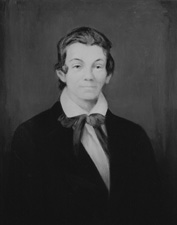
James Trotter
Former U.S. Senator from Mississippi · 1838–1839 · Democratic · Class 1
James Trotter represented Mississippi in the United States Senate (1838–1839) for the Democratic party. The page below collects sourced biographical facts, term history, committee roles, and provenance for Trotter.
Bioguide ID: T000380
Key facts
- Full name
- James Trotter
- State
- Mississippi
- Party
- Democratic
- Senate class
- Class I
- Senate service
- 1838–1839
- First Senate term
- 1838
- Status
- Left office
- Current term ends
- —
- Born
- 1802
- Bioguide ID
- T000380
- Committee assignments
- —
- Dataset version
- 1.20260602
Biographical narrative
1,022 words · sourced from the Wikipedia REST extract
James Trotter was a prominent figure in the early political landscape of Mississippi, serving as a United States Senator and holding various judicial positions throughout his career. Born in Virginia in the early 19th century, Trotter's life was marked by his involvement in law and politics, reflecting the complexities of the era in which he lived. His tenure in the Senate was brief, but it was part of a broader career that included significant roles in state government and the judiciary.
Early life and career
James Trotter was born on November 5, 1802, in Brunswick County, Virginia. His early years were spent in a region that was deeply influenced by the agricultural economy and the social structures of the time. In pursuit of education, Trotter moved to eastern Tennessee, where he attended private schools. This educational background laid the foundation for his future career in law. After completing his studies, Trotter was admitted to the bar in 1820, marking the beginning of his professional journey.
In 1823, Trotter relocated to Hamilton, Mississippi, where he began practicing law. This move to Mississippi coincided with a period of significant growth and development in the state, which was becoming a focal point for new settlers and economic opportunities. Trotter's legal career flourished, and he quickly became an influential figure in the local community. His involvement in the legal profession was complemented by his engagement in politics, as he sought to shape the governance of his adopted state.
Trotter's political career began in earnest when he served in the Mississippi House of Representatives from 1827 to 1829. This role allowed him to gain valuable experience in legislative processes and to understand the needs and concerns of his constituents. Following his time in the House, he was elected to the Mississippi Senate, where he served from 1829 to 1833. During this period, Trotter was involved in various legislative initiatives that aimed to address the challenges facing Mississippi as it developed.
In 1833, Trotter was appointed as a judge of the circuit court of Mississippi. This position further solidified his reputation as a legal authority in the state. His judicial responsibilities included presiding over cases and ensuring the fair application of the law, which was particularly important in a time when legal precedents were still being established in the region. Trotter's tenure as a judge demonstrated his commitment to justice and the rule of law, values that would continue to guide his career.
Senate tenure
Trotter's entry into the United States Senate came in 1838 when he was appointed as a Democrat to fill the vacancy left by the resignation of Senator John Black. His term began on January 22, 1838, and he served until July 10 of the same year, when he resigned from the Senate. Although his time in the Senate was relatively short, it was a significant moment in his career, as it placed him at the national level of politics during a critical period in American history.
During his brief tenure in the Senate, Trotter participated in discussions and debates that were reflective of the political climate of the time. The late 1830s were marked by tensions surrounding issues such as states' rights, slavery, and economic policies. As a member of the Democratic Party, Trotter aligned with the prevailing views of his party, which often emphasized agrarian interests and the rights of individual states. His role in the Senate allowed him to contribute to the legislative discourse of the era, although the specifics of his contributions are less documented due to the brevity of his service.
Following his resignation from the Senate, Trotter returned to Mississippi, where he continued to engage in public service. He was appointed as a judge of the Mississippi Supreme Court from 1839 to 1842, filling a vacancy caused by the resignation of Justice Daniel W. Wright. This position allowed him to influence the judicial landscape of Mississippi significantly. In 1839, Trotter was elected to a six-year term on the Supreme Court, further establishing his legal credentials and commitment to public service.
Legislative focus and committees
Throughout his career, Trotter's legislative focus and judicial roles reflected the priorities and challenges of Mississippi during the early 19th century. His involvement in the Mississippi House of Representatives and the Senate underscored his dedication to addressing the needs of his constituents, particularly in a state grappling with rapid growth and the complexities of a changing economy.
As a member of the Mississippi Senate and later as a U.S. Senator, Trotter was engaged in discussions that revolved around key issues of the time, including economic development, infrastructure, and the legal frameworks that governed the state. His legal background informed his approach to legislation, as he sought to create laws that would benefit the citizens of Mississippi and promote stability within the state.
After his Senate term, Trotter continued to serve in various judicial capacities, including his role as a judge on the Mississippi Supreme Court. His experience in the judiciary allowed him to contribute to the development of legal precedents that would shape the state's legal system for years to come. Additionally, Trotter served as vice chancellor of the northern district of Mississippi from 1855 to 1857, further demonstrating his commitment to public service and the legal profession.
In the later years of his career, Trotter took on the role of a professor of law at the University of Mississippi from 1860 to 1862. This position allowed him to share his knowledge and experience with the next generation of legal professionals, contributing to the education and training of future lawyers in the state. His appointment as a circuit judge in 1866 marked the final chapter of his judicial career, as he continued to serve until his death later that year.
James Trotter passed away on March 9, 1866, in Holly Springs, Mississippi. His contributions to the legal and political landscape of Mississippi left a lasting impact, and he was laid to rest at Hillcrest Cemetery. His life and career reflect the complexities of a transformative period in American history, characterized by rapid change and the evolving nature of governance and law.
Notable legislation
Sponsored and co-sponsored legislation for James Trotter is pending operator curation. The biographical narrative above carries the same provenance trail until per-bill rows are written.
Sources
- [1]https://en.wikipedia.org/wiki/James_F._TrotterWikipedia · retrieved 2026-06-02
Notable quotes
Sourced quotes for James Trotter are pending operator curation. Narrative-scope provenance remains attached below.
Sources
- [1]https://en.wikipedia.org/wiki/James_F._TrotterWikipedia · retrieved 2026-06-02
Key positions
Curated policy positions for James Trotter are pending operator review. The biographical narrative above carries the same provenance trail until per-topic positions are written.
Sources
- [1]https://en.wikipedia.org/wiki/James_F._TrotterWikipedia · retrieved 2026-06-02
Terms served
- 1838–1839U.S. Senate · Term 1 · Democratic · Class I
Sources & provenance
Every attributable claim above carries a per-section [N] marker that resolves to the corresponding URL below. Each entry records the upstream provider, the canonical URL, and the timestamp at which the source was retrieved by the ingest pipeline.
Key facts
- https://bioguide.congress.gov/search/bio/T000380bioguide · retrieved 2026-06-02
- https://www.govtrack.us/congress/members/410949govtrack · retrieved 2026-06-02
Biographical narrative
- https://en.wikipedia.org/wiki/James_F._Trotterwikipedia · retrieved 2026-06-02
Find your senator
Every U.S. state elects two senators. Browse Mississippi’s delegation, the full former-senator roster, or explore the role and term length.
Related on The Candidate
- Preceded by John BlackEarlier holder of the Mississippi Class I Senate seat · Whig.Open
- Succeeded by John HendersonLater holder of the Mississippi Class I Senate seat · Whig.Open
- Adelbert AmesFormer U.S. Senator from Mississippi · RepublicanOpen
- Albert BrownFormer U.S. Senator from Mississippi · DemocraticOpen
- Anselm McLaurinFormer U.S. Senator from Mississippi · DemocraticOpen
- Blanche BruceFormer U.S. Senator from Mississippi · RepublicanOpen