
Historical · U.S. Senate · Mississippi
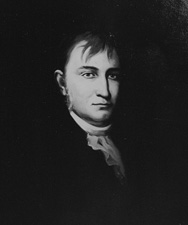
Thomas Reed
Former U.S. Senator from Mississippi · 1826–1829 · Class 2
Thomas Reed represented Mississippi in the United States Senate (1826–1829). The page below collects sourced biographical facts, term history, committee roles, and provenance for Reed.
Bioguide ID: R000129
Key facts
- Full name
- Thomas Reed
- State
- Mississippi
- Party
- —
- Senate class
- Class II
- Senate service
- 1826–1829
- First Senate term
- 1826
- Status
- Left office
- Current term ends
- —
- Born
- 1787
- Bioguide ID
- R000129
- Committee assignments
- —
- Dataset version
- 1.20260602
Biographical narrative
831 words · sourced from the Wikipedia REST extract
Thomas Reed was a prominent political figure in the early 19th century, serving as a United States Senator from Mississippi. His political career was marked by his affiliation with the Jacksonian movement, and he played a significant role in the legislative landscape of his time. Reed's life spanned a period of considerable change in the United States, and his contributions to the Senate are part of the historical record of American governance.
Early life and career
Thomas Reed was born on May 7, 1787, in the vicinity of Lexington, Kentucky. His early education took place in public schools, and he furthered his studies at the College of New Jersey, which is now known as Princeton University. Following his academic pursuits, Reed studied law and successfully gained admission to the bar, allowing him to practice law professionally.
Reed began his legal career in Lexington in 1808, where he established himself as a practicing attorney. In 1809, he relocated to Natchez, Mississippi, a move that would set the stage for his future political endeavors. In Natchez, he took on the role of city clerk in 1811, which provided him with valuable experience in local governance. His early political aspirations included a bid for a congressional delegate position in 1813, although this attempt was unsuccessful.
In 1821, Reed was appointed as the attorney general of Mississippi, a position he held until 1826. This role allowed him to influence legal matters within the state and further solidified his reputation as a legal and political figure. In 1825, Reed was elected to the Mississippi House of Representatives; however, he chose not to take his seat, indicating a shift in his political focus. Instead, he was elected to the United States Senate in 1826 to fill a vacancy left by the resignation of David Holmes. Reed's first term in the Senate began on January 28, 1826, and he served until March 3, 1827.
Senate tenure
Reed's initial tenure in the Senate was relatively brief, as he was not successful in his bid for reelection in 1827. However, his political career was not over, as he returned to the Senate after being elected again in 1828. This second term commenced on March 4, 1829, and lasted until the end of the year, concluding on December 31, 1829. During his time in the Senate, Reed was involved in various legislative discussions and decisions that reflected the political climate of the era.
Although specific details regarding Reed's actions and votes in the Senate are not extensively documented, his participation in the legislative process during a formative period in American history is acknowledged. The early 19th century was characterized by significant political developments, including the rise of the Jacksonian movement, which emphasized populism and the expansion of democratic participation. Reed's alignment with this movement suggests that he was engaged with the key issues of his time, advocating for policies that resonated with the Jacksonian ideals.
Legislative focus and committees
Throughout his Senate career, Reed's legislative focus was likely influenced by the political and social dynamics of Mississippi and the broader United States. While specific committees or legislative initiatives he may have participated in are not detailed in the available records, his background as an attorney general and city clerk likely informed his perspectives on legal and governance issues.
Reed's affiliation with the Jacksonian party indicates that he may have been involved in discussions surrounding states' rights, economic development, and the expansion of the United States. The Jacksonian era was marked by debates over the role of the federal government, the economy, and the rights of individuals, particularly in relation to land and property. Reed's legal background would have provided him with a unique insight into these matters, allowing him to contribute to the Senate's deliberations on relevant legislation.
In addition to his legislative responsibilities, Reed's personal life also played a role in shaping his public persona. He married Margaret Allison Ross, the daughter of a plantation owner, which connected him to the social and economic fabric of Mississippi during a time when agriculture, particularly cotton production, was a dominant force in the region's economy.
Reed's life came to an end on November 26, 1829, in Lexington, Kentucky, where he was born. His passing marked the conclusion of a career that had significant implications for his state and the nation. As a former U.S. Senator, Reed's contributions to the legislative process and his involvement in the political landscape of early 19th-century America remain part of the historical narrative of the United States Congress.
In summary, Thomas Reed's life and career reflect the complexities of American politics during a transformative period. His journey from a young lawyer in Kentucky to a U.S. Senator from Mississippi illustrates the opportunities and challenges faced by individuals in the early republic. Reed's legacy, while not extensively documented in terms of specific legislative achievements, is nonetheless a part of the broader story of American governance and the evolution of political thought in the United States.
Notable legislation
Sponsored and co-sponsored legislation for Thomas Reed is pending operator curation. The biographical narrative above carries the same provenance trail until per-bill rows are written.
Sources
- [1]https://en.wikipedia.org/wiki/Thomas_Buck_ReedWikipedia · retrieved 2026-06-02
Notable quotes
Sourced quotes for Thomas Reed are pending operator curation. Narrative-scope provenance remains attached below.
Sources
- [1]https://en.wikipedia.org/wiki/Thomas_Buck_ReedWikipedia · retrieved 2026-06-02
Key positions
Curated policy positions for Thomas Reed are pending operator review. The biographical narrative above carries the same provenance trail until per-topic positions are written.
Sources
- [1]https://en.wikipedia.org/wiki/Thomas_Buck_ReedWikipedia · retrieved 2026-06-02
Terms served
- 1826–1827U.S. Senate · Term 1 · Jackson · Class I
- 1829–1829U.S. Senate · Term 2 · Class II
Sources & provenance
Every attributable claim above carries a per-section [N] marker that resolves to the corresponding URL below. Each entry records the upstream provider, the canonical URL, and the timestamp at which the source was retrieved by the ingest pipeline.
Key facts
- https://bioguide.congress.gov/search/bio/R000129bioguide · retrieved 2026-06-02
- https://www.govtrack.us/congress/members/409108govtrack · retrieved 2026-06-02
Biographical narrative
- https://en.wikipedia.org/wiki/Thomas_Buck_Reedwikipedia · retrieved 2026-06-02
Find your senator
Every U.S. state elects two senators. Browse Mississippi’s delegation, the full former-senator roster, or explore the role and term length.
Related on The Candidate
- Succeeded by George PoindexterLater holder of the Mississippi Class II Senate seat · Jackson.Open
- Adelbert AmesFormer U.S. Senator from Mississippi · RepublicanOpen
- Albert BrownFormer U.S. Senator from Mississippi · DemocraticOpen
- Anselm McLaurinFormer U.S. Senator from Mississippi · DemocraticOpen
- Blanche BruceFormer U.S. Senator from Mississippi · RepublicanOpen
- Senators from MississippiEvery former U.S. Senator who has represented Mississippi.Open