
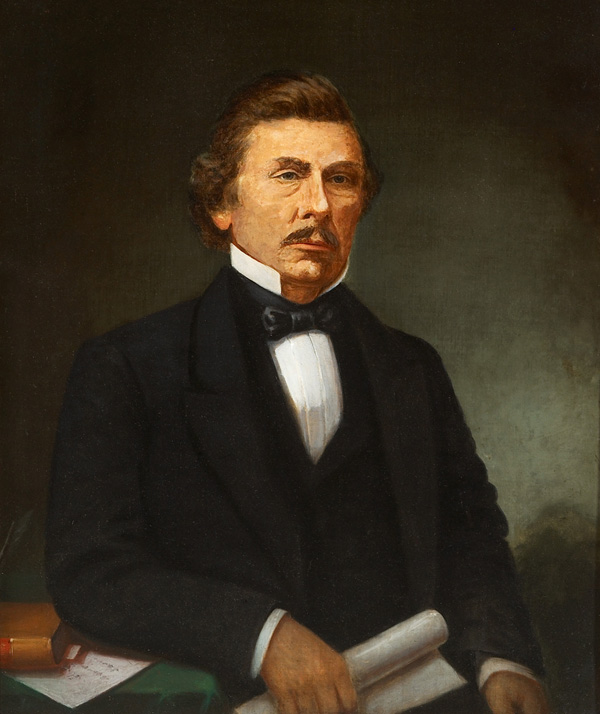
Historical · U.S. Senate · Mississippi
Walker Brooke
Former U.S. Senator from Mississippi · 1852–1853 · Whig · Class 2
Walker Brooke represented Mississippi in the United States Senate (1852–1853) for the Whig party. The page below collects sourced biographical facts, term history, committee roles, and provenance for Brooke.
Bioguide ID: B000872
Key facts
- Full name
- Walker Brooke
- State
- Mississippi
- Party
- Whig
- Senate class
- Class II
- Senate service
- 1852–1853
- First Senate term
- 1852
- Status
- Left office
- Current term ends
- —
- Born
- 1813
- Bioguide ID
- B000872
- Committee assignments
- —
- Dataset version
- 1.20260602
Biographical narrative
919 words · sourced from the Wikipedia REST extract
Walker Brooke was an American politician who served as a U.S. Senator from Mississippi from 1852 to 1853. A member of the Whig Party, he filled the vacancy left by the resignation of Henry S. Foote. Brooke's political career was marked by his involvement in both state and national politics, as well as his participation in the Confederate States during the Civil War. Born in Virginia, he pursued education and law before entering public service, and his life was characterized by significant events in Mississippi's history, including the state's secession from the Union.
Early life and career
Walker Brooke was born on December 25, 1813, in Clarke County, Virginia. He was the son of Humphrey Brooke and Sarah Walker Page, and his upbringing in Virginia set the foundation for his future endeavors. Brooke received his early education in public schools located in Richmond, Virginia, and Georgetown, Washington, D.C. These formative years provided him with a solid educational background, which he would later build upon.
In 1835, Brooke graduated from the University of Virginia in Charlottesville, a prestigious institution that has produced numerous influential figures in American history. Following his graduation, he turned his attention to the study of law, which he pursued with dedication. After being admitted to the bar in 1838, he began his legal practice in Lexington, Mississippi. This move to Mississippi marked the beginning of his long-standing connection to the state.
Brooke's early career also included a stint as a schoolteacher, reflecting his commitment to education and community service. His involvement in local governance began in 1848 when he was elected to the Mississippi House of Representatives. This role allowed him to engage directly with the legislative process and address the needs of his constituents. He continued to build his political experience by serving in the Mississippi State Senate in 1850 and again in 1852, representing the counties of Holmes and Sunflower. These positions helped to solidify his reputation as a dedicated public servant and laid the groundwork for his subsequent election to the U.S. Senate.
Senate tenure
Walker Brooke's tenure in the U.S. Senate began when he was elected as a member of the Whig Party to fill the vacancy created by the resignation of Henry S. Foote. He officially took office on March 11, 1852, and served until March 4, 1853. During this brief period, Brooke participated in the legislative activities of the Senate, contributing to discussions and decisions that were pivotal for the nation during a time of growing sectional tensions.
Despite his involvement in national politics, Brooke did not seek reelection at the end of his term. After his Senate service concluded, he returned to the practice of law, indicating a preference for the legal profession over a prolonged political career. His decision not to run for reelection may have been influenced by the shifting political landscape of the time, as the nation was increasingly divided over issues such as slavery and states' rights.
Following his departure from the Senate, Brooke relocated to Vicksburg, Mississippi, in 1857. This move was significant, as Vicksburg would later become a focal point during the Civil War. Brooke's legal career continued in this new location, and he remained active in the community.
Legislative focus and committees
While specific details regarding the legislative focus and committee assignments during Walker Brooke's Senate tenure are not extensively documented, his political career unfolded during a critical period in American history. The early 1850s were marked by intense debates over slavery, territorial expansion, and the balance of power between free and slave states. As a member of the Whig Party, Brooke was part of a political organization that sought to navigate these contentious issues, often advocating for a compromise approach.
Brooke's political actions and decisions during his time in the Senate were likely influenced by the prevailing sentiments in Mississippi, a state that was deeply entrenched in the institution of slavery. His subsequent involvement in the Mississippi secession convention in 1861 further illustrates the complexities of his political stance. Although he was a prominent Unionist voice at the convention, he ultimately voted for secession, reflecting the pressures of state unity during a tumultuous time.
After Mississippi's secession from the Union, Brooke was selected as a delegate to the Provisional Congress of the Confederate States, where he served from 1861 to 1862. His participation in this body demonstrated his commitment to the Confederate cause, even as he had previously expressed Unionist sentiments. Brooke's political journey continued as he sought election to the Confederate Senate on two occasions, although he was unsuccessful in both attempts. Following these electoral defeats, he was appointed to the permanent military court of the Confederate States, where he contributed to the legal framework supporting the Confederate military efforts.
Walker Brooke's life came to an unexpected end on February 18, 1869, in Vicksburg, Mississippi. His death was the result of an unfortunate incident involving choking on a large oyster during a friendly wager. This unusual circumstance marked the conclusion of a life that had been intertwined with significant events in American history, from his early legal career to his involvement in the Civil War and the political transformations of the mid-19th century.
In summary, Walker Brooke's career as a U.S. Senator and his subsequent political activities reflect the complexities of American politics during a time of division and conflict. His contributions to Mississippi's legislative landscape and his participation in the Confederate government highlight the challenges faced by politicians in navigating the turbulent waters of their era.
Notable legislation
Sponsored and co-sponsored legislation for Walker Brooke is pending operator curation. The biographical narrative above carries the same provenance trail until per-bill rows are written.
Sources
- [1]https://en.wikipedia.org/wiki/Walker_BrookeWikipedia · retrieved 2026-06-02
Notable quotes
Sourced quotes for Walker Brooke are pending operator curation. Narrative-scope provenance remains attached below.
Sources
- [1]https://en.wikipedia.org/wiki/Walker_BrookeWikipedia · retrieved 2026-06-02
Key positions
Curated policy positions for Walker Brooke are pending operator review. The biographical narrative above carries the same provenance trail until per-topic positions are written.
Sources
- [1]https://en.wikipedia.org/wiki/Walker_BrookeWikipedia · retrieved 2026-06-02
Terms served
- 1852–1853U.S. Senate · Term 1 · Whig · Class II
Sources & provenance
Every attributable claim above carries a per-section [N] marker that resolves to the corresponding URL below. Each entry records the upstream provider, the canonical URL, and the timestamp at which the source was retrieved by the ingest pipeline.
Key facts
- https://bioguide.congress.gov/search/bio/B000872bioguide · retrieved 2026-06-02
- https://www.govtrack.us/congress/members/401829govtrack · retrieved 2026-06-02
Biographical narrative
- https://en.wikipedia.org/wiki/Walker_Brookewikipedia · retrieved 2026-06-02
Find your senator
Every U.S. state elects two senators. Browse Mississippi’s delegation, the full former-senator roster, or explore the role and term length.
Related on The Candidate
- Preceded by Joseph ChalmersEarlier holder of the Mississippi Class II Senate seat · Democratic.Open
- Succeeded by Albert BrownLater holder of the Mississippi Class II Senate seat · Democratic.Open
- Adelbert AmesFormer U.S. Senator from Mississippi · RepublicanOpen
- Anselm McLaurinFormer U.S. Senator from Mississippi · DemocraticOpen
- Blanche BruceFormer U.S. Senator from Mississippi · RepublicanOpen
- Senators from MississippiEvery former U.S. Senator who has represented Mississippi.Open