
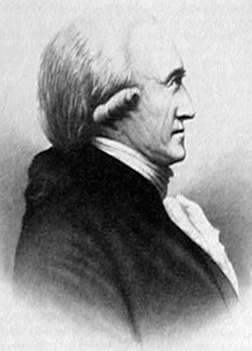
Historical · U.S. Senate · North Carolina
Benjamin Hawkins
Former U.S. Senator from North Carolina · 1789–1795 · Pro-Administration · Class 3
Benjamin Hawkins represented North Carolina in the United States Senate (1789–1795) for the Pro-Administration party. The page below collects sourced biographical facts, term history, committee roles, and provenance for Hawkins.
Bioguide ID: H000368
Key facts
- Full name
- Benjamin Hawkins
- State
- North Carolina
- Party
- Pro-Administration
- Senate class
- Class III
- Senate service
- 1789–1795
- First Senate term
- 1789
- Status
- Left office
- Current term ends
- —
- Born
- 1754
- Bioguide ID
- H000368
- Committee assignments
- —
- Dataset version
- 1.20260602
Biographical narrative
942 words · sourced from the Wikipedia REST extract
Benjamin Hawkins was an American planter, statesman, and U.S. Indian agent who served as a United States Senator from North Carolina. Born on August 15, 1754, Hawkins played a significant role in early American politics and Indian affairs during a transformative period in U.S. history. His career spanned various roles, including serving as a delegate to the Continental Congress and as a prominent figure in negotiations with Native American tribes. His tenure in the Senate lasted from 1789 until 1795, during which he was associated with the Pro-Administration faction, reflecting his alignment with the early federal government. Following his Senate career, Hawkins continued to influence Indian policy and relations, particularly with the Creek Nation, where he established a lasting legacy.
Early life and career
Benjamin Hawkins was born in Granville County, North Carolina, to Philemon Hawkins and Delia (Martin) Hawkins. He was the third of four sons in a family that owned a plantation, which was indicative of the planter elite of the region. His early education took place in local schools before he attended the College of New Jersey, which would later become known as Princeton University. Although he did not graduate, Hawkins demonstrated a talent for languages, a skill that would later assist him in his dealings with Native American tribes.
During the American Revolutionary War, Hawkins was commissioned as a Colonel and served on the staff of General George Washington. His role involved acting as an interpreter, particularly for French, which was crucial for communication with French allies. After his military service concluded in late 1777, Hawkins returned to North Carolina, where he began his political career. He was elected to the North Carolina House of Representatives in 1778, serving until 1779 and then again in 1784. His political involvement expanded when he was selected as a delegate to the Continental Congress, representing North Carolina from 1781 to 1783 and again in 1787.
In 1789, Hawkins participated in the Fayetteville Convention, where he played a role in the ratification of the United States Constitution. Following this, he was elected to the first U.S. Senate, where he served until 1795. During this period, the Senate was not yet organized into political parties, but Hawkins was identified with the Pro-Administration faction, aligning himself with the policies of the early federal government.
Senate tenure
Hawkins' Senate career began in 1789, marking the start of a significant chapter in his life as he became one of the first senators representing North Carolina. His tenure in the Senate coincided with the formative years of the United States, a time when the nation was establishing its legislative framework and addressing various domestic and foreign issues. Although the Senate was not formally divided into political parties at the time, Hawkins' views aligned with those who supported the federal administration led by President George Washington.
Throughout his time in the Senate, Hawkins was involved in discussions and decisions that shaped the early legislative landscape of the United States. His alignment with the Pro-Administration group indicated his support for the policies that aimed to strengthen the federal government and establish a cohesive national identity. However, as his Senate career progressed, he began to align more closely with the Republican or Anti-Administration Party, reflecting the evolving political dynamics of the time.
Hawkins' Senate term ended on March 3, 1795. His departure from the Senate did not mark the end of his public service; rather, it transitioned him into a role that would have a lasting impact on Indian affairs in the southeastern United States.
Legislative focus and committees
During his time in the Senate, Hawkins was involved in various legislative matters, particularly those related to Indian affairs and land negotiations. His previous experience as a representative in negotiations with Native American tribes positioned him as a knowledgeable figure in matters concerning indigenous peoples. In 1785, he had already begun engaging with the Creek Indians, working to negotiate land agreements and manage relations between the U.S. government and the tribes.
Hawkins' efforts culminated in significant treaties, including the Treaty of New York in 1790, which was instrumental in formalizing U.S.-Creek relations. His ability to negotiate and communicate effectively with Native American leaders was a hallmark of his career. In 1796, President Washington appointed him as General Superintendent of Indian Affairs, a role that expanded his responsibilities to include all tribes south of the Ohio River. This position allowed him to further influence policies and practices regarding Native American relations.
As principal agent to the Creek Nation, Hawkins established the Creek Agency in present-day Crawford County, Georgia. He immersed himself in Creek culture, learning the Muscogee language and integrating into the community through his common-law relationship with a Creek woman. His commitment to understanding and working with the Creek people was evident in his efforts to promote agricultural practices and a "civilization plan" that encouraged the adoption of European-American farming methods.
Hawkins' plantation became a center for agricultural development, where he raised livestock and crops while employing enslaved labor. His approach to Indian affairs was characterized by a belief in the potential for Native Americans to adopt European-American lifestyles, which he sought to facilitate through education and agricultural training.
In summary, Benjamin Hawkins' career was marked by significant contributions to early American governance and Indian affairs. His tenure as a U.S. Senator and his subsequent role as a General Superintendent of Indian Affairs reflect his commitment to navigating the complex relationships between the U.S. government and Native American tribes during a pivotal era in American history. His legacy continues to be recognized in discussions of early American political history and the evolution of U.S. policies toward indigenous peoples.
Notable legislation
Sponsored and co-sponsored legislation for Benjamin Hawkins is pending operator curation. The biographical narrative above carries the same provenance trail until per-bill rows are written.
Sources
- [1]https://en.wikipedia.org/wiki/Benjamin_HawkinsWikipedia · retrieved 2026-06-02
Notable quotes
Sourced quotes for Benjamin Hawkins are pending operator curation. Narrative-scope provenance remains attached below.
Sources
- [1]https://en.wikipedia.org/wiki/Benjamin_HawkinsWikipedia · retrieved 2026-06-02
Key positions
Curated policy positions for Benjamin Hawkins are pending operator review. The biographical narrative above carries the same provenance trail until per-topic positions are written.
Sources
- [1]https://en.wikipedia.org/wiki/Benjamin_HawkinsWikipedia · retrieved 2026-06-02
Terms served
- 1789–1795U.S. Senate · Term 1 · Pro-Administration · Class III
Sources & provenance
Every attributable claim above carries a per-section [N] marker that resolves to the corresponding URL below. Each entry records the upstream provider, the canonical URL, and the timestamp at which the source was retrieved by the ingest pipeline.
Key facts
- https://bioguide.congress.gov/search/bio/H000368bioguide · retrieved 2026-06-02
- https://www.govtrack.us/congress/members/405237govtrack · retrieved 2026-06-02
Biographical narrative
- https://en.wikipedia.org/wiki/Benjamin_Hawkinswikipedia · retrieved 2026-06-02
Find your senator
Every U.S. state elects two senators. Browse North Carolina’s delegation, the full former-senator roster, or explore the role and term length.
Related on The Candidate
- Succeeded by Timothy BloodworthLater holder of the North Carolina Class III Senate seat · Republican.Open
- Alexander MartinFormer U.S. Senator from North Carolina · RepublicanOpen
- Alton LennonFormer U.S. Senator from North Carolina · DemocraticOpen
- Asa BiggsFormer U.S. Senator from North Carolina · DemocraticOpen
- Augustus MerrimonFormer U.S. Senator from North Carolina · DemocraticOpen
- Senators from North CarolinaEvery former U.S. Senator who has represented North Carolina.Open