
Historical · U.S. Senate · North Carolina
Kay Hagan
Former U.S. Senator from North Carolina · 2009–2015 · Democratic · Class 2
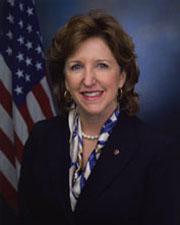
Kay Hagan represented North Carolina in the United States Senate (2009–2015) for the Democratic party. The page below collects sourced biographical facts, term history, committee roles, and provenance for Hagan.
Bioguide ID: H001049
Key facts
- Full name
- Kay Hagan
- State
- North Carolina
- Party
- Democratic
- Senate class
- Class II
- Senate service
- 2009–2015
- First Senate term
- 2009
- Status
- Left office
- Current term ends
- —
- Born
- 1953
- Bioguide ID
- H001049
- Committee assignments
- —
- Dataset version
- 1.20260601-3
Biographical narrative
981 words · sourced from the Wikipedia REST extract
Janet Kay Hagan, commonly known as Kay Hagan, was an American lawyer, banking executive, and politician who served as a United States Senator representing North Carolina from 2009 until 2015. A member of the Democratic Party, Hagan made history by defeating incumbent Republican Senator Elizabeth Dole in the 2008 election, becoming the first woman to unseat an incumbent woman in a U.S. Senate race. She served one term in the Senate before losing her re-election bid in 2014 to Republican Thom Tillis. Hagan's political career also included a decade in the North Carolina Senate prior to her tenure in the U.S. Senate.
Early life and career
Kay Hagan was born on May 26, 1953, in Shelby, North Carolina, to Jeanette Chiles and Josie Perry "Joe" Ruthven. Hagan's family background included a notable connection to politics, as her maternal uncle, Lawton Chiles, served as a U.S. Senator from Florida and later became the Governor of Florida. Hagan's father and brother both served in the U.S. Navy, which contributed to a family tradition of public service. During her childhood, Hagan spent significant time in Lakeland, Florida, where her father transitioned from the tire business to real estate development, focusing on industrial warehouses. He eventually became the mayor of Lakeland.
Hagan's formative years included summers spent on her grandparents' farm in Chesterfield, South Carolina, where she participated in agricultural activities such as stringing tobacco and harvesting watermelons. In the 1970s, she gained early exposure to politics by interning at the Capitol, where she operated an elevator for senators, including her uncle.
Hagan pursued higher education at Florida State University, earning a Bachelor of Arts degree in 1975. She continued her studies at Wake Forest University School of Law, where she obtained her Juris Doctor degree in 1978. During her time at Florida State, she joined the Chi Omega sorority but later resigned her membership. Following her education, Hagan embarked on a career in law and finance, eventually becoming a vice president at North Carolina National Bank (NCNB), which is now part of Bank of America. Her early political involvement included serving as a county campaign manager for Governor Jim Hunt's gubernatorial campaign.
Senate tenure
Hagan entered the political arena by winning a seat in the North Carolina General Assembly as a state senator for the 32nd district in 1998. Her district later became the 27th due to redistricting. Over the course of five terms, she represented Guilford County, including the city of Greensboro. Hagan's political career at the state level laid the groundwork for her eventual candidacy for the U.S. Senate.
In 2008, Hagan announced her candidacy for the U.S. Senate, entering a competitive race against incumbent Elizabeth Dole. Initially hesitant to run, Hagan was encouraged to enter the race after several prominent North Carolina Democrats opted not to challenge Dole. She officially declared her candidacy in October 2007 and secured the Democratic nomination after defeating several challengers in the primary election.
Hagan's campaign gained momentum as polling indicated a competitive race against Dole, who had previously held the seat since 2003. Hagan's candidacy was bolstered by the national Democratic Party's support, particularly from then-presidential candidate Barack Obama, who was actively campaigning in North Carolina. The Democratic Senatorial Campaign Committee invested heavily in Hagan's campaign, making North Carolina a focal point in the 2008 election cycle.
The general election featured a contentious atmosphere, with both candidates engaging in negative advertising. One particularly controversial ad from Dole's campaign accused Hagan of associating with a group labeled as "Godless Americans." Hagan condemned the ad as misleading and defamatory, leading her to file a lawsuit against Dole. Ultimately, Hagan won the election with a significant margin, receiving 53% of the vote compared to Dole's 44%. Her victory marked a significant shift in North Carolina's political landscape, as she reclaimed a seat previously held by Jesse Helms for the Democratic Party.
In 2014, Hagan sought re-election in a challenging political environment. Analysts noted that her seat was vulnerable, particularly in the absence of a presidential election that typically drives higher voter turnout. Hagan's relationship with President Obama became a focal point of her campaign, as some observers suggested she aimed to distance herself from the President amid declining approval ratings in North Carolina. The campaign saw a barrage of negative advertisements targeting Hagan, primarily funded by outside groups such as Americans for Prosperity.
Despite her efforts, Hagan lost her re-election bid to Thom Tillis, the Republican Speaker of the North Carolina House of Representatives. Following her defeat, she concluded her term in the Senate on January 3, 2015.
Legislative focus and committees
During her time in the U.S. Senate, Hagan was involved in various legislative initiatives and served on several committees. Her work primarily focused on issues pertinent to North Carolina and the broader national landscape. Hagan's experience in the financial sector informed her approach to economic policy, and she advocated for measures aimed at supporting economic growth and job creation.
Hagan served on committees that addressed a range of topics, including banking, housing, and urban affairs, which aligned with her professional background in finance. Her legislative efforts also extended to areas such as healthcare, education, and veterans' affairs, reflecting her commitment to addressing the needs of her constituents.
Throughout her Senate tenure, Hagan was known for her collaborative approach, often seeking bipartisan support for her initiatives. Her legislative record included efforts to improve access to healthcare, support for education funding, and initiatives aimed at enhancing the economic prospects of North Carolina residents.
In summary, Kay Hagan's career in the U.S. Senate was characterized by her focus on issues that directly impacted her constituents and her ability to navigate the complexities of legislative processes. Her tenure concluded in 2015, and she remains a notable figure in North Carolina's political history as the last Democrat to represent the state in the U.S. Senate as of 2025.
Notable legislation
Sponsored and co-sponsored legislation for Kay Hagan is pending operator curation. The biographical narrative above carries the same provenance trail until per-bill rows are written.
Sources
- [1]https://en.wikipedia.org/wiki/Kay_HaganWikipedia · retrieved 2026-06-01
Notable quotes
Sourced quotes for Kay Hagan are pending operator curation. Narrative-scope provenance remains attached below.
Sources
- [1]https://en.wikipedia.org/wiki/Kay_HaganWikipedia · retrieved 2026-06-01
Key positions
Curated policy positions for Kay Hagan are pending operator review. The biographical narrative above carries the same provenance trail until per-topic positions are written.
Sources
- [1]https://en.wikipedia.org/wiki/Kay_HaganWikipedia · retrieved 2026-06-01
Terms served
- 2009–2015U.S. Senate · Term 1 · Democratic · Class II
Sources & provenance
Every attributable claim above carries a per-section [N] marker that resolves to the corresponding URL below. Each entry records the upstream provider, the canonical URL, and the timestamp at which the source was retrieved by the ingest pipeline.
Key facts
- https://bioguide.congress.gov/search/bio/H001049bioguide · retrieved 2026-06-01
- http://www.hagan.senate.govsenate.gov · retrieved 2026-06-01
Biographical narrative
- https://en.wikipedia.org/wiki/Kay_Haganwikipedia · retrieved 2026-06-01
Find your senator
Every U.S. state elects two senators. Browse North Carolina’s delegation, the full former-senator roster, or explore the role and term length.
Related on The Candidate
- Preceded by Elizabeth DoleEarlier holder of the North Carolina Class II Senate seat · Republican.Open
- Alexander MartinFormer U.S. Senator from North Carolina · RepublicanOpen
- Alton LennonFormer U.S. Senator from North Carolina · DemocraticOpen
- Asa BiggsFormer U.S. Senator from North Carolina · DemocraticOpen
- Augustus MerrimonFormer U.S. Senator from North Carolina · DemocraticOpen
- Democratic PartyFederal candidates and office holders on the Democratic line.Open