
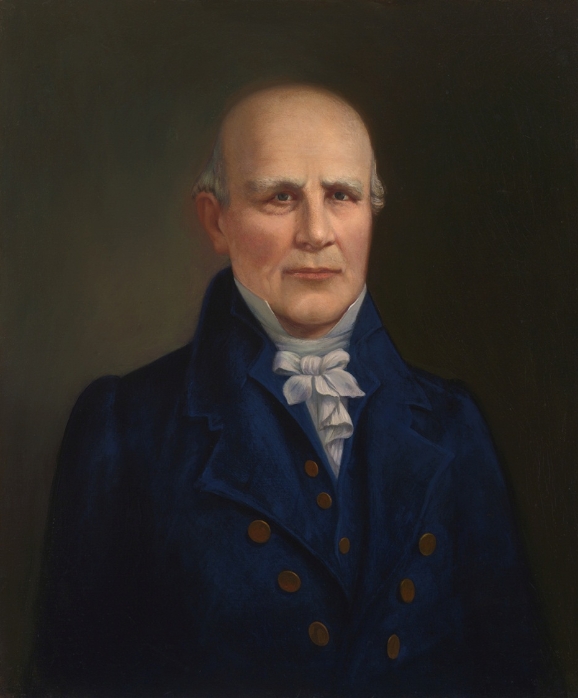
Historical · U.S. Senate · North Carolina
Nathaniel Macon
Former U.S. Senator from North Carolina · 1815–1828 · Jackson · Class 3
Nathaniel Macon represented North Carolina in the United States Senate (1815–1828) for the Jackson party. The page below collects sourced biographical facts, term history, committee roles, and provenance for Macon.
Bioguide ID: M000034
Key facts
- Full name
- Nathaniel Macon
- State
- North Carolina
- Party
- Jackson
- Senate class
- Class III
- Senate service
- 1815–1828
- First Senate term
- 1815
- Status
- Left office
- Current term ends
- —
- Born
- 1757
- Bioguide ID
- M000034
- Committee assignments
- —
- Dataset version
- 1.20260602
Biographical narrative
1,052 words · sourced from the Wikipedia REST extract
Nathaniel Macon was an American politician who served as a U.S. Senator from North Carolina and held significant roles in both houses of Congress. A member of the Democratic-Republican Party, he was known for his opposition to the Federalist policies of his time and for advocating for a limited federal government. Macon’s political career spanned several decades, during which he was also recognized for his leadership as the fifth Speaker of the House of Representatives. His tenure in the Senate lasted from 1815 until 1828, during which he became a prominent figure in American politics.
Early life and career
Nathaniel Macon was born on December 17, 1757, near Warrenton, North Carolina. He was the son of Major Gideon Macon, a prosperous tobacco planter originally from Virginia, and Priscilla Jones, who was born in North Carolina. His lineage included notable connections, as he was a second cousin to Martha Dandridge Washington, the wife of George Washington, through his great-grandfather, Colonel Gideon Macon, who was of English descent and allegedly had French Huguenot roots.
Macon's early life was marked by the death of his father when he was just two years old. Following this loss, he inherited two parcels of land and his father's blacksmithing tools, along with three enslaved individuals. His mother, Priscilla, later remarried James Ransom, and in 1766, she arranged for Nathaniel and his brother John to receive an education. They were tutored alongside the sons of their neighbor, Philemon Hawkins II, by Mr. Charles Pettigrew, who would later become the principal of the Academy of Edenton.
From 1766 to 1773, Macon and his peers were educated under Pettigrew's guidance. Eventually, Nathaniel and one of his classmates, Benjamin Hawkins, continued their studies at the College of New Jersey, now known as Princeton University, as part of the class of 1777, although neither completed their degree.
Macon's involvement in the American Revolution began with a brief military service in 1776. After returning to North Carolina, he studied law for three years before rejoining the Revolutionary forces as a private in 1780. He is believed to have participated in the Battle of Camden, a significant engagement during the war.
In 1783, Macon married Hannah Plummer, whom he had met in Warrenton. Their courtship was marked by a competitive spirit, as Macon reportedly challenged another suitor to a card game for Hannah's affection. The couple married on October 9, 1783, and had three children together: Betsy Kemp Macon, Plummer Macon, and Seignora Macon. Tragically, Hannah passed away at the young age of 29 in 1790, a loss that deeply affected Macon, who never remarried. He was known for his devotion to her memory, and both his wife and son were buried near their home.
Senate tenure
Nathaniel Macon's political career began in the United States House of Representatives, where he served from 1791 until 1815. During this time, he became known for his opposition to the ratification of the United States Constitution and the economic policies advocated by Alexander Hamilton, which he believed favored a strong federal government at the expense of state sovereignty. Macon was a prominent member of the Democratic-Republican Party, which sought to limit the powers of the federal government and promote agrarian interests.
In 1815, Macon transitioned to the United States Senate, where he served until November 14, 1828. His Senate tenure included a period as President pro tempore from 1826 to 1827, a role that involved presiding over the Senate in the absence of the Vice President. Throughout his time in the Senate, Macon was recognized for his steadfast commitment to the principles of the Old Republican faction, which emphasized a strict interpretation of the Constitution and limited federal authority.
Macon's political philosophy often put him at odds with contemporaries who supported internal improvements and federal funding for infrastructure projects. He was a vocal critic of initiatives championed by figures such as Henry Clay and John C. Calhoun, advocating instead for a more restrained approach to government spending and intervention in the economy.
In the 1824 presidential election, Macon received several electoral votes for the vice presidency, despite his decision not to run. His political influence extended beyond his Senate career, as he also played a role in the 1835 North Carolina constitutional convention, further shaping the governance of his state.
Legislative focus and committees
Throughout his legislative career, Nathaniel Macon was known for his strong advocacy for limited government and states' rights. He was a prominent spokesman for the Old Republican faction of the Democratic-Republican Party, which sought to counter the influence of Federalist policies. Macon's opposition to the Missouri Compromise in 1820 highlighted his commitment to maintaining the institution of slavery, a stance that would later define much of the political discourse in the United States.
Macon's legislative focus included a consistent resistance to federal involvement in domestic policy, particularly in areas such as infrastructure and economic development. He believed that the federal government should refrain from intervening in state matters and that local governance should be prioritized. This perspective often placed him in opposition to other prominent lawmakers who advocated for a more expansive role for the federal government in economic affairs.
In addition to his legislative duties, Macon served on various committees during his time in the Senate, where he worked to influence policy and debate on key issues of the day. His leadership and experience were recognized by his peers, and he was often called upon to guide discussions on matters related to governance and constitutional interpretation.
After leaving the Senate, Macon continued to be active in public life, serving as a trustee for the University of North Carolina at Chapel Hill. He remained engaged in political discourse, notably protesting President Andrew Jackson's approach during the Nullification Crisis, which he viewed as a threat to the principles of federalism and state sovereignty.
Nathaniel Macon's legacy is marked by his unwavering commitment to the ideals of limited government and his role as a significant figure in early American politics. His contributions to the legislative process and his influence on the Democratic-Republican Party continue to be recognized in the context of American political history. He passed away on June 29, 1837, at the age of 79, leaving behind a complex legacy shaped by his principles and the tumultuous political landscape of his time.
Notable legislation
Sponsored and co-sponsored legislation for Nathaniel Macon is pending operator curation. The biographical narrative above carries the same provenance trail until per-bill rows are written.
Sources
- [1]https://en.wikipedia.org/wiki/Nathaniel_MaconWikipedia · retrieved 2026-06-02
Notable quotes
Sourced quotes for Nathaniel Macon are pending operator curation. Narrative-scope provenance remains attached below.
Sources
- [1]https://en.wikipedia.org/wiki/Nathaniel_MaconWikipedia · retrieved 2026-06-02
Key positions
Curated policy positions for Nathaniel Macon are pending operator review. The biographical narrative above carries the same provenance trail until per-topic positions are written.
Sources
- [1]https://en.wikipedia.org/wiki/Nathaniel_MaconWikipedia · retrieved 2026-06-02
Terms served
- 1791–1793U.S. House · District 2 · Term 1 · Democratic
- 1793–1795U.S. House · District 5 · Term 2 · Democratic
- 1795–1797U.S. House · District 5 · Term 3 · Republican
- 1797–1799U.S. House · District 5 · Term 4 · Republican
- 1799–1801U.S. House · District 5 · Term 5 · Republican
- 1801–1803U.S. House · District 5 · Term 6 · Republican
- 1803–1805U.S. House · District 6 · Term 7 · Republican
- 1805–1807U.S. House · District 6 · Term 8 · Republican
- 1807–1809U.S. House · District 6 · Term 9 · Republican
- 1809–1811U.S. House · District 6 · Term 10 · Republican
- 1811–1813U.S. House · District 6 · Term 11 · Republican
- 1813–1815U.S. House · District 6 · Term 12 · Republican
- 1815–1815U.S. House · District 6 · Term 13 · Republican
- 1815–1819U.S. Senate · Term 14 · Republican · Class III
- 1819–1825U.S. Senate · Term 15 · Republican · Class III
- 1825–1828U.S. Senate · Term 16 · Jackson · Class III
Sources & provenance
Every attributable claim above carries a per-section [N] marker that resolves to the corresponding URL below. Each entry records the upstream provider, the canonical URL, and the timestamp at which the source was retrieved by the ingest pipeline.
Key facts
- https://bioguide.congress.gov/search/bio/M000034bioguide · retrieved 2026-06-02
- https://www.govtrack.us/congress/members/407062govtrack · retrieved 2026-06-02
Biographical narrative
- https://en.wikipedia.org/wiki/Nathaniel_Maconwikipedia · retrieved 2026-06-02
Find your senator
Every U.S. state elects two senators. Browse North Carolina’s delegation, the full former-senator roster, or explore the role and term length.
Related on The Candidate
- Preceded by David StoneEarlier holder of the North Carolina Class III Senate seat · Republican.Open
- Succeeded by James IredellLater holder of the North Carolina Class III Senate seat · Jackson.Open
- Alexander MartinFormer U.S. Senator from North Carolina · RepublicanOpen
- Alton LennonFormer U.S. Senator from North Carolina · DemocraticOpen
- Asa BiggsFormer U.S. Senator from North Carolina · DemocraticOpen
- Augustus MerrimonFormer U.S. Senator from North Carolina · DemocraticOpen