
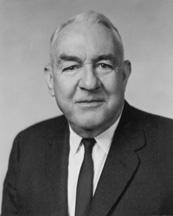
Historical · U.S. Senate · North Carolina
Samuel Ervin Jr.
Former U.S. Senator from North Carolina · 1954–1975 · Democratic · Class 3
Samuel Ervin Jr. represented North Carolina in the United States Senate (1954–1975) for the Democratic party. The page below collects sourced biographical facts, term history, committee roles, and provenance for Jr..
Bioguide ID: E000211
Key facts
- Full name
- Samuel Ervin Jr.
- State
- North Carolina
- Party
- Democratic
- Senate class
- Class III
- Senate service
- 1954–1975
- First Senate term
- 1954
- Status
- Left office
- Current term ends
- —
- Born
- 1896
- Bioguide ID
- E000211
- Committee assignments
- —
- Dataset version
- 1.20260602
Biographical narrative
864 words · sourced from the Wikipedia REST extract
Sam J. Ervin Jr. was a prominent American politician who served as a United States Senator from North Carolina. A member of the Democratic Party, Ervin's political career spanned several decades, during which he became known for his commitment to civil liberties and his role in significant legislative matters. His tenure in the Senate lasted from 1954 until 1975, marking him as a notable figure in American political history.
Early life and career
Sam J. Ervin Jr. was born on September 27, 1896, in Morganton, North Carolina. He grew up in a region that would later influence his political outlook and values. Ervin pursued higher education at the University of North Carolina at Chapel Hill, where he earned a Bachelor of Arts degree. Following his undergraduate studies, he continued his education at Harvard Law School, obtaining a law degree. This legal background would later serve as a foundation for his political career, enabling him to navigate complex legislative issues.
After completing his education, Ervin returned to North Carolina, where he began practicing law. His legal career was interrupted by military service during World War I, where he served in the United States Army. After the war, he resumed his law practice and quickly became involved in local politics. His early political career included serving in the North Carolina State Senate, where he gained valuable experience and established a reputation as a dedicated public servant.
Ervin's political aspirations grew, and he sought higher office, leading to his election to the United States Senate in 1954. His ascent to the Senate marked a significant milestone in his career, allowing him to influence national policy and engage with pressing issues of the time.
Senate tenure
Sam J. Ervin Jr. began his first term in the United States Senate in 1954, representing North Carolina as a member of the Democratic Party. Throughout his time in the Senate, which extended until January 3, 1975, Ervin was known for his strong advocacy for civil rights and his commitment to upholding the Constitution. His tenure coincided with a period of significant social change in the United States, including the civil rights movement and various legislative reforms.
During his time in the Senate, Ervin served on several important committees, which allowed him to play a pivotal role in shaping legislation. He was particularly noted for his work on issues related to civil liberties, government oversight, and constitutional law. His legal background informed his approach to these matters, and he often emphasized the importance of protecting individual rights and freedoms.
Ervin's reputation grew during the Watergate scandal, where he became a key figure in the Senate Watergate Committee. His leadership in this investigation was marked by a commitment to uncovering the truth and ensuring accountability in government. This role further solidified his status as a principled politician dedicated to the integrity of the democratic process.
Throughout his Senate career, Ervin was re-elected multiple times, reflecting the support he garnered from his constituents in North Carolina. His ability to connect with voters and address their concerns contributed to his longevity in office. Ervin's tenure in the Senate was characterized by a focus on issues that resonated with the public, including education, healthcare, and civil rights.
Legislative focus and committees
Sam J. Ervin Jr.'s legislative focus encompassed a range of issues, with a particular emphasis on civil liberties and constitutional rights. He was a staunch advocate for the protection of individual freedoms and often spoke out against government overreach. His commitment to civil rights was evident in his support for various legislative measures aimed at promoting equality and justice for all citizens.
In addition to his work on civil rights, Ervin was involved in numerous committees during his time in the Senate. His participation in these committees allowed him to influence a wide array of policy areas, including judiciary matters, government operations, and oversight. His legal expertise was particularly valuable in discussions surrounding constitutional law and the balance of power within the federal government.
Ervin's role in the Senate Watergate Committee is one of the most notable aspects of his legislative career. As the committee sought to investigate the Watergate scandal, Ervin's leadership was characterized by a commitment to transparency and accountability. He worked diligently to ensure that the committee's findings were thorough and that the American public had access to the truth regarding the events surrounding the scandal.
Throughout his Senate career, Ervin's legislative initiatives often reflected his belief in the importance of government accountability and the protection of civil liberties. He was known for his principled stance on various issues, which earned him respect from colleagues across party lines. His contributions to the Senate and his dedication to public service left a lasting impact on American politics.
In summary, Sam J. Ervin Jr. was a significant figure in U.S. politics, known for his commitment to civil rights and government accountability. His tenure in the Senate was marked by a focus on protecting individual liberties and ensuring that the democratic process was upheld. Through his legislative work and leadership, Ervin contributed to shaping important policies that resonated with the American public and reflected the values of his constituents in North Carolina.
Notable legislation
Sponsored and co-sponsored legislation for Samuel Ervin Jr. is pending operator curation. The biographical narrative above carries the same provenance trail until per-bill rows are written.
Sources
- [1]https://en.wikipedia.org/wiki/Sam_ErvinWikipedia · retrieved 2026-06-02
Notable quotes
Sourced quotes for Samuel Ervin Jr. are pending operator curation. Narrative-scope provenance remains attached below.
Sources
- [1]https://en.wikipedia.org/wiki/Sam_ErvinWikipedia · retrieved 2026-06-02
Key positions
Curated policy positions for Samuel Ervin Jr. are pending operator review. The biographical narrative above carries the same provenance trail until per-topic positions are written.
Sources
- [1]https://en.wikipedia.org/wiki/Sam_ErvinWikipedia · retrieved 2026-06-02
Terms served
- 1945–1947U.S. House · District 10 · Term 1 · Democratic
- 1954–1957U.S. Senate · Term 2 · Democratic · Class III
- 1957–1963U.S. Senate · Term 3 · Democratic · Class III
- 1963–1969U.S. Senate · Term 4 · Democratic · Class III
- 1969–1975U.S. Senate · Term 5 · Democratic · Class III
Sources & provenance
Every attributable claim above carries a per-section [N] marker that resolves to the corresponding URL below. Each entry records the upstream provider, the canonical URL, and the timestamp at which the source was retrieved by the ingest pipeline.
Key facts
- https://bioguide.congress.gov/search/bio/E000211bioguide · retrieved 2026-06-02
- https://www.govtrack.us/congress/members/403898govtrack · retrieved 2026-06-02
Biographical narrative
- https://en.wikipedia.org/wiki/Sam_Ervinwikipedia · retrieved 2026-06-02
Find your senator
Every U.S. state elects two senators. Browse North Carolina’s delegation, the full former-senator roster, or explore the role and term length.
Related on The Candidate
- Preceded by Robert ReynoldsEarlier holder of the North Carolina Class III Senate seat · Democratic.Open
- Succeeded by Robert MorganLater holder of the North Carolina Class III Senate seat · Democratic.Open
- Alexander MartinFormer U.S. Senator from North Carolina · RepublicanOpen
- Alton LennonFormer U.S. Senator from North Carolina · DemocraticOpen
- Asa BiggsFormer U.S. Senator from North Carolina · DemocraticOpen
- Augustus MerrimonFormer U.S. Senator from North Carolina · DemocraticOpen