
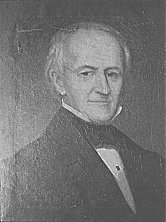
Historical · U.S. Senate · New Hampshire
Henry Hubbard
Former U.S. Senator from New Hampshire · 1835–1841 · Democratic · Class 2
Henry Hubbard represented New Hampshire in the United States Senate (1835–1841) for the Democratic party. The page below collects sourced biographical facts, term history, committee roles, and provenance for Hubbard.
Bioguide ID: H000883
Key facts
- Full name
- Henry Hubbard
- State
- New Hampshire
- Party
- Democratic
- Senate class
- Class II
- Senate service
- 1835–1841
- First Senate term
- 1835
- Status
- Left office
- Current term ends
- —
- Born
- 1784
- Bioguide ID
- H000883
- Committee assignments
- —
- Dataset version
- 1.20260602
Biographical narrative
900 words · sourced from the Wikipedia REST extract
Henry Hubbard was a prominent political figure in the early 19th century, serving as a U.S. Senator from New Hampshire and later as the state's governor. His political career spanned several decades, during which he held various positions at both the state and federal levels. A member of the Democratic Party, Hubbard's legislative work focused on issues such as pensions, claims, and taxation, reflecting the concerns of his constituents during a transformative period in American history.
Early life and career
Henry Hubbard was born on May 3, 1784, in Charlestown, New Hampshire. His early education was conducted at home under the guidance of private tutors, where he engaged in classical studies. He later attended Dartmouth College, graduating in 1803. Following his graduation, Hubbard pursued a legal career, studying law in Portsmouth under the mentorship of Jeremiah Mason. He was admitted to the New Hampshire bar around 1806 and began practicing law in his hometown of Charlestown.
In 1813, Hubbard married Sally Walker Dean, and together they had five children. His early involvement in the financial sector included purchasing 50 shares of the Suffolk Bank, a significant clearinghouse bank located on State Street in Boston, in 1818. This investment reflected his growing interest in both law and finance, which would later inform his political decisions.
Hubbard's political career began in 1810 when he was elected as Town Moderator, a position he would hold multiple times throughout his life, totaling sixteen elections to that role. His early political activities included serving in the New Hampshire House of Representatives from 1812 to 1814, and again from 1819 to 1820, and 1823 to 1827. He held the position of Speaker of the House from 1825 to 1827, showcasing his leadership abilities within the state legislature. Additionally, he served as a selectman in 1819, 1820, and 1828, and took on various legal and military roles, including Judge Advocate of the 5th Militia Brigade and Solicitor for Sullivan County from 1823 to 1828.
Initially, Hubbard was affiliated with the Federalist Party, but he transitioned to the Democratic Party, aligning himself with the Jacksonian movement. His congressional career began on March 4, 1829, when he was elected to the United States House of Representatives. During his tenure in the House, he served through the 21st, 22nd, and 23rd Congresses. Notably, he chaired the Committee on Revolutionary Pensions during the 22nd Congress and served as Speaker pro tem in 1834. After completing his term in the House on March 3, 1835, Hubbard was elected to the United States Senate.
Senate tenure
Henry Hubbard's Senate career commenced in 1835, representing New Hampshire as a member of the Democratic Party. He served in the Senate until March 3, 1841, during which time he participated in the 24th, 25th, and 26th Congresses. His leadership capabilities were recognized as he held the position of chairman of the Committee on Claims, where he was involved in reviewing and recommending legislation related to claims against the federal government.
During his time in the Senate, Hubbard engaged in various legislative discussions and contributed to the development of policies that addressed the needs of his constituents. His work in the Senate was characterized by a focus on issues pertinent to the economic and social climate of the time, reflecting the interests of the Democratic Party and the broader public.
After concluding his Senate term in 1841, Hubbard continued his political journey by seeking the governorship of New Hampshire. His experience in the Senate and previous roles in state government provided him with a solid foundation for this next step in his career.
Legislative focus and committees
Throughout his political career, Henry Hubbard's legislative focus encompassed several key areas that were significant to his constituents and the nation. As a member of the House of Representatives, he chaired the Committee on Revolutionary Pensions, which dealt with issues related to veterans and their benefits. This role underscored his commitment to supporting those who had served the nation and highlighted the importance of addressing the needs of veterans in the post-Revolutionary War era.
In the Senate, Hubbard's leadership as chairman of the Committee on Claims allowed him to further influence legislation related to financial claims against the government. This position was critical during a time when many citizens sought redress for various grievances, including land claims and compensation for military service. His work in this capacity demonstrated his understanding of the complexities of government finances and the necessity of addressing the concerns of the public.
Hubbard's legislative agenda also reflected broader social issues of his time. As governor of New Hampshire from 1842 to 1844, he advocated for lowering protective tariffs, which were a contentious issue affecting trade and the economy. He denounced capital punishment, reflecting a growing movement toward criminal justice reform. Additionally, he called for state legislation aimed at curbing excessive corporate profits, indicating his concern for the economic well-being of the average citizen. His advocacy for tax reductions for property-owning women further illustrated his progressive stance on social issues, particularly regarding women's rights and economic equity.
After leaving the Senate, Hubbard continued to serve the public as the subtreasurer in Boston from 1846 to 1849. He later returned to Charlestown to practice law until his death on June 5, 1857. His contributions to New Hampshire's political landscape and his commitment to public service left a lasting impact on the state and its governance.
Notable legislation
Sponsored and co-sponsored legislation for Henry Hubbard is pending operator curation. The biographical narrative above carries the same provenance trail until per-bill rows are written.
Sources
- [1]https://en.wikipedia.org/wiki/Henry_HubbardWikipedia · retrieved 2026-06-02
Notable quotes
Sourced quotes for Henry Hubbard are pending operator curation. Narrative-scope provenance remains attached below.
Sources
- [1]https://en.wikipedia.org/wiki/Henry_HubbardWikipedia · retrieved 2026-06-02
Key positions
Curated policy positions for Henry Hubbard are pending operator review. The biographical narrative above carries the same provenance trail until per-topic positions are written.
Sources
- [1]https://en.wikipedia.org/wiki/Henry_HubbardWikipedia · retrieved 2026-06-02
Terms served
- 1829–1831U.S. House · District -1 · Term 1 · Jackson
- 1831–1833U.S. House · District -1 · Term 2 · Jackson
- 1833–1835U.S. House · District -1 · Term 3 · Jackson
- 1835–1841U.S. Senate · Term 4 · Democratic · Class II
Sources & provenance
Every attributable claim above carries a per-section [N] marker that resolves to the corresponding URL below. Each entry records the upstream provider, the canonical URL, and the timestamp at which the source was retrieved by the ingest pipeline.
Key facts
- https://bioguide.congress.gov/search/bio/H000883bioguide · retrieved 2026-06-02
- https://www.govtrack.us/congress/members/405729govtrack · retrieved 2026-06-02
Biographical narrative
- https://en.wikipedia.org/wiki/Henry_Hubbardwikipedia · retrieved 2026-06-02
Find your senator
Every U.S. state elects two senators. Browse New Hampshire’s delegation, the full former-senator roster, or explore the role and term length.
Related on The Candidate
- Preceded by Samuel BellEarlier holder of the New Hampshire Class II Senate seat.Open
- Succeeded by Charles AthertonLater holder of the New Hampshire Class II Senate seat · Democratic.Open
- Aaron CraginFormer U.S. Senator from New Hampshire · RepublicanOpen
- Austin PikeFormer U.S. Senator from New Hampshire · RepublicanOpen
- Bainbridge WadleighFormer U.S. Senator from New Hampshire · RepublicanOpen
- Benning JennessFormer U.S. Senator from New Hampshire · DemocraticOpen