
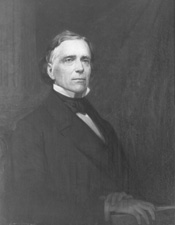
Historical · U.S. Senate · New Hampshire
James Bell
Former U.S. Senator from New Hampshire · 1855–1857 · Republican · Class 3
James Bell represented New Hampshire in the United States Senate (1855–1857) for the Republican party. The page below collects sourced biographical facts, term history, committee roles, and provenance for Bell.
Bioguide ID: B000337
Key facts
- Full name
- James Bell
- State
- New Hampshire
- Party
- Republican
- Senate class
- Class III
- Senate service
- 1855–1857
- First Senate term
- 1855
- Status
- Left office
- Current term ends
- —
- Born
- 1804
- Bioguide ID
- B000337
- Committee assignments
- —
- Dataset version
- 1.20260602
Biographical narrative
970 words · sourced from the Wikipedia REST extract
James Bell was an American politician who served as a United States Senator from New Hampshire from 1855 until his death in 1857. A member of the Republican Party, Bell's political career was marked by his involvement in state politics prior to his election to the Senate. His contributions to the legislative process during a tumultuous period in American history reflect the complexities of governance in the mid-19th century.
Early life and career
James Bell was born on November 13, 1804, in Francestown, New Hampshire. He was the son of Samuel Bell and Mehitable Dana Bell, and his family background was rooted in the New England tradition of public service. Bell pursued higher education at Bowdoin College, from which he graduated in 1822. Following his graduation, he furthered his education in law at Litchfield Law School, a prominent institution known for training many lawyers of the time. He was admitted to the bar in 1825, marking the beginning of his legal career.
Initially, Bell began practicing law in Gilmanton, New Hampshire, where he established himself as a competent attorney. His legal career progressed as he moved to Exeter, New Hampshire, in 1831, where he continued to practice law until 1846. During this period, Bell became actively involved in local politics, which would lay the groundwork for his future political endeavors.
Bell's political career began in earnest when he was elected to the New Hampshire House of Representatives, serving from 1846 to 1850. This role allowed him to gain valuable experience in legislative processes and state governance. In 1850, he was selected as a delegate to the State Constitutional Convention, where he contributed to discussions that would shape the state's legal framework. Despite his growing political profile, Bell faced challenges in his aspirations for higher office. He ran unsuccessfully for the position of Governor of New Hampshire in both 1854 and 1855, which underscored the competitive nature of state politics during that era.
In July 1855, following the death of Senator Moses Norris, Jr., Bell was elected to the United States Senate as a Republican, filling the vacancy left by Norris's passing. He replaced John S. Wells, who had been appointed to the Senate temporarily. Bell's election came during a period of significant political change in the United States, as the nation grappled with issues related to slavery, states' rights, and sectionalism.
Senate tenure
James Bell's tenure in the United States Senate began on July 30, 1855, and lasted until his death on May 26, 1857. He served during the Thirty-fourth Congress, a time characterized by intense political debates and divisions over the issue of slavery. The Senate was a battleground for competing interests, and Bell's role as a senator placed him at the center of these discussions.
During his time in the Senate, Bell participated in various legislative activities and discussions, although specific details regarding his contributions to particular bills or debates are not extensively documented. His service coincided with a period when the Republican Party was emerging as a significant political force, advocating for anti-slavery policies and seeking to unify various factions opposed to the expansion of slavery into new territories.
Bell's political career was cut short when he passed away on May 26, 1857, in Laconia, New Hampshire, at the age of 52. His death occurred while he was still in office, and he was interred at the Exeter Cemetery in Exeter, New Hampshire. The loss of Bell marked the end of his brief but impactful time in the Senate, as he had been part of the legislative body during a pivotal moment in American history.
Legislative focus and committees
While specific details regarding James Bell's legislative focus and committee assignments during his Senate tenure are not provided in the available records, it is important to contextualize his role within the broader political landscape of the time. The mid-19th century was marked by significant national tensions, particularly surrounding the issue of slavery. Senators were often deeply involved in debates that shaped the future of the nation, and Bell's alignment with the Republican Party suggests that he likely supported measures aimed at limiting the expansion of slavery.
The Republican Party, which was founded in the 1850s, attracted a coalition of former Whigs, Free Soilers, and anti-slavery Democrats. As a member of this party, Bell would have been expected to engage in discussions and legislative efforts that aligned with the party's platform. The Senate during this era was a critical arena for addressing the contentious issues of the day, and Bell's participation would have involved navigating complex political dynamics.
In addition to his legislative responsibilities, Bell's role as a senator would have included engaging with constituents and representing the interests of New Hampshire at the national level. Senators were tasked with advocating for their states while also considering the broader implications of national policies. This dual responsibility required a careful balancing act, particularly in a time of heightened political strife.
Bell's legacy is further marked by his familial connections. He was the uncle of Samuel Newell Bell and the cousin of Charles Henry Bell, both of whom were involved in public service. He married Judith A. Upham in 1831, and together they had five children: Mary A. Bell White, Eliza U. Bell, Lucy Bell, James Dana Bell, and Charles Upham Bell. His family ties reflect the interconnected nature of political life in New England during the 19th century.
In conclusion, James Bell's life and career encapsulate the experiences of a politician navigating the complexities of mid-19th century America. His contributions to the New Hampshire House of Representatives and the United States Senate, although brief, were set against a backdrop of significant national challenges. Bell's legacy is preserved in the historical record, where he is remembered as a figure who participated in the political discourse of his time.
Notable legislation
Sponsored and co-sponsored legislation for James Bell is pending operator curation. The biographical narrative above carries the same provenance trail until per-bill rows are written.
Sources
- [1]https://en.wikipedia.org/wiki/James_Bell_(New_Hampshire_politician)Wikipedia · retrieved 2026-06-02
Notable quotes
Sourced quotes for James Bell are pending operator curation. Narrative-scope provenance remains attached below.
Sources
- [1]https://en.wikipedia.org/wiki/James_Bell_(New_Hampshire_politician)Wikipedia · retrieved 2026-06-02
Key positions
Curated policy positions for James Bell are pending operator review. The biographical narrative above carries the same provenance trail until per-topic positions are written.
Sources
- [1]https://en.wikipedia.org/wiki/James_Bell_(New_Hampshire_politician)Wikipedia · retrieved 2026-06-02
Terms served
- 1855–1857U.S. Senate · Term 1 · Republican · Class III
Sources & provenance
Every attributable claim above carries a per-section [N] marker that resolves to the corresponding URL below. Each entry records the upstream provider, the canonical URL, and the timestamp at which the source was retrieved by the ingest pipeline.
Key facts
- https://bioguide.congress.gov/search/bio/B000337bioguide · retrieved 2026-06-02
- https://www.govtrack.us/congress/members/401329govtrack · retrieved 2026-06-02
Biographical narrative
- https://en.wikipedia.org/wiki/James_Bell_(New_Hampshire_politician)wikipedia · retrieved 2026-06-02
Find your senator
Every U.S. state elects two senators. Browse New Hampshire’s delegation, the full former-senator roster, or explore the role and term length.
Related on The Candidate
- Preceded by John WellsEarlier holder of the New Hampshire Class III Senate seat · Democratic.Open
- Succeeded by Daniel ClarkLater holder of the New Hampshire Class III Senate seat · Republican.Open
- Aaron CraginFormer U.S. Senator from New Hampshire · RepublicanOpen
- Austin PikeFormer U.S. Senator from New Hampshire · RepublicanOpen
- Bainbridge WadleighFormer U.S. Senator from New Hampshire · RepublicanOpen
- Benning JennessFormer U.S. Senator from New Hampshire · DemocraticOpen