
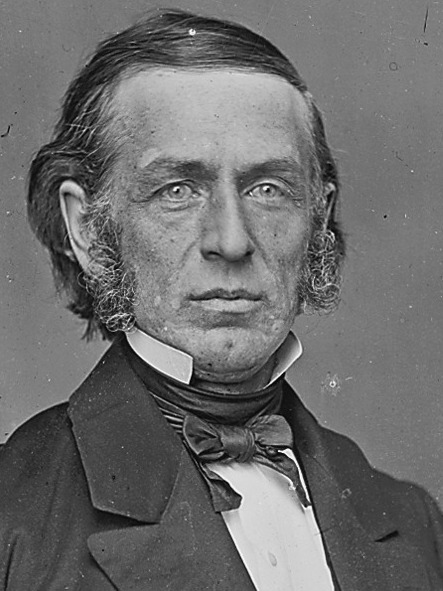
Historical · U.S. Senate · New Hampshire
James Patterson
Former U.S. Senator from New Hampshire · 1867–1873 · Republican · Class 3
James Patterson represented New Hampshire in the United States Senate (1867–1873) for the Republican party. The page below collects sourced biographical facts, term history, committee roles, and provenance for Patterson.
Bioguide ID: P000120
Key facts
- Full name
- James Patterson
- State
- New Hampshire
- Party
- Republican
- Senate class
- Class III
- Senate service
- 1867–1873
- First Senate term
- 1867
- Status
- Left office
- Current term ends
- —
- Born
- 1823
- Bioguide ID
- P000120
- Committee assignments
- —
- Dataset version
- 1.20260602
Biographical narrative
822 words · sourced from the Wikipedia REST extract
James Patterson was a prominent American politician who served as a U.S. Senator from New Hampshire. A member of the Republican Party, he held office during a pivotal time in American history, particularly in the post-Civil War era. Patterson's political career included a term in the U.S. House of Representatives before his election to the Senate, where he was involved in significant legislative activities. His tenure was marked by controversy, particularly related to a major political scandal involving bribery, which ultimately impacted his career.
Early life and career
James Patterson was born on July 2, 1823, in Henniker, Merrimack County, New Hampshire. He was the son of William and Frances M. Shepard Patterson. Growing up in New England, Patterson pursued a classical education, culminating in his graduation from Dartmouth College in 1848. Following his graduation, he took on the role of principal at Woodstock Academy in Connecticut, where he served for two years. His academic pursuits continued as he attended the Theological Seminary in New Haven, Connecticut, where he also studied law.
In 1854, Patterson returned to Dartmouth College, where he became a professor of mathematics, astronomy, and meteorology. His academic career at the college lasted until 1865. During this period, he also became involved in politics, serving as a member of the New Hampshire House of Representatives in 1862. Patterson's early career in education and politics laid the groundwork for his future endeavors in public service.
Patterson married Sarah Parker Wilder, and together they had two children, George Willis Patterson and Arthur Hubert Patterson. His family life, alongside his professional commitments, shaped his perspectives and priorities as he transitioned into higher political office.
Senate tenure
Patterson's political career advanced significantly when he was elected as a Republican to the U.S. House of Representatives. He served the third district of New Hampshire from March 4, 1863, until March 3, 1867. Following his tenure in the House, he successfully ran for the U.S. Senate, taking office on March 4, 1867. He served in the Senate until March 3, 1873, during which time he was a member of the Republican majority.
During his Senate tenure, Patterson held the position of chairman of the Committee on Enrolled Bills during the Forty-first Congress. He was also a member of the Committee on the District of Columbia for both the Forty-first and Forty-second Congresses. His involvement in these committees allowed him to influence legislation concerning various issues, including those related to the governance of the District of Columbia.
Patterson's time in the Senate was characterized by the broader political climate of the Reconstruction era, a period marked by significant social and political upheaval in the United States. His legislative activities and committee work reflected the challenges and opportunities of this transformative time.
Legislative focus and committees
Throughout his Senate career, Patterson's legislative focus included issues pertinent to the post-Civil War landscape. His involvement in the Committee on Enrolled Bills and the Committee on the District of Columbia positioned him at the intersection of legislative processes and local governance. However, his political career became overshadowed by a significant scandal that emerged in 1872.
In September of that year, allegations surfaced regarding bribery involving Patterson and other politicians linked to the Union Pacific Railroad and Crédit Mobilier. The ensuing investigation by the House of Representatives, known as the Poland Committee, revealed that several high-ranking Republican officials were implicated in the scandal. The committee's findings indicated that Patterson had engaged in questionable financial dealings, including a transaction with Oakes Ames, an official from Crédit Mobilier.
As the investigation progressed, Patterson attempted to defend his actions by asserting his lack of awareness regarding the ownership of stock linked to the transactions. However, the committee concluded that he had provided false testimony during the inquiry. As a result, both the House and Senate began recommending his expulsion from Congress. Ultimately, Patterson's Senate term concluded on March 3, 1873, before any formal action could be taken against him.
Following his Senate career, Patterson continued to engage in public service. He served as a regent of the Smithsonian Institution and returned to the New Hampshire House of Representatives in 1877-1878. He also held the position of State Superintendent of Public Instruction from 1881 until his death in 1893. Additionally, he was the president of the American Institute of Instruction, further demonstrating his commitment to education and public service.
Patterson's legacy includes the establishment of educational initiatives, particularly in Washington, D.C., where he sponsored legislation to create a public school system for Black students. In recognition of his contributions, a school was named in his honor, although it eventually closed in 2013.
James Patterson passed away on May 4, 1893, in Hanover, Grafton County, New Hampshire, at the age of 69. He is interred at Dartmouth College Cemetery. His life and career reflect the complexities of American politics during a transformative period in the nation's history, marked by both achievements and controversies.
Notable legislation
Sponsored and co-sponsored legislation for James Patterson is pending operator curation. The biographical narrative above carries the same provenance trail until per-bill rows are written.
Sources
- [1]https://en.wikipedia.org/wiki/James_W._PattersonWikipedia · retrieved 2026-06-02
Notable quotes
Sourced quotes for James Patterson are pending operator curation. Narrative-scope provenance remains attached below.
Sources
- [1]https://en.wikipedia.org/wiki/James_W._PattersonWikipedia · retrieved 2026-06-02
Key positions
Curated policy positions for James Patterson are pending operator review. The biographical narrative above carries the same provenance trail until per-topic positions are written.
Sources
- [1]https://en.wikipedia.org/wiki/James_W._PattersonWikipedia · retrieved 2026-06-02
Terms served
- 1863–1865U.S. House · District 3 · Term 1 · Republican
- 1865–1867U.S. House · District 3 · Term 2 · Republican
- 1867–1873U.S. Senate · Term 3 · Republican · Class III
Sources & provenance
Every attributable claim above carries a per-section [N] marker that resolves to the corresponding URL below. Each entry records the upstream provider, the canonical URL, and the timestamp at which the source was retrieved by the ingest pipeline.
Key facts
- https://bioguide.congress.gov/search/bio/P000120bioguide · retrieved 2026-06-02
- https://www.govtrack.us/congress/members/408528govtrack · retrieved 2026-06-02
Biographical narrative
- https://en.wikipedia.org/wiki/James_W._Pattersonwikipedia · retrieved 2026-06-02
Find your senator
Every U.S. state elects two senators. Browse New Hampshire’s delegation, the full former-senator roster, or explore the role and term length.
Related on The Candidate
- Preceded by Daniel ClarkEarlier holder of the New Hampshire Class III Senate seat · Republican.Open
- Succeeded by Bainbridge WadleighLater holder of the New Hampshire Class III Senate seat · Republican.Open
- Aaron CraginFormer U.S. Senator from New Hampshire · RepublicanOpen
- Austin PikeFormer U.S. Senator from New Hampshire · RepublicanOpen
- Benning JennessFormer U.S. Senator from New Hampshire · DemocraticOpen
- Republican PartyFederal candidates and office holders on the Republican line.Open