
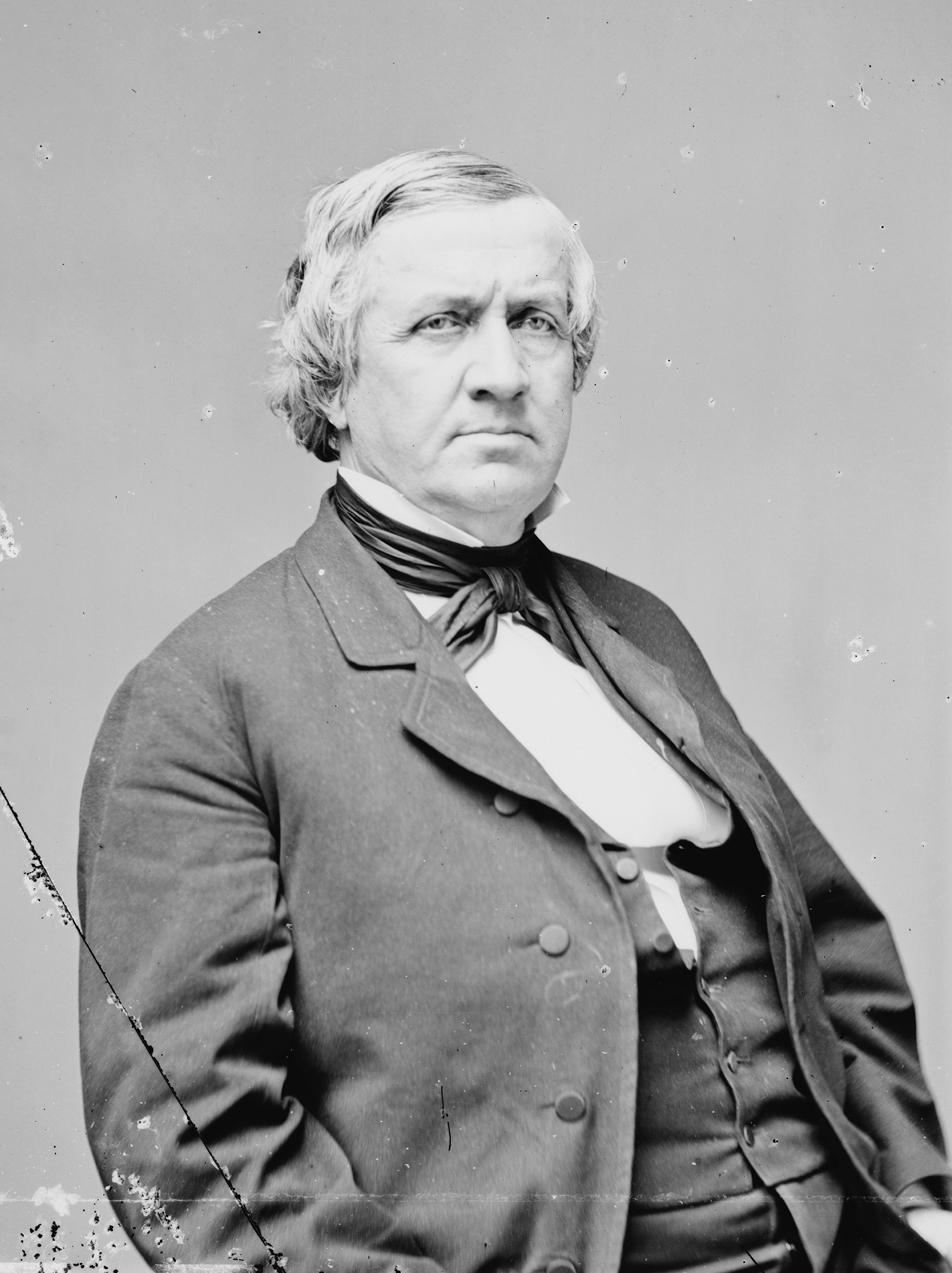
Historical · U.S. Senate · New Hampshire
John Hale
Former U.S. Senator from New Hampshire · 1847–1865 · Republican · Class 2
John Hale represented New Hampshire in the United States Senate (1847–1865) for the Republican party. The page below collects sourced biographical facts, term history, committee roles, and provenance for Hale.
Bioguide ID: H000034
Key facts
- Full name
- John Hale
- State
- New Hampshire
- Party
- Republican
- Senate class
- Class II
- Senate service
- 1847–1865
- First Senate term
- 1847
- Status
- Left office
- Current term ends
- —
- Born
- 1806
- Bioguide ID
- H000034
- Committee assignments
- —
- Dataset version
- 1.20260602
Biographical narrative
831 words · sourced from the Wikipedia REST extract
John Hale was an American politician and lawyer who served as a U.S. Senator from New Hampshire. His political career spanned several decades, during which he transitioned from the Democratic Party to the Free Soil Party and eventually to the Republican Party. Hale was known for his strong opposition to slavery and played a significant role in anti-slavery politics during a pivotal time in American history. His Senate tenure lasted from 1847 to 1853 and again from 1855 to 1865, marking him as a prominent figure in the legislative battles surrounding the issues of slavery and territorial expansion.
Early life and career
John Hale was born on March 31, 1806, in Rochester, New Hampshire, to John Parker Hale and Lydia Clarkson O'Brien. He pursued his education at Phillips Exeter Academy before graduating from Bowdoin College in 1827, where he was a contemporary of Franklin Pierce and an active member of the Athenian Society, a literary organization. Following his graduation, Hale began studying law under Jeremiah H. Woodman in Rochester and later with Daniel M. Christie in Dover. He successfully passed the bar examination in 1830 and commenced his legal practice in Dover.
Hale's political career began in 1832 when he was elected to the New Hampshire House of Representatives as a member of the Democratic Party. His political involvement deepened when he was appointed as U.S. District Attorney for New Hampshire by President Andrew Jackson in 1834, a position he retained under President Martin Van Buren until his removal in 1841 by President John Tyler, a Whig. In 1842, Hale was elected to the United States House of Representatives, serving from March 4, 1843, to March 3, 1845. During his time in the House, he became known for his opposition to the gag rule, which had been established to suppress anti-slavery petitions.
Hale's stance against the annexation of Texas, which was a contentious issue within the Democratic Party, led to his removal from the party's nomination for re-election in 1844. Despite this setback, he continued to advocate against slavery and sought to build a coalition of anti-slavery supporters in New Hampshire. His efforts culminated in a campaign known as the "Hale Storm of 1845," during which he traveled extensively throughout the state to promote anti-slavery sentiments.
Senate tenure
Hale's first election to the U.S. Senate occurred on June 9, 1846, when he was chosen as an Independent Democrat. He officially took office on March 4, 1847, and served until March 3, 1853. During this period, Hale emerged as a vocal opponent of the Mexican-American War, arguing that the conflict was driven by the desire to expand slavery into new territories. His anti-slavery platform made him one of the earliest senators to adopt such a position openly.
In 1852, Hale sought the presidential nomination of the Free Soil Party, which had been established to oppose the expansion of slavery into the territories. Although he did not secure the nomination, he remained a significant figure within the party. After the passage of the Kansas-Nebraska Act in 1854, which allowed for the possibility of slavery in territories where it had previously been prohibited, Hale joined the Republican Party, which had formed in opposition to the expansion of slavery.
Hale returned to the Senate for a second term on March 4, 1855, and continued to serve until March 3, 1865. Throughout his time in the Senate, he maintained a consistent focus on anti-slavery legislation and worked to unify various factions opposed to slavery. His commitment to these issues solidified his reputation as a leading voice in the fight against the institution of slavery.
Legislative focus and committees
During his Senate tenure, Hale was known for his strong advocacy against slavery and his opposition to the Mexican-American War. His legislative focus included efforts to prevent the spread of slavery into new territories and to promote the rights of free states. He was a key figure in the establishment of the Free Soil Party, which sought to create a political platform centered around anti-slavery principles.
Hale's participation in various Senate committees allowed him to influence legislation significantly. He was involved in discussions and debates surrounding key issues of the time, including the implications of the Mexican-American War and the impact of the Kansas-Nebraska Act. His ability to articulate the concerns of anti-slavery advocates contributed to the growing national discourse on the subject.
In addition to his legislative efforts, Hale's political career included an appointment by President Abraham Lincoln as Minister to Spain after his Senate term ended in 1865. This role marked the conclusion of his active participation in public office, as he was recalled in April 1869 and subsequently retired from political life.
Hale's legacy is characterized by his unwavering commitment to anti-slavery principles and his role in shaping the political landscape of his time. His contributions to the Senate and his involvement in the anti-slavery movement reflect the complexities of American politics during a period marked by significant social and political upheaval.
Notable legislation
Sponsored and co-sponsored legislation for John Hale is pending operator curation. The biographical narrative above carries the same provenance trail until per-bill rows are written.
Sources
- [1]https://en.wikipedia.org/wiki/John_P._HaleWikipedia · retrieved 2026-06-02
Notable quotes
Sourced quotes for John Hale are pending operator curation. Narrative-scope provenance remains attached below.
Sources
- [1]https://en.wikipedia.org/wiki/John_P._HaleWikipedia · retrieved 2026-06-02
Key positions
Curated policy positions for John Hale are pending operator review. The biographical narrative above carries the same provenance trail until per-topic positions are written.
Sources
- [1]https://en.wikipedia.org/wiki/John_P._HaleWikipedia · retrieved 2026-06-02
Terms served
- 1843–1845U.S. House · District -1 · Term 1 · Democratic
- 1847–1853U.S. Senate · Term 2 · Free Soil · Class II
- 1855–1859U.S. Senate · Term 3 · Republican · Class II
- 1859–1865U.S. Senate · Term 4 · Republican · Class II
Sources & provenance
Every attributable claim above carries a per-section [N] marker that resolves to the corresponding URL below. Each entry records the upstream provider, the canonical URL, and the timestamp at which the source was retrieved by the ingest pipeline.
Key facts
- https://bioguide.congress.gov/search/bio/H000034bioguide · retrieved 2026-06-02
- https://www.govtrack.us/congress/members/404919govtrack · retrieved 2026-06-02
Biographical narrative
- https://en.wikipedia.org/wiki/John_P._Halewikipedia · retrieved 2026-06-02
Find your senator
Every U.S. state elects two senators. Browse New Hampshire’s delegation, the full former-senator roster, or explore the role and term length.
Related on The Candidate
- Preceded by Benning JennessEarlier holder of the New Hampshire Class II Senate seat · Democratic.Open
- Succeeded by Aaron CraginLater holder of the New Hampshire Class II Senate seat · Republican.Open
- Austin PikeFormer U.S. Senator from New Hampshire · RepublicanOpen
- Bainbridge WadleighFormer U.S. Senator from New Hampshire · RepublicanOpen
- Republican PartyFederal candidates and office holders on the Republican line.Open
- Senators from New HampshireEvery former U.S. Senator who has represented New Hampshire.Open