
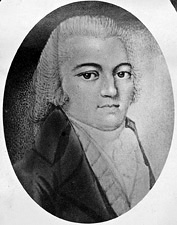
Historical · U.S. Senate · New Hampshire
John Parrott
Former U.S. Senator from New Hampshire · 1819–1825 · Republican · Class 3
John Parrott represented New Hampshire in the United States Senate (1819–1825) for the Republican party. The page below collects sourced biographical facts, term history, committee roles, and provenance for Parrott.
Bioguide ID: P000084
Key facts
- Full name
- John Parrott
- State
- New Hampshire
- Party
- Republican
- Senate class
- Class III
- Senate service
- 1819–1825
- First Senate term
- 1819
- Status
- Left office
- Current term ends
- —
- Born
- 1767
- Bioguide ID
- P000084
- Committee assignments
- —
- Dataset version
- 1.20260602
Biographical narrative
813 words · sourced from the Wikipedia REST extract
John Parrott was a prominent political figure in early 19th-century America, serving as a U.S. Senator from New Hampshire. Born in 1767, he was a member of the Republican Party and held office during a transformative period in the nation's history. Parrott's political career included serving in both the U.S. House of Representatives and the Senate, where he contributed to the legislative process during a time of significant national development. His tenure in the Senate lasted from 1819 until 1825, after which he continued to engage in public service in various capacities.
Early life and career
John Parrott was born on August 8, 1767, in Portsmouth, which was then part of the Province of New Hampshire. He was the son of John Parrott, a merchant and ship captain, and his wife, Deborah Walker. Growing up in a maritime family, Parrott was likely influenced by the commercial activities of his father, which led him to pursue a career in trade. He engaged in trading activities that extended to Europe and the Caribbean, a venture that was curtailed by the Embargo Act of 1807, which restricted American trade with foreign nations.
Parrott's political career began at the local level, where he held various offices before advancing to the state legislature. He served in the New Hampshire House of Representatives from 1809 to 1814, gaining valuable experience in governance and public affairs. His initial attempt to enter Congress was unsuccessful when he ran for election to the Thirteenth Congress in 1812. However, he persevered and was elected to the U.S. House of Representatives for the Fifteenth Congress, serving from March 4, 1817, to March 3, 1819. This experience in the House laid the groundwork for his subsequent election to the Senate.
Senate tenure
Parrott's Senate career commenced on March 4, 1819, when he was elected to represent New Hampshire in the U.S. Senate. He served in this capacity until March 3, 1825. During his time in the Senate, Parrott was affiliated with the Democratic-Republican Party, which later evolved into the Adams-Clay Republican faction. His legislative activities occurred during a period marked by significant political and economic changes in the United States, including the aftermath of the War of 1812 and the growing tensions surrounding issues such as states' rights and federal authority.
As a senator, Parrott participated in debates and discussions that shaped the direction of national policy. His tenure coincided with a time when the nation was grappling with the implications of westward expansion, economic development, and the evolving political landscape. Although specific details of his legislative contributions are not extensively documented, his role as a senator placed him at the heart of the discussions that influenced the trajectory of the young nation.
After completing his Senate term, Parrott continued to engage in public service. In 1826, he was appointed as the postmaster of Portsmouth, a role that allowed him to remain involved in the community and contribute to local governance. Additionally, he served in the New Hampshire Senate from 1830 to 1831, further extending his influence in state politics.
Legislative focus and committees
While specific details regarding Parrott's legislative focus and committee assignments during his Senate tenure are not provided, it is known that he was active in the political discourse of his time. Senators during this period often addressed a range of issues, including economic policy, infrastructure development, and territorial expansion. Given the context of his service, it is likely that Parrott engaged with legislation pertinent to these themes, reflecting the concerns of his constituents in New Hampshire and the broader national interest.
Parrott's political affiliations and the evolving nature of the Democratic-Republican Party during his time in office suggest that he may have been involved in discussions surrounding the party's ideological shifts. The early 19th century was characterized by a dynamic political environment, and senators often played crucial roles in shaping party platforms and responding to the needs of their states.
Following his departure from the Senate, Parrott's continued involvement in public service, including his role as postmaster and his participation in the New Hampshire Senate, indicates a commitment to civic duty and governance. His later years were spent in Greenland, New Hampshire, where he passed away on July 9, 1836. He was interred in the family burying ground on his estate, leaving behind a legacy intertwined with the early political history of the United States.
Parrott's papers are preserved at the University of North Carolina, providing a resource for those interested in exploring his contributions to American politics and the historical context of his service. His family included notable figures, such as his son Robert Parker Parrott, who became known for inventing the Parrott gun, and another son, Peter Pearse Parrott, who was involved in the ordinance foundry business. Through his family and public service, John Parrott's life reflects the complexities and developments of early American political life.
Notable legislation
Sponsored and co-sponsored legislation for John Parrott is pending operator curation. The biographical narrative above carries the same provenance trail until per-bill rows are written.
Sources
- [1]https://en.wikipedia.org/wiki/John_F._ParrottWikipedia · retrieved 2026-06-02
Notable quotes
Sourced quotes for John Parrott are pending operator curation. Narrative-scope provenance remains attached below.
Sources
- [1]https://en.wikipedia.org/wiki/John_F._ParrottWikipedia · retrieved 2026-06-02
Key positions
Curated policy positions for John Parrott are pending operator review. The biographical narrative above carries the same provenance trail until per-topic positions are written.
Sources
- [1]https://en.wikipedia.org/wiki/John_F._ParrottWikipedia · retrieved 2026-06-02
Terms served
- 1817–1819U.S. House · District -1 · Term 1 · Republican
- 1819–1825U.S. Senate · Term 2 · Republican · Class III
Sources & provenance
Every attributable claim above carries a per-section [N] marker that resolves to the corresponding URL below. Each entry records the upstream provider, the canonical URL, and the timestamp at which the source was retrieved by the ingest pipeline.
Key facts
- https://bioguide.congress.gov/search/bio/P000084bioguide · retrieved 2026-06-02
- https://www.govtrack.us/congress/members/408494govtrack · retrieved 2026-06-02
Biographical narrative
- https://en.wikipedia.org/wiki/John_F._Parrottwikipedia · retrieved 2026-06-02
Find your senator
Every U.S. state elects two senators. Browse New Hampshire’s delegation, the full former-senator roster, or explore the role and term length.
Related on The Candidate
- Preceded by Clement StorerEarlier holder of the New Hampshire Class III Senate seat · Republican.Open
- Succeeded by Isaac HillLater holder of the New Hampshire Class III Senate seat · Jackson.Open
- Aaron CraginFormer U.S. Senator from New Hampshire · RepublicanOpen
- Austin PikeFormer U.S. Senator from New Hampshire · RepublicanOpen
- Bainbridge WadleighFormer U.S. Senator from New Hampshire · RepublicanOpen
- Benning JennessFormer U.S. Senator from New Hampshire · DemocraticOpen