
Historical · U.S. Senate · New Hampshire
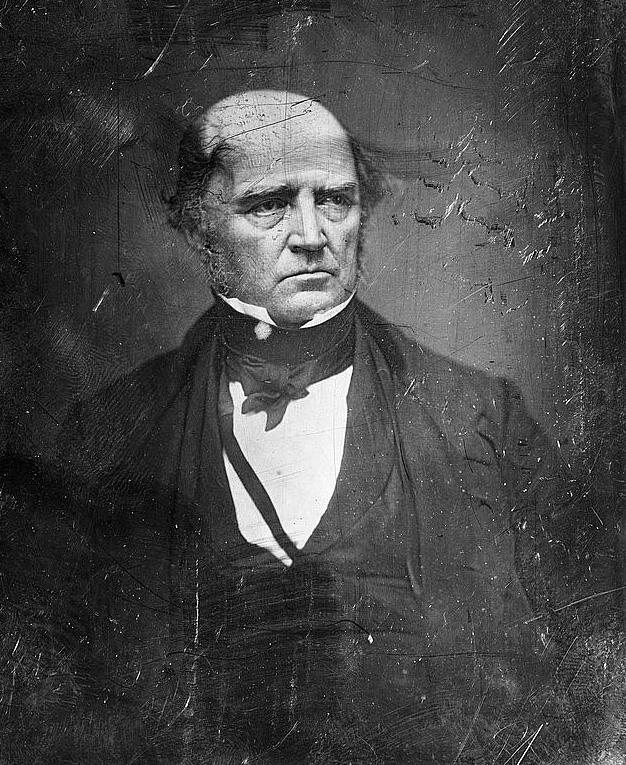
Levi Woodbury
Former U.S. Senator from New Hampshire · 1825–1845 · Democratic · Class 2
Levi Woodbury represented New Hampshire in the United States Senate (1825–1845) for the Democratic party. The page below collects sourced biographical facts, term history, committee roles, and provenance for Woodbury.
Bioguide ID: W000711
Key facts
- Full name
- Levi Woodbury
- State
- New Hampshire
- Party
- Democratic
- Senate class
- Class II
- Senate service
- 1825–1845
- First Senate term
- 1825
- Status
- Left office
- Current term ends
- —
- Born
- 1789
- Bioguide ID
- W000711
- Committee assignments
- —
- Dataset version
- 1.20260602
Biographical narrative
889 words · sourced from the Wikipedia REST extract
Levi Woodbury was an American attorney, jurist, and politician who served as a U.S. Senator from New Hampshire. A member of the Democratic Party, Woodbury's political career spanned several decades, during which he held various significant positions, including Governor of New Hampshire, Secretary of the Navy, Secretary of the Treasury, and Associate Justice of the Supreme Court of the United States. His tenure in the Senate was marked by his commitment to the principles of the Democratic Party, particularly those espoused by President Andrew Jackson, and he played a notable role in shaping financial policy during a tumultuous economic period in American history.
Early life and career
Levi Woodbury was born on December 22, 1789, in Francestown, New Hampshire, to Peter and Mary Woodbury. He received his early education at Atkinson Academy before attending Dartmouth College, where he graduated in 1809 as a member of the Phi Beta Kappa honor society. Following his graduation, Woodbury briefly attended Tapping Reeve Law School in Litchfield, Connecticut, and subsequently read law to gain admission to the New Hampshire Bar in 1812. His legal education and practice laid the groundwork for his future political career.
After being admitted to the bar, Woodbury established a law practice in Francestown, where he worked from 1812 until 1816. His early involvement in politics began with his writing of the Hillsborough Resolves, which defended the Madison administration during the War of 1812. This work garnered him recognition and led to his appointment as clerk of the New Hampshire State Senate from 1816 to 1817. His political ascent continued as he was appointed to the Superior Court of Judicature in New Hampshire, serving from 1817 until 1823. In 1823, Woodbury was elected as the Governor of New Hampshire, a position he held for one year. His gubernatorial term was characterized by attempts to bridge the divide between Federalists and Democratic-Republicans, although he faced challenges in achieving significant progress.
Following his governorship, Woodbury was elected as Speaker of the New Hampshire House of Representatives in 1825, further establishing his political credentials and leadership within the state.
Senate tenure
Levi Woodbury's first term as a U.S. Senator began in 1825 and lasted until 1831. During this period, he became known for his alignment with the Democratic Party and its principles, particularly those championed by President Andrew Jackson. His role as a senator included serving as Chairman of the Senate Commerce Committee from 1827 to 1831, where he was involved in various legislative matters related to commerce and trade.
After a brief hiatus from the Senate, Woodbury returned to the U.S. Senate for a second term from 1841 until 1845. His political career during this time was marked by significant events in American financial policy. Woodbury was a strong advocate for the "independent" treasury system, which aimed to reduce the influence of commercial banks over government finances. His efforts were particularly relevant during the financial Panic of 1837, which highlighted the vulnerabilities in the existing banking system. Woodbury's advocacy for a more secure administration of the U.S. Treasury's funds culminated in his support for the passage of the Independent Treasury Act in 1840, although this act was largely repealed the following year. Nonetheless, the groundwork laid during his tenure contributed to the eventual establishment of an independent U.S. Treasury in 1846.
In addition to his legislative work, Woodbury's brief chairmanship of the Senate Committee on Finance during a special session of the 29th Congress is noted for being the shortest on record, lasting only ten days.
Legislative focus and committees
Throughout his time in the Senate, Woodbury's legislative focus was heavily influenced by his commitment to the Democratic Party's principles and his belief in the need for a stable financial system. He was a staunch opponent of the Second Bank of the United States and favored policies that promoted hard currency over paper money. His tenure coincided with a period of economic instability, and he worked to address the challenges that arose from the financial Panic of 1837 and subsequent economic downturns.
Woodbury's involvement in the Senate also included significant contributions to discussions surrounding the Contract Clause, slavery, and the political question doctrine. His legal background as an attorney and jurist informed his perspectives on these issues, allowing him to articulate the constitutional implications of various legislative proposals.
In addition to his Senate duties, Woodbury's political career included service in the executive branch, where he held the positions of Secretary of the Navy and Secretary of the Treasury under Presidents Andrew Jackson and Martin Van Buren. His experience in these roles further shaped his understanding of federal financial management and policy, which he carried into his legislative work.
After concluding his second Senate term in 1845, Woodbury was appointed by President James K. Polk to serve as an Associate Justice of the Supreme Court of the United States, marking the culmination of his extensive public service career. His legal and political experiences contributed to his reputation as a defender of constitutional rights and a significant figure in American jurisprudence.
Levi Woodbury passed away on September 4, 1851, leaving behind a legacy of public service that spanned multiple facets of government, including legislative, executive, and judicial branches. His contributions to the political landscape of the early 19th century continue to be recognized in discussions of American history and governance.
Notable legislation
Sponsored and co-sponsored legislation for Levi Woodbury is pending operator curation. The biographical narrative above carries the same provenance trail until per-bill rows are written.
Sources
- [1]https://en.wikipedia.org/wiki/Levi_WoodburyWikipedia · retrieved 2026-06-02
Notable quotes
Sourced quotes for Levi Woodbury are pending operator curation. Narrative-scope provenance remains attached below.
Sources
- [1]https://en.wikipedia.org/wiki/Levi_WoodburyWikipedia · retrieved 2026-06-02
Key positions
Curated policy positions for Levi Woodbury are pending operator review. The biographical narrative above carries the same provenance trail until per-topic positions are written.
Sources
- [1]https://en.wikipedia.org/wiki/Levi_WoodburyWikipedia · retrieved 2026-06-02
Terms served
- 1825–1831U.S. Senate · Term 1 · Jackson · Class III
- 1841–1845U.S. Senate · Term 2 · Democratic · Class II
Sources & provenance
Every attributable claim above carries a per-section [N] marker that resolves to the corresponding URL below. Each entry records the upstream provider, the canonical URL, and the timestamp at which the source was retrieved by the ingest pipeline.
Key facts
- https://bioguide.congress.gov/search/bio/W000711bioguide · retrieved 2026-06-02
- https://www.govtrack.us/congress/members/411863govtrack · retrieved 2026-06-02
Biographical narrative
- https://en.wikipedia.org/wiki/Levi_Woodburywikipedia · retrieved 2026-06-02
Find your senator
Every U.S. state elects two senators. Browse New Hampshire’s delegation, the full former-senator roster, or explore the role and term length.
Related on The Candidate
- Preceded by David MorrilEarlier holder of the New Hampshire Class II Senate seat · Republican.Open
- Succeeded by Benning JennessLater holder of the New Hampshire Class II Senate seat · Democratic.Open
- Aaron CraginFormer U.S. Senator from New Hampshire · RepublicanOpen
- Austin PikeFormer U.S. Senator from New Hampshire · RepublicanOpen
- Bainbridge WadleighFormer U.S. Senator from New Hampshire · RepublicanOpen
- Democratic PartyFederal candidates and office holders on the Democratic line.Open