
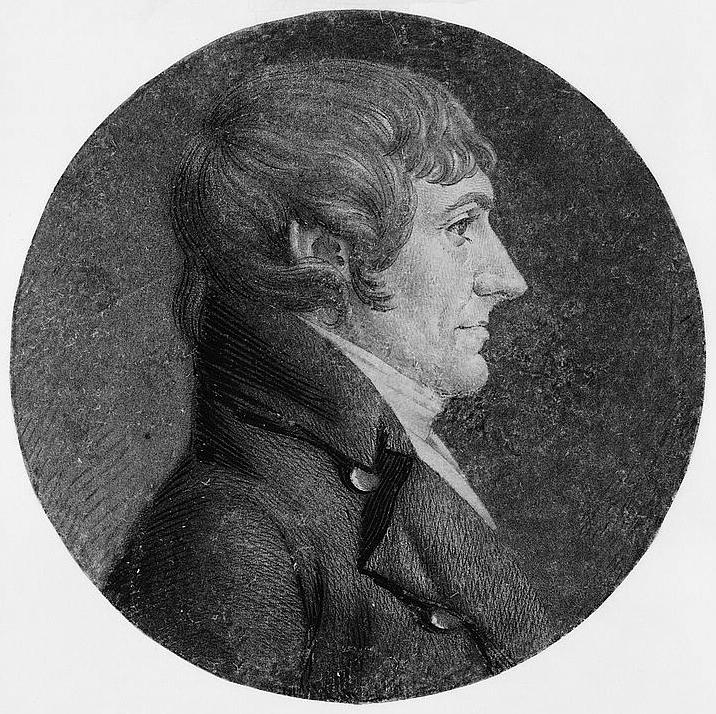
Historical · U.S. Senate · New Hampshire
William Plumer
Former U.S. Senator from New Hampshire · 1802–1807 · Federalist · Class 3
William Plumer represented New Hampshire in the United States Senate (1802–1807) for the Federalist party. The page below collects sourced biographical facts, term history, committee roles, and provenance for Plumer.
Bioguide ID: P000393
Key facts
- Full name
- William Plumer
- State
- New Hampshire
- Party
- Federalist
- Senate class
- Class III
- Senate service
- 1802–1807
- First Senate term
- 1802
- Status
- Left office
- Current term ends
- —
- Born
- 1759
- Bioguide ID
- P000393
- Committee assignments
- —
- Dataset version
- 1.20260602
Biographical narrative
885 words · sourced from the Wikipedia REST extract
William Plumer was an American lawyer, politician, and Baptist lay preacher who served as a U.S. Senator from New Hampshire from 1802 to 1807. A member of the Federalist Party during his Senate tenure, he later transitioned to the Democratic-Republican Party, serving as the seventh governor of New Hampshire from 1812 to 1813 and again from 1816 to 1819. Plumer was also involved in local politics and held various positions in the New Hampshire legislature throughout his career. He was born on June 25, 1759, in Newburyport, Massachusetts, and passed away on December 22, 1850, in Epping, New Hampshire.
Early life and career
William Plumer was born into a family of modest means in Newburyport, which was then part of the Province of Massachusetts Bay. His father, Samuel Plumer, worked as a farmer and merchant, while his mother was Mary Dole Plumer. In 1768, the family relocated to Epping, New Hampshire, where Plumer grew up on his father's farm situated on Red Oak Hill. He received his early education at the local Red Oak Hill School, where he studied until the age of 17.
Throughout his youth, Plumer faced significant health challenges that prevented him from engaging in military service during the American Revolution or pursuing a career in farming. After experiencing a religious conversion in his late teens, he became a Baptist exhorter, which is a lay preacher role. For several years, he traveled across New Hampshire, delivering sermons in various Baptist churches and participating in revival meetings.
Initially considering a career in medicine, Plumer began studying the field but soon shifted his focus to law. He apprenticed with attorneys Joshua Atherton in Amherst and John Prentice in Londonderry. During his time with Atherton, he formed a lasting friendship with fellow law clerk William Coleman. Plumer was admitted to the bar in 1787 and commenced his legal practice in Epping.
In addition to his legal career, Plumer was active in local governance and politics. He held several positions within his town, including that of selectman. His political involvement extended to the state level, where he served in the New Hampshire House of Representatives during multiple terms between 1785 and 1800. He was elected Speaker of the House in both 1791 and 1797 and was a delegate to the state constitutional convention from 1791 to 1792.
Senate tenure
William Plumer was elected to the United States Senate as a member of the Federalist Party, filling the vacancy left by the resignation of James Sheafe. His Senate term began on June 17, 1802, and concluded on March 3, 1807. During his time in the Senate, Plumer was part of a group of New England Federalists who, in 1803, proposed the idea of secession from the United States. This proposal stemmed from their concerns over the diminishing power of the Federalist Party, the increasing influence of the Jeffersonian Democrats, and the perceived marginalization of the Northern states following the Louisiana Purchase.
Plumer's involvement in the secession discussions was later reflected upon with regret. He acknowledged that pursuing such a course of action could have had dire consequences for New England and expressed relief that the plan did not come to fruition. After serving one term in the Senate, Plumer chose not to seek re-election.
Legislative focus and committees
During his Senate tenure, Plumer's legislative focus aligned with the interests of the Federalist Party, which emphasized strong federal governance and economic development. However, specific details regarding the committees he served on or the particular legislation he sponsored are not documented in the available records.
Following his time in the U.S. Senate, Plumer continued his political career in New Hampshire. He served in the New Hampshire Senate in 1810 and 1811, where he was elected president of the Senate in both years. His political affiliations shifted as he became a member of the Democratic-Republican Party, leading to his nomination for governor in 1812. Plumer won the election and served as governor until 1813. He returned to the governorship in 1816 and remained in office until 1819.
In addition to his political roles, Plumer participated in the electoral process at the national level. In the 1820 presidential election, he served as one of New Hampshire's electors in the Electoral College. Notably, he cast a dissenting vote against the incumbent President James Monroe, opting instead for John Quincy Adams. This decision has been interpreted in various ways, with some suggesting it was an attempt to maintain George Washington's status as the only unanimously elected president, while others view it as a means to highlight Adams as a potential future candidate or to express dissatisfaction with Monroe's administration.
Beyond his political endeavors, Plumer contributed to the cultural and historical landscape of New Hampshire. He was a founding member and the first president of the New Hampshire Historical Society and was elected to the American Antiquarian Society in 1815.
William Plumer passed away on December 22, 1850, in Epping, New Hampshire. He was laid to rest in the Plumer Family Cemetery. Throughout his life, he was married to Sarah "Sally" Fowler, with whom he had six children, including William Plumer Jr., who later served in the U.S. House of Representatives. Plumer's legacy is marked by his contributions to both state and national politics during a formative period in American history.
Notable legislation
Sponsored and co-sponsored legislation for William Plumer is pending operator curation. The biographical narrative above carries the same provenance trail until per-bill rows are written.
Sources
- [1]https://en.wikipedia.org/wiki/William_PlumerWikipedia · retrieved 2026-06-02
Notable quotes
Sourced quotes for William Plumer are pending operator curation. Narrative-scope provenance remains attached below.
Sources
- [1]https://en.wikipedia.org/wiki/William_PlumerWikipedia · retrieved 2026-06-02
Key positions
Curated policy positions for William Plumer are pending operator review. The biographical narrative above carries the same provenance trail until per-topic positions are written.
Sources
- [1]https://en.wikipedia.org/wiki/William_PlumerWikipedia · retrieved 2026-06-02
Terms served
- 1802–1807U.S. Senate · Term 1 · Federalist · Class III
Sources & provenance
Every attributable claim above carries a per-section [N] marker that resolves to the corresponding URL below. Each entry records the upstream provider, the canonical URL, and the timestamp at which the source was retrieved by the ingest pipeline.
Key facts
- https://bioguide.congress.gov/search/bio/P000393bioguide · retrieved 2026-06-02
- https://www.govtrack.us/congress/members/408787govtrack · retrieved 2026-06-02
Biographical narrative
- https://en.wikipedia.org/wiki/William_Plumerwikipedia · retrieved 2026-06-02
Find your senator
Every U.S. state elects two senators. Browse New Hampshire’s delegation, the full former-senator roster, or explore the role and term length.
Related on The Candidate
- Preceded by John LangdonEarlier holder of the New Hampshire Class III Senate seat · Republican.Open
- Succeeded by Nahum ParkerLater holder of the New Hampshire Class III Senate seat · Republican.Open
- Aaron CraginFormer U.S. Senator from New Hampshire · RepublicanOpen
- Austin PikeFormer U.S. Senator from New Hampshire · RepublicanOpen
- Bainbridge WadleighFormer U.S. Senator from New Hampshire · RepublicanOpen
- Benning JennessFormer U.S. Senator from New Hampshire · DemocraticOpen