
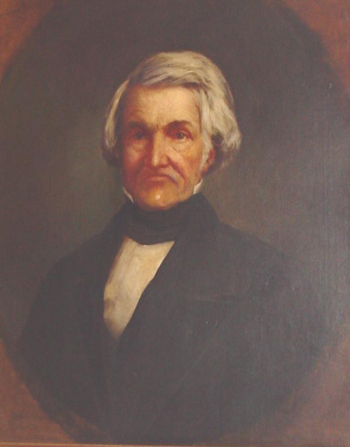
Historical · U.S. Senate · Ohio
Jeremiah Morrow
Former U.S. Senator from Ohio · 1813–1819 · Republican · Class 3
Jeremiah Morrow represented Ohio in the United States Senate (1813–1819) for the Republican party. The page below collects sourced biographical facts, term history, committee roles, and provenance for Morrow.
Bioguide ID: M001003
Key facts
- Full name
- Jeremiah Morrow
- State
- Ohio
- Party
- Republican
- Senate class
- Class III
- Senate service
- 1813–1819
- First Senate term
- 1813
- Status
- Left office
- Current term ends
- —
- Born
- 1771
- Bioguide ID
- M001003
- Committee assignments
- —
- Dataset version
- 1.20260602
Biographical narrative
820 words · sourced from the Wikipedia REST extract
Jeremiah Morrow was a prominent American politician in the early 19th century, serving as a U.S. Senator from Ohio and later as the ninth governor of the state. A member of the Republican Party, Morrow's political career spanned several key roles, including service in the U.S. House of Representatives and the Ohio Senate. His contributions to Ohio's political landscape were significant during a formative period in the state's history.
Early life and career
Jeremiah Morrow was born on October 6, 1771, in the vicinity of Gettysburg, Pennsylvania. He hailed from a Scots-Irish background, with his grandfather, also named Jeremiah Morrow, having immigrated from County Londonderry, Ireland. This lineage traces back to 17th-century Scottish settlers. In 1795, Morrow relocated to the Northwest Territory, settling initially at the mouth of the Little Miami River before establishing himself in what is now Warren County, Ohio.
Morrow was a devout member of the Associate Reformed Presbyterian Church and played a significant role in the religious community upon his arrival in Ohio. He was one of the original elders of the Mill Creek congregation, which was organized shortly before 1800. His early involvement in local governance began with his election to the Territorial House of Representatives and later the Territorial Senate. Morrow's political engagement continued as he served as a delegate from Hamilton County to the 1802 Constitutional Convention, which was instrumental in shaping Ohio's governance.
In 1803, Morrow was elected to the first Ohio State Senate, where he served for a brief period before becoming Ohio's inaugural representative in the United States House of Representatives. His tenure in the House was marked by four additional full terms, during which he contributed to the legislative process and represented the interests of Ohio's constituents. Morrow's political career took a significant turn when he ran for the U.S. Senate in 1812, ultimately winning the election and serving a single term from 1813 to 1819. Notably, he was the first U.S. Senator from Ohio to complete a full six-year term.
Senate tenure
Jeremiah Morrow's Senate career began in 1813, during a time when the United States was navigating various challenges, including the War of 1812. His service in the Senate was characterized by his alignment with the Republican Party, which was a dominant political force during this era. Morrow's legislative focus included issues pertinent to Ohio and the broader national context, reflecting the interests of his constituents and the evolving political landscape.
Morrow's term in the Senate lasted until March 3, 1819. During this period, he participated in discussions and decisions that would shape the future of the nation. Although he did not seek re-election after his term ended, his contributions during his time in office were significant, as he was part of the early establishment of Ohio's representation at the federal level.
After concluding his Senate term, Morrow continued to engage in public service, eventually being elected as Ohio's governor in 1822. His political career was marked by a commitment to the development of Ohio and its governance, and he remained an influential figure in the state's political history.
Legislative focus and committees
Throughout his political career, Jeremiah Morrow demonstrated a commitment to various legislative issues that were critical to Ohio and the nation. While specific details regarding the bills he supported or the committees he served on during his Senate tenure are not provided, it is known that his political activities were aligned with the interests of his constituents and the broader goals of the Republican Party at the time.
In addition to his role in the Senate, Morrow's legislative focus extended beyond his time in Washington. After his Senate career, he was elected governor of Ohio, where he served two consecutive terms. His governorship was marked by efforts to address the needs of the state and its citizens, reflecting his ongoing dedication to public service.
Morrow's political legacy continued to influence Ohio's governance even after he stepped away from elected office. He returned to the Ohio House of Representatives and the State Senate, demonstrating his ongoing commitment to public service and the political process. His involvement in various capacities within Ohio's government underscored his dedication to the state's development and the welfare of its residents.
In recognition of his contributions, Morrow was elected as a member of the American Antiquarian Society in 1814, reflecting his engagement with historical and cultural issues. His legacy is further commemorated through various geographic locations named in his honor, including Morrow County and the village of Morrow, Ohio, as well as the Jeremiah Morrow Bridge, which is noted as the highest bridge in the state.
Jeremiah Morrow passed away on March 22, 1852, leaving behind a legacy of public service that spanned several decades. His life and career are reflective of the early political landscape of Ohio and the United States, marking him as a significant figure in the history of American governance during a transformative period.
Notable legislation
Sponsored and co-sponsored legislation for Jeremiah Morrow is pending operator curation. The biographical narrative above carries the same provenance trail until per-bill rows are written.
Sources
- [1]https://en.wikipedia.org/wiki/Jeremiah_MorrowWikipedia · retrieved 2026-06-02
Notable quotes
Sourced quotes for Jeremiah Morrow are pending operator curation. Narrative-scope provenance remains attached below.
Sources
- [1]https://en.wikipedia.org/wiki/Jeremiah_MorrowWikipedia · retrieved 2026-06-02
Key positions
Curated policy positions for Jeremiah Morrow are pending operator review. The biographical narrative above carries the same provenance trail until per-topic positions are written.
Sources
- [1]https://en.wikipedia.org/wiki/Jeremiah_MorrowWikipedia · retrieved 2026-06-02
Terms served
- 1803–1805U.S. House · District 1 · Term 1 · Republican
- 1805–1807U.S. House · District 1 · Term 2 · Republican
- 1807–1809U.S. House · District 1 · Term 3 · Republican
- 1809–1811U.S. House · District 1 · Term 4 · Republican
- 1811–1813U.S. House · District 1 · Term 5 · Republican
- 1813–1819U.S. Senate · Term 6 · Republican · Class III
- 1839–1841U.S. House · District 4 · Term 7 · Whig
- 1841–1843U.S. House · District 4 · Term 8 · Whig
Sources & provenance
Every attributable claim above carries a per-section [N] marker that resolves to the corresponding URL below. Each entry records the upstream provider, the canonical URL, and the timestamp at which the source was retrieved by the ingest pipeline.
Key facts
- https://bioguide.congress.gov/search/bio/M001003bioguide · retrieved 2026-06-02
- https://www.govtrack.us/congress/members/407971govtrack · retrieved 2026-06-02
Biographical narrative
- https://en.wikipedia.org/wiki/Jeremiah_Morrowwikipedia · retrieved 2026-06-02
Find your senator
Every U.S. state elects two senators. Browse Ohio’s delegation, the full former-senator roster, or explore the role and term length.
Related on The Candidate
- Preceded by Alexander CampbellEarlier holder of the Ohio Class III Senate seat · Republican.Open
- Succeeded by William TrimbleLater holder of the Ohio Class III Senate seat · Republican.Open
- Allen ThurmanFormer U.S. Senator from Ohio · DemocraticOpen
- Alvin DonaheyFormer U.S. Senator from Ohio · DemocraticOpen
- Atlee PomereneFormer U.S. Senator from Ohio · DemocraticOpen
- Republican PartyFederal candidates and office holders on the Republican line.Open