
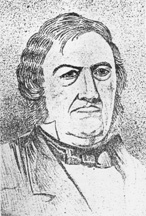
Historical · U.S. Senate · Ohio
Thomas Morris
Former U.S. Senator from Ohio · 1833–1839 · Democratic · Class 1
Thomas Morris represented Ohio in the United States Senate (1833–1839) for the Democratic party. The page below collects sourced biographical facts, term history, committee roles, and provenance for Morris.
Bioguide ID: M000989
Key facts
- Full name
- Thomas Morris
- State
- Ohio
- Party
- Democratic
- Senate class
- Class I
- Senate service
- 1833–1839
- First Senate term
- 1833
- Status
- Left office
- Current term ends
- —
- Born
- 1776
- Bioguide ID
- M000989
- Committee assignments
- —
- Dataset version
- 1.20260602
Biographical narrative
913 words · sourced from the Wikipedia REST extract
Thomas Morris was a prominent American politician from Ohio, known for his service as a U.S. Senator and his involvement in the early anti-slavery movement. A member of the Democratic Party, Morris's political career spanned several decades, during which he held various positions in state and national government. His tenure in the Senate lasted from 1833 until 1839, after which he became increasingly vocal in advocating for abolition and civil rights, ultimately leading to his expulsion from the Democratic Party. In 1844, he was nominated as the vice presidential candidate for the Liberty Party, reflecting his commitment to anti-slavery principles.
Early life and career
Thomas Morris was born on January 3, 1776, in Berks County, Pennsylvania. His early life was marked by a commitment to public service and military duty; he enlisted as a Ranger in 1793 to participate in conflicts against Native American tribes. Following his military service, he moved to western Ohio in 1795, where he began to establish his career. In 1804, Morris began practicing law in Bethel, Ohio, laying the groundwork for his future political endeavors.
Morris's political career began in the Ohio House of Representatives, where he contested the election of David C. Bryan and successfully secured a seat representing Clermont County. His service in the Ohio House spanned multiple terms from 1806 to 1809, and he continued to serve in various capacities within the state legislature throughout the following years. In addition to his time in the House, Morris was a member of the Ohio State Senate, serving multiple terms between 1813 and 1833. His legal background and political experience culminated in a brief tenure as a Justice of the Ohio State Supreme Court in 1809.
Morris's political affiliations evolved over time. Initially aligned with the Jacksonian Democrats, he became a significant figure in Ohio politics. His legislative work during this period helped shape the political landscape of the state and contributed to the development of policies that would later influence national debates, particularly regarding slavery and civil rights.
Senate tenure
Morris was elected to the United States Senate in 1833 as a member of the Democratic Party, representing Ohio in the Senate Class 1. His time in the Senate was characterized by his advocacy for issues that would later align him with the anti-slavery movement. During his single term, Morris engaged in debates and discussions that highlighted the growing tensions surrounding slavery in the United States.
Despite his initial support for the Democratic Party, Morris's views began to diverge from those of his colleagues, particularly regarding the issue of abolition. His outspoken support for anti-slavery measures ultimately led to his defeat in the 1839 election, as he faced opposition from within his party due to his progressive stance on civil rights for free blacks. This defeat marked a significant turning point in his political career, as it not only ended his tenure in the Senate but also catalyzed his transition to a more radical anti-slavery position.
Following his defeat, Morris became increasingly critical of the Democratic Party, particularly its members who opposed abolition. His views were met with resistance, and in January 1840, he was expelled from the party, described by delegates at the Ohio Democratic State Convention as a "rotten branch that should be lopped off." This expulsion did not deter him; instead, it propelled him into a leadership role within the emerging Liberty Party, which was dedicated to the abolition of slavery.
Legislative focus and committees
During his time in the Senate, Morris's legislative focus was primarily on issues related to slavery and civil rights. His advocacy for abolition placed him at the forefront of a growing movement that sought to challenge the established norms of his time. Morris's commitment to these issues was not only a personal conviction but also reflected the broader societal shifts occurring in the United States during the 1830s.
Morris's involvement in the Liberty Party further emphasized his dedication to anti-slavery principles. In 1844, he was nominated as the vice presidential candidate on the ticket with James G. Birney, representing a significant moment in the history of the anti-slavery movement. Although the ticket ultimately finished third in the presidential election, Morris's candidacy underscored the increasing political organization among abolitionists and the growing recognition of the need for a dedicated political platform to address the issue of slavery.
Throughout his political career, Morris was involved in various committees and legislative initiatives that sought to address the moral and legal implications of slavery. His efforts contributed to the development of a theoretical framework for an anti-slavery constitution, which would later influence the discourse surrounding civil rights and the abolitionist movement. Scholars have noted Morris's role as a significant figure in the anti-slavery movement, with some arguing that he was one of the first political martyrs of the cause, as his defeat in the Senate was directly related to his abolitionist convictions.
Morris's legacy is marked by his early leadership in the anti-slavery movement and his commitment to civil rights. His work laid the groundwork for future political actions and organizations that would ultimately lead to the establishment of the Republican Party and the broader abolitionist movement in the United States. His contributions to the discourse on slavery and civil rights continue to be recognized as pivotal in the history of American politics. Morris passed away on December 7, 1844, leaving behind a complex legacy intertwined with the early struggles for abolition and civil rights in the United States.
Notable legislation
Sponsored and co-sponsored legislation for Thomas Morris is pending operator curation. The biographical narrative above carries the same provenance trail until per-bill rows are written.
Sources
- [1]https://en.wikipedia.org/wiki/Thomas_Morris_(Ohio_politician)Wikipedia · retrieved 2026-06-02
Notable quotes
Sourced quotes for Thomas Morris are pending operator curation. Narrative-scope provenance remains attached below.
Sources
- [1]https://en.wikipedia.org/wiki/Thomas_Morris_(Ohio_politician)Wikipedia · retrieved 2026-06-02
Key positions
Curated policy positions for Thomas Morris are pending operator review. The biographical narrative above carries the same provenance trail until per-topic positions are written.
Sources
- [1]https://en.wikipedia.org/wiki/Thomas_Morris_(Ohio_politician)Wikipedia · retrieved 2026-06-02
Terms served
- 1833–1839U.S. Senate · Term 1 · Democratic · Class I
Sources & provenance
Every attributable claim above carries a per-section [N] marker that resolves to the corresponding URL below. Each entry records the upstream provider, the canonical URL, and the timestamp at which the source was retrieved by the ingest pipeline.
Key facts
- https://bioguide.congress.gov/search/bio/M000989bioguide · retrieved 2026-06-02
- https://www.govtrack.us/congress/members/407957govtrack · retrieved 2026-06-02
Biographical narrative
- https://en.wikipedia.org/wiki/Thomas_Morris_(Ohio_politician)wikipedia · retrieved 2026-06-02
Find your senator
Every U.S. state elects two senators. Browse Ohio’s delegation, the full former-senator roster, or explore the role and term length.
Related on The Candidate
- Preceded by Benjamin RugglesEarlier holder of the Ohio Class I Senate seat · Adams.Open
- Succeeded by Benjamin TappanLater holder of the Ohio Class I Senate seat · Democratic.Open
- Alexander CampbellFormer U.S. Senator from Ohio · RepublicanOpen
- Allen ThurmanFormer U.S. Senator from Ohio · DemocraticOpen
- Alvin DonaheyFormer U.S. Senator from Ohio · DemocraticOpen
- Atlee PomereneFormer U.S. Senator from Ohio · DemocraticOpen