
Historical · U.S. Senate · Ohio
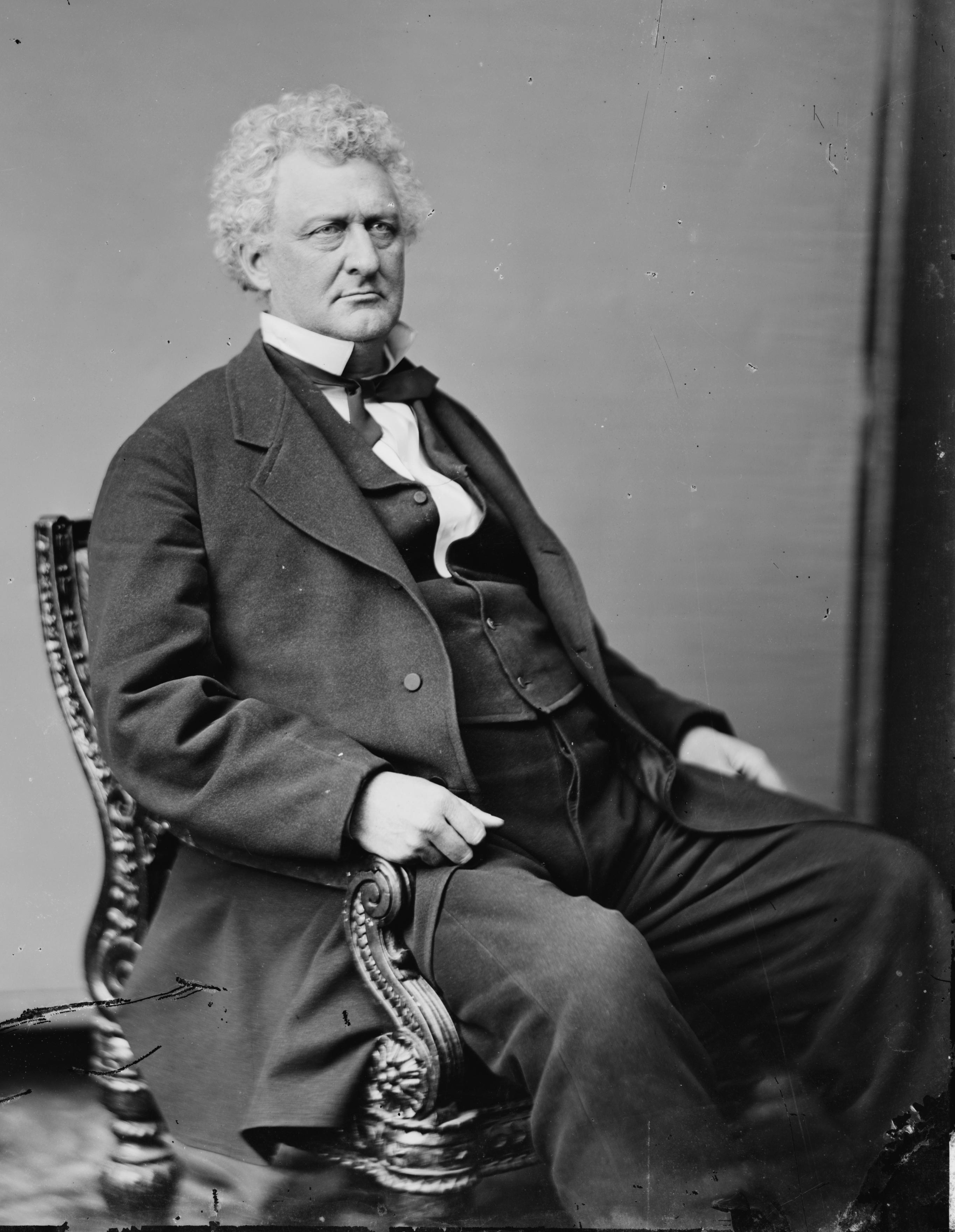
William Allen
Former U.S. Senator from Ohio · 1837–1849 · Democratic · Class 3
William Allen represented Ohio in the United States Senate (1837–1849) for the Democratic party. The page below collects sourced biographical facts, term history, committee roles, and provenance for Allen.
Bioguide ID: A000150
Key facts
- Full name
- William Allen
- State
- Ohio
- Party
- Democratic
- Senate class
- Class III
- Senate service
- 1837–1849
- First Senate term
- 1837
- Status
- Left office
- Current term ends
- —
- Born
- 1803
- Bioguide ID
- A000150
- Committee assignments
- —
- Dataset version
- 1.20260602
Biographical narrative
835 words · sourced from the Wikipedia REST extract
William Allen was a prominent American lawyer and politician who served as a U.S. Senator from Ohio as a member of the Democratic Party. His political career spanned several decades, during which he held various significant positions, including a term as a U.S. Representative and later as the 31st governor of Ohio. Allen's tenure in the Senate was marked by his involvement in key issues of the time, particularly regarding territorial expansion and the contentious debates surrounding slavery. He was born on December 27, 1803, in Edenton, North Carolina, and passed away on July 11, 1879.
Early life and career
William Allen was born to Nathanial Allen and Fanny Coulston in Edenton, North Carolina. His father was a landowner, and his mother was an enslaved woman, which placed Allen in a complex familial and social context. Following the death of his mother, he and his brother moved to Lynchburg, Virginia, before settling in Chillicothe, Ohio, in 1819 to live with his sister. This relocation marked a significant transition in his life, as he began to pursue education and a career in law.
Allen attended Chillicothe Academy, where he received a foundational education. He later studied law under Colonel Edward King and was admitted to the bar in Ohio at the age of 21. His early political career began with his election to the U.S. House of Representatives, where he served from 1833 to 1835. Although he lost his bid for re-election, this experience laid the groundwork for his subsequent political endeavors.
Senate tenure
William Allen's Senate career began in 1837 when he was elected as a U.S. Senator from Ohio. He served in this capacity until 1849, during which time he was part of a group of Western Democrats who advocated for the expansion of U.S. territory. A notable aspect of his Senate tenure was his strong support for the idea that the United States had a legitimate claim to the entire Oregon Country. This position became a significant topic during the 1844 presidential election, where he suggested that the U.S. should be prepared to confront the United Kingdom militarily to annex the region up to the latitude of 54°40′N, which was associated with the slogan "Fifty-Four Forty or Fight!" Although this slogan was popularized by opponents of the expansionist policy, it reflected the sentiments of many Democrats, including Allen.
Throughout his time in the Senate, Allen was also a proponent of "popular sovereignty," which was a principle that allowed territories to decide for themselves whether to permit slavery. He supported the presidential candidacy of fellow Democrat Lewis Cass in 1848, who was a key figure in promoting this idea. However, Allen's political career in the Senate concluded when he lost his bid for a third term in 1848. After leaving the Senate, he retired to his farm, known as "Fruit Hill," which was located near Chillicothe, Ohio.
Legislative focus and committees
During his Senate tenure, William Allen was involved in several key legislative issues that reflected the political climate of the time. His advocacy for territorial expansion was a significant aspect of his political identity, aligning him with the broader Democratic agenda that sought to extend U.S. borders. Allen's position on the Oregon Country and his willingness to consider military action against the British underscored the aggressive expansionist sentiment that characterized many Democrats in the 1840s.
In addition to his expansionist views, Allen's support for popular sovereignty placed him at the center of the contentious debates surrounding slavery in the United States. This principle was particularly relevant during the lead-up to the Civil War, as it aimed to provide a mechanism for determining the status of slavery in new territories. Allen's alignment with this ideology indicated his commitment to the Democratic Party's platform, which often sought to balance the interests of slaveholding and free states.
After his Senate career, Allen's political involvement diminished significantly until he returned to public service as the governor of Ohio from 1874 to 1876. His governorship was marked by a quieter political climate, and he faced challenges in seeking a second term, which he ultimately lost in the 1875 election. Throughout his life, Allen was known for his distinctive loud voice, which became a notable characteristic among his peers.
Following his retirement from public life, Allen lived at Fruit Hill until his death in 1879. He was buried at Grandview Cemetery in Chillicothe, Ohio. His legacy includes the naming of Allen County, Kansas, in his honor, as well as a statue that was donated by Ohio to the National Statuary Hall Collection, although this statue was later replaced due to controversies surrounding his pro-slavery stance and criticisms of President Abraham Lincoln during the Civil War.
In summary, William Allen's political career was shaped by the significant issues of his time, including territorial expansion and the debates over slavery. His contributions to the Senate and his later role as governor of Ohio reflect a complex legacy that continues to be examined in the context of American history.
Notable legislation
Sponsored and co-sponsored legislation for William Allen is pending operator curation. The biographical narrative above carries the same provenance trail until per-bill rows are written.
Sources
- [1]https://en.wikipedia.org/wiki/William_Allen_(governor)Wikipedia · retrieved 2026-06-02
Notable quotes
Sourced quotes for William Allen are pending operator curation. Narrative-scope provenance remains attached below.
Sources
- [1]https://en.wikipedia.org/wiki/William_Allen_(governor)Wikipedia · retrieved 2026-06-02
Key positions
Curated policy positions for William Allen are pending operator review. The biographical narrative above carries the same provenance trail until per-topic positions are written.
Sources
- [1]https://en.wikipedia.org/wiki/William_Allen_(governor)Wikipedia · retrieved 2026-06-02
Terms served
- 1833–1835U.S. House · District 7 · Term 1 · Jackson
- 1837–1843U.S. Senate · Term 2 · Democratic · Class III
- 1843–1849U.S. Senate · Term 3 · Democratic · Class III
Sources & provenance
Every attributable claim above carries a per-section [N] marker that resolves to the corresponding URL below. Each entry records the upstream provider, the canonical URL, and the timestamp at which the source was retrieved by the ingest pipeline.
Key facts
- https://bioguide.congress.gov/search/bio/A000150bioguide · retrieved 2026-06-02
- https://www.govtrack.us/congress/members/400804govtrack · retrieved 2026-06-02
Biographical narrative
- https://en.wikipedia.org/wiki/William_Allen_(governor)wikipedia · retrieved 2026-06-02
Find your senator
Every U.S. state elects two senators. Browse Ohio’s delegation, the full former-senator roster, or explore the role and term length.
Related on The Candidate
- Preceded by Jacob BurnetEarlier holder of the Ohio Class III Senate seat · Adams.Open
- Succeeded by Salmon ChaseLater holder of the Ohio Class III Senate seat · Republican.Open
- Alexander CampbellFormer U.S. Senator from Ohio · RepublicanOpen
- Allen ThurmanFormer U.S. Senator from Ohio · DemocraticOpen
- Alvin DonaheyFormer U.S. Senator from Ohio · DemocraticOpen
- Atlee PomereneFormer U.S. Senator from Ohio · DemocraticOpen