
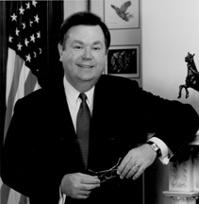
Historical · U.S. Senate · Oklahoma
David Boren
Former U.S. Senator from Oklahoma · 1979–1995 · Democratic · Class 2
David Boren represented Oklahoma in the United States Senate (1979–1995) for the Democratic party. The page below collects sourced biographical facts, term history, committee roles, and provenance for Boren.
Bioguide ID: B000639
Key facts
- Full name
- David Boren
- State
- Oklahoma
- Party
- Democratic
- Senate class
- Class II
- Senate service
- 1979–1995
- First Senate term
- 1979
- Status
- Left office
- Current term ends
- —
- Born
- 1941
- Bioguide ID
- B000639
- Committee assignments
- —
- Dataset version
- 1.20260602
Biographical narrative
924 words · sourced from the Wikipedia REST extract
David L. Boren is a former United States Senator from Oklahoma, who served as a member of the Democratic Party. His tenure in the Senate spanned from 1979 until 1995, during which he was recognized for his contributions to various legislative initiatives. Boren's political career is marked by his commitment to public service and his engagement in key issues affecting his constituents and the nation.
Early life and career
David L. Boren was born on April 21, 1941. He grew up in Oklahoma, where he developed an early interest in politics and public service. Boren pursued higher education at the University of Oklahoma, where he earned a Bachelor of Arts degree. He continued his studies at the Oxford University, obtaining a Bachelor of Arts degree in Philosophy, Politics, and Economics. This academic background provided him with a strong foundation for his future political career.
Before entering the Senate, Boren's political journey began in the Oklahoma state legislature, where he served in the House of Representatives. His early experiences in state politics helped shape his understanding of governance and the needs of his constituents. Following his time in the state legislature, he was elected to the U.S. House of Representatives, where he served for a brief period before transitioning to the Senate.
Boren's election to the Senate in 1978 marked the beginning of a significant chapter in his political career. He was elected to represent Oklahoma in the 96th Congress and subsequently began his first term in the Senate in January 1979. Throughout his early political career, Boren was known for his ability to build coalitions and work across party lines, which would become a hallmark of his time in the Senate.
Senate tenure
David Boren served as a U.S. Senator from Oklahoma for a total of three terms, concluding his service on January 3, 1995. His tenure in the Senate was characterized by a focus on various issues, including education, healthcare, and economic development. Boren was known for his pragmatic approach to legislation, often seeking common ground with colleagues from both sides of the aisle.
During his time in the Senate, Boren was involved in numerous legislative initiatives aimed at improving the lives of his constituents and addressing national concerns. He played a role in shaping policies related to education, advocating for increased funding and support for public schools and higher education institutions. His commitment to education reform was evident in his efforts to enhance access to quality education for all students.
Boren's Senate career also included a focus on healthcare issues. He worked on initiatives aimed at expanding access to healthcare services and improving the overall quality of care for Americans. His efforts in this area reflected a broader concern for the well-being of his constituents and a desire to address pressing health-related challenges facing the nation.
In addition to education and healthcare, Boren was actively engaged in economic development initiatives. He recognized the importance of fostering economic growth in Oklahoma and supported policies that aimed to create jobs and stimulate investment in the state. His work in this area contributed to efforts to enhance the economic prospects of Oklahomans and improve the overall quality of life in the region.
Boren's ability to navigate the complexities of the Senate and work collaboratively with colleagues from different political backgrounds allowed him to be an effective legislator. His tenure was marked by a commitment to bipartisanship and a focus on finding practical solutions to the challenges facing the nation.
Legislative focus and committees
Throughout his Senate career, David Boren served on several key committees that shaped his legislative priorities and allowed him to influence important policy areas. His committee assignments included positions on the Senate Committee on Appropriations, the Senate Committee on Intelligence, and the Senate Committee on Energy and Natural Resources, among others. These roles provided him with a platform to advocate for issues that were critical to his constituents and the nation as a whole.
As a member of the Senate Committee on Appropriations, Boren was involved in determining federal funding allocations for various programs and initiatives. His work on this committee allowed him to advocate for resources that would benefit education, healthcare, and economic development in Oklahoma. Boren's focus on appropriations reflected his commitment to ensuring that federal resources were directed toward addressing the needs of his constituents.
In his role on the Senate Committee on Intelligence, Boren contributed to discussions and decisions related to national security and intelligence matters. His involvement in this committee underscored his awareness of the importance of safeguarding the nation while balancing civil liberties and privacy concerns. Boren's work in this area demonstrated his commitment to protecting the interests of the United States and its citizens.
Boren's participation on the Senate Committee on Energy and Natural Resources highlighted his interest in energy policy and environmental issues. He recognized the significance of energy production and conservation in the context of economic development and environmental stewardship. His work on this committee allowed him to engage in discussions about energy policy that would have lasting implications for both Oklahoma and the nation.
In summary, David L. Boren's Senate tenure was marked by a dedication to public service and a focus on key issues affecting his constituents. His legislative efforts in education, healthcare, and economic development, combined with his committee work, positioned him as a significant figure in the Senate during his time in office. After concluding his service in 1995, Boren's contributions to American politics continued to be recognized, reflecting his lasting impact on the legislative landscape.
Notable legislation
Sponsored and co-sponsored legislation for David Boren is pending operator curation. The biographical narrative above carries the same provenance trail until per-bill rows are written.
Sources
- [1]https://en.wikipedia.org/wiki/David_BorenWikipedia · retrieved 2026-06-02
Notable quotes
Sourced quotes for David Boren are pending operator curation. Narrative-scope provenance remains attached below.
Sources
- [1]https://en.wikipedia.org/wiki/David_BorenWikipedia · retrieved 2026-06-02
Key positions
Curated policy positions for David Boren are pending operator review. The biographical narrative above carries the same provenance trail until per-topic positions are written.
Sources
- [1]https://en.wikipedia.org/wiki/David_BorenWikipedia · retrieved 2026-06-02
Terms served
- 1979–1985U.S. Senate · Term 1 · Democratic · Class II
- 1985–1991U.S. Senate · Term 2 · Democratic · Class II
- 1991–1995U.S. Senate · Term 3 · Democratic · Class II
Sources & provenance
Every attributable claim above carries a per-section [N] marker that resolves to the corresponding URL below. Each entry records the upstream provider, the canonical URL, and the timestamp at which the source was retrieved by the ingest pipeline.
Key facts
- https://bioguide.congress.gov/search/bio/B000639bioguide · retrieved 2026-06-02
- https://www.govtrack.us/congress/members/401604govtrack · retrieved 2026-06-02
Biographical narrative
- https://en.wikipedia.org/wiki/David_Borenwikipedia · retrieved 2026-06-02
Find your senator
Every U.S. state elects two senators. Browse Oklahoma’s delegation, the full former-senator roster, or explore the role and term length.
Related on The Candidate
- Preceded by Dewey BartlettEarlier holder of the Oklahoma Class II Senate seat · Republican.Open
- Succeeded by Markwayne MullinLater holder of the Oklahoma Class II Senate seat · Republican.Open
- Almer MonroneyFormer U.S. Senator from Oklahoma · DemocraticOpen
- Don NicklesFormer U.S. Senator from Oklahoma · RepublicanOpen
- Edward MooreFormer U.S. Senator from Oklahoma · RepublicanOpen
- Democratic PartyFederal candidates and office holders on the Democratic line.Open